Understanding the Case N0 RCOMAA 0012: A Deep Dive into Its Importance
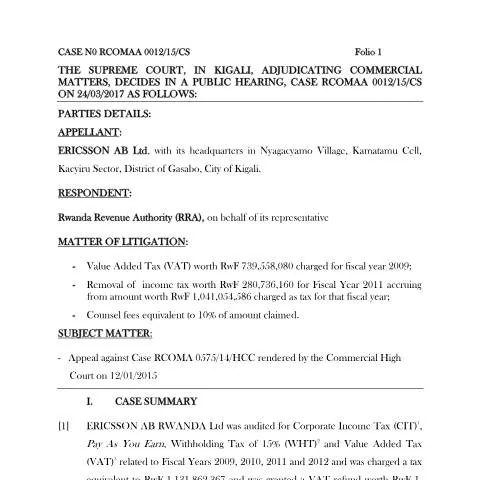
The Case N0 RCOMAA 0012 is not just an ordinary document; it's a pivotal legal instrument within the Rwandan judicial system that outlines the intricate details of tax disputes between corporate entities and the Rwanda Revenue Authority (RRA). This particular case, adjudicated by the Supreme Court of Rwanda on March 24, 2017, highlights the complexities of tax law, appeal procedures, and the financial implications for businesses operating in Rwanda. The appellant, Ericsson AB Rwanda Ltd, contested charges primarily related to Value Added Tax (VAT) and Corporate Income Tax (CIT).
This document serves as a record of the litigation process, offering insight into the administrative proceedings and the interpretative nuances of tax law in Rwanda. Its role is essential for legal practitioners, corporate tax advisors, and businesses, understanding their rights and obligations under Rwandan law.
The Legal Framework Surrounding Case RCOMAA 0012
Rooted in Law No. 22/2018 relating to the Civil, Commercial, Labour and Administrative Procedure, Case N0 RCOMAA 0012 exemplifies how Rwandan law governs commercial disputes. The law provides a structured approach to litigation, ensuring that all parties adhere to procedural requirements while giving them the opportunity to present their cases.
Historically, tax-related disputes in Rwanda have relied heavily on the RRA's interpretations and decisions. The RRA's authority is consolidated through various regulations, including those governing tax assessments, audits, and appeals. Understanding this framework is crucial for stakeholders engaging with the RRA, particularly in tax matters, as it sets the procedural landscape for potential litigation.
Who Should Engage with the Case N0 RCOMAA 0012 Document?
The implications of this document extend beyond just the parties involved in the case. Various stakeholders should pay attention:
- Businesses and Corporations: Companies operating in Rwanda, especially those dealing with large tax assessments, must understand the implications of this case.
- Legal Professionals: Lawyers who specialize in tax and administrative law can leverage insights from this case in representing clients facing similar tax disputes.
- Policy Makers: Understanding the legal outcomes can inform future policies regarding taxation and corporate governance.
- Accountants and Tax Advisors: These professionals can better guide their clients through compliance and dispute resolution using lessons learned from this case.
Each group brings unique interests to the table; thus, the document's relevance is multifaceted, emphasizing the need for comprehensive understanding.
Navigating the Process: Filing and Following Up on Your Case
Once a party decides to engage with the legal process surrounding a tax dispute, knowing how to file and follow up on the case becomes essential. The procedures are well-defined under Rwandan law, but they can vary based on the specifics of each case.
Filing Your Appeal
To initiate an appeal like that seen in Case N0 RCOMAA 0012, parties must submit their appeal to the relevant taxing authority first—in this instance, the Commissioner General of Taxes. This step is crucial as it serves as the primary administrative review before judicial intervention.
Tracking Your Case Status
Following submission, it is imperative to monitor the case's trajectory. Given the different administrative layers, parties should:
- Check with the RRA for preliminary decisions or audit outcomes.
- Engage with legal counsel to understand potential next steps post-review.
- File for judicial review if necessary, particularly if the RRA's decision appears untenable.
Parties are encouraged to keep detailed records and seek legal guidance throughout the process to ensure they remain compliant with procedural requirements.
Understanding the Consequences of Tax Disputes
Engagement in tax disputes can lead to significant consequences for businesses. The outcome of cases like RCOMAA 0012 can dictate a company's financial health, operational strategy, and reputation.
Financial Implications
When businesses face tax assessments, as was the case for Ericsson AB Rwanda Ltd, they must account for:
- Potential back taxes owed, which can accumulate significant sums.
- Interest and penalties that may arise from unpaid taxes.
- Legal fees associated with preparing and presenting the case.
Failure to successfully dispute a tax charge may lead to a loss of confidence from stakeholders and investors, impacting the company’s market position.
Operational Implications
Disputes can also affect a company's operations:
- Companies may need to divert resources to legal matters rather than core business activities.
- Uncertainty regarding tax liabilities can hinder strategic planning and investment.
Thus, understanding and navigating these implications is critical for any business involved in similar disputes.
Decoding the Document: Critical Sections of the Form
Careful examination of the Case N0 RCOMAA 0012 document reveals critical sections that are pivotal for understanding the case’s context and legal foundations. Each part carries weight in the decision-making process.
Key Details and Parties Involved
The document begins with an introduction to the parties involved, identifying Ericsson AB Ltd as the appellant and the RRA as the respondent. This section is essential, as it frames the dispute context.
Claim Details
This document section articulates the specific claims made by the appellant, highlighting:
- The argued tax amounts.
- Reasons why the appellant believes the RRA's charges were unjust.
- The legal basis for the appeal.
Understanding these claims' nuances is essential for anyone facing similar disputes.
Judicial Decisions and Rationale
In this section, the Supreme Court's rationale for its decision is articulated, providing insight into the judicial interpretation of tax law. This encompasses:
- Legal precedents referenced.
- The court’s interpretation of the relevant tax regulations.
- How the findings align with existing laws.
This analysis is critical for understanding future tax disputes and appeals.
The Wider Implications: Case RCOMAA 0012 in Context
Case N0 RCOMAA 0012 does not exist in isolation; it reflects broader themes within the Rwandan administrative and tax systems.
Impacts on Tax Legislation
Decisions arising from such cases can influence how tax laws are interpreted and enforced in the future. Stakeholders must remain vigilant to changes in legislation or interpretation that arise from these rulings.
Shaping Corporate Governance
The outcomes of high-profile cases like this also inform corporate governance best practices. Businesses must align their financial reporting and compliance strategies with evolving legal interpretations to mitigate risks.
Practical Advice for Engaging with the RRA
Given the complexities demonstrated by the Case N0 RCOMAA 0012, here are actionable insights for businesses dealing with the RRA:
- Maintain Accurate Records: Ensure all financial documents are meticulously kept to support any claims or disputes.
- Engage with Tax Advisors: Collaborating with professionals who understand the local landscape can optimize tax compliance and strategies.
- Stay Informed: Keep abreast of changes in tax law and administrative practices, as these can significantly affect business operations.
By adhering to these best practices, businesses can navigate the complex landscape of tax law effectively, minimizing the risks tied to tax disputes.
The Path Forward: Leveraging Insights from Case N0 RCOMAA 0012
In conclusion, the Case N0 RCOMAA 0012 serves as a critical learning opportunity within the Rwandan tax landscape. By analyzing its intricacies, stakeholders can better understand their rights and obligations, strategically preparing for potential disputes.
The lessons drawn from this case extend to operational practices, legislative engagement, and the broader implications for corporate governance, ensuring that businesses can navigate Rwanda's tax landscape confidently and effectively.
Understanding the Civil Registration Process in Rwanda
The civil registration process in Rwanda is essential for the documentation of vital events such as births, deaths, marriages, and divorces. Governed by the Ministry of Local Government (MINALOC), civil registration serves as a fundamental tool for both statistical data collection and the enforcement of legal rights.
To begin the process, individuals must visit their local administrative office, which operates under the decentralization policy to facilitate easier access for citizens. The National Identification Number (NIN) is crucial for initiating any civil registration requests. For instance, to register a birth, parents must provide the NIN of at least one parent, alongside a completed form that can be obtained electronically through the Irembo platform or in person.
It's noteworthy that the registration of births must occur within 30 days of the event to avoid penalties, which may include additional fees. For marriages, couples are required to submit a marriage declaration form, alongside documentation proving their eligibility to marry, which includes identification and, if applicable, divorce decrees or death certificates of former spouses.
Moreover, the civil registration process extends to foreigners residing in Rwanda, who must follow a similar protocol to obtain legal recognition of their marital status or the birth of their children. This ensures that all citizens and residents have equal access to legal documentation that enables them to exercise their rights and responsibilities under the Rwandan law.
Navigating Tax Compliance through RRA: A Guide for Citizens and Businesses
Understanding tax compliance in Rwanda is paramount for both individuals and businesses. The Rwanda Revenue Authority (RRA) administers tax laws and collects taxes to fund national development goals. The most common taxes include income tax, value-added tax (VAT), and corporate tax, among others. The current fiscal year runs from July to June, and it is crucial for taxpayers to align their financial activities with this timeline.
Individuals earning above a certain threshold must file an annual income tax return, which can be conveniently done online through the RRA’s e-services. Businesses, on the other hand, are required to maintain precise financial records to substantiate their tax returns. The RRA operates with the objective of enhancing tax compliance while simplifying the reporting process. Taxpayers can access various tools and resources, including training sessions and workshops, aimed at educating them on their tax obligations.
For specific situations, such as tax exemptions for small businesses or individuals in certain sectors like agriculture, the RRA provides guidelines that detail the criteria and application process. Furthermore, businesses can benefit from incentives designed to stimulate investment and economic activity, especially in sectors aligned with national priorities.
In cases of disputes or concerns regarding tax assessments, taxpayers have the right to appeal through established channels within the RRA. This ensures that there is transparency and fairness in the tax system, fostering a culture of compliance and civic responsibility.
The Role of Digital Government in Rwandan Administrative Services
Rwanda has made significant strides in establishing a digital government, particularly through the Irembo platform, which seeks to streamline access to various administrative services. The ongoing digital transformation is part of the broader vision to enhance service delivery, improve efficiency, and increase transparency within the government.
Irembo offers citizens the ability to apply for numerous services such as birth certificates, national IDs, and permits online, which saves time and reduces the need for physical visits to government offices. This digital architecture not only simplifies processes but also contributes to a more accountable system where citizens can easily track their applications.
Furthermore, the Rwandan government has prioritized cybersecurity and data protection to ensure that personal information shared through these digital platforms is secure. Citizens are encouraged to adopt these digital services as they not only promote convenience but also help in cultivating a tech-savvy society.
As the country continues to innovate, public engagement and feedback mechanisms have been integrated into the digital services to enhance user experiences. Citizens can voice their concerns, suggest improvements, and report issues directly through the platform, promoting a participatory governance framework that underpins the developmental aspirations of Rwanda.