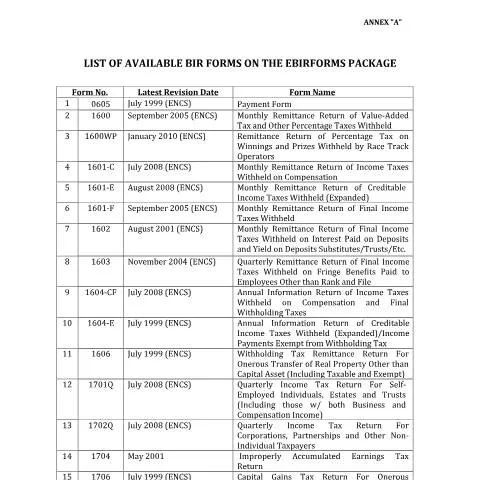
Diving into BIR Form No. 1601-F: Monthly Remittance Return of Final Income Taxes Withheld
BIR Form No. 1601-F is an essential document for employers and withholding agents in the Philippines, acting as the Monthly Remittance Return of Final Income Taxes Withheld. This form is specifically designed to report and remit final income taxes that have been withheld from employees or payees during a given month. The submission of this form is crucial for ensuring compliance with the Philippine Bureau of Internal Revenue (BIR) regulations and avoiding potential penalties.
Identifying Stakeholders: Who Needs to File?
Understanding who is mandated to file BIR Form 1601-F is vital for compliant tax practices. The following entities are typically required to submit this form:
- Employers: Companies or individuals who employ workers and are required to withhold income tax from their salaries.
- Withholding Agents: This includes those who withhold taxes from payments made to contractors, professionals, or other payees.
- Tax Advisors: Professionals advising entities on tax compliance may also need to file the form on behalf of their clients.
It’s essential to note that the requirements and liabilities may vary based on the specific circumstances, including whether the employer is a large corporation, small enterprise, or a non-resident withholding agent.
Completing the Form: A Step-by-Step Guide
Filling out BIR Form 1601-F requires attention to detail and accurate record-keeping. Each section of the form corresponds to different aspects of withheld taxes. Here’s a breakdown:
Section 1: Taxpayer Information
This includes the Tax Identification Number (TIN), registered name, address, and other pertinent details. Ensure that all information matches what is registered with the BIR to avoid discrepancies.
Section 2: Summary of Withholding Tax
In this section, you will need to compile the total income tax withheld from various payments. This includes:
- Compensation payments
- Professional fees
- Other income subject to final withholding tax
Insert the total amounts in the respective fields, ensuring that calculations are accurate to prevent errors.
Section 3: Payment Details
Provide information about payment—the due date, amount paid, and the mode of payment (e.g., bank, e-payment). It's crucial to observe deadlines to avoid penalties.
Common Mistakes to Avoid
While filling out the form, be cautious of common pitfalls:
- Incorrect TINs or personal details
- Miscalculations in the total withheld tax
- Missing deadlines for submission and payment
Submission Channels: Choosing the Right Method
Filing BIR Form 1601-F can be done through several channels, each offering unique advantages according to user needs:
1. Electronic Filing: eBIRForms
Utilizing the eBIRForms platform is one of the most efficient ways to submit this form. This method allows for:
- Real-time validation of entries
- Immediate electronic submission
- Easier access to previous submissions
Ensure you have the appropriate software installed which supports the eBIRForms package.
2. Manual Submission: Over-the-Counter
For those who prefer traditional methods, submitting the form in person at designated BIR offices is also an option. This method requires:
- A printed and completed form
- Payment in the form of cash or checks
While less convenient, this method may be preferred by those who wish to maintain physical records of their submission.
3. Third-Party Filing Services
Using third-party services for filing can offer ease for busy employers. These services handle the submission and compliance aspects, ensuring accuracy. Be mindful to choose reputable providers.
What Happens After Submission?
Once BIR Form 1601-F is submitted, various processes are triggered within the BIR system:
- Processing: The BIR will review the form for accuracy and completeness. If discrepancies are found, the taxpayer will be notified.
- Assessment: The BIR may conduct assessments based on the submitted data, potentially leading to refunds or further tax obligations.
- Record Keeping: Taxpayers should retain copies of filed forms and any confirmations received for their records, as these may be required for future reference or audits.
Addressing Issues: Handling Rejections and Errors
Should the BIR return the submitted form due to missing information or errors, it’s essential to know how to respond:
Identifying Common Issues
Common reasons for rejections include:
- Incorrect taxpayer information
- Inaccurate amounts reported
- Failure to submit before the deadline
Steps to Rectify Errors
To correct any issues:
- Review the feedback provided by the BIR.
- Make necessary amendments on the form.
- Submit the corrected form along with any required documentation promptly.
It’s crucial to act swiftly to minimize penalties or interest that may accrue due to late payment or resubmission.
Understanding the Distinction: BIR Form 1601-F vs. Other Withholding Forms
It’s vital to recognize how BIR Form 1601-F differs from other BIR forms related to withholding taxes, such as:
| Form Number | Form Title | Purpose |
|---|---|---|
| 1601-C | Monthly Remittance Return of Income Taxes Withheld on Compensation | Used for withholding taxes on regular salary payments. |
| 1601-E | Monthly Remittance Return of Creditable Income Taxes Withheld (Expanded) | Applicable for expanded withholding taxes on certain payments. |
| 1602 | Monthly Remittance Return of Final Income Taxes Withheld on Interest Paid | Specifically for interest income payments. |
Understanding these distinctions ensures that taxpayers file the correct forms to avoid penalties and ensure compliance with Philippine tax law.
Special Cases: Unique Circumstances That May Affect Filing
In certain scenarios, the requirements for filing BIR Form 1601-F may differ. These exceptions include situations involving:
Foreign Nationals
Foreign entities operating in the Philippines may have varied obligations based on international agreements. They must determine if withholding tax applies to them based on their residency and the nature of income.
Minors and Limited Capacity Taxpayers
For minors or individuals with limited capacity, guardians or responsible parties must manage their tax obligations, including filing BIR Form 1601-F. This can involve additional documentation to verify the relationship and authority.
Urgent Situations
If facing imminent deadlines, it may be possible to seek extensions or alternative solutions by contacting the BIR. Documenting these communications is crucial for tracking follow-ups.
The Future of Tax Compliance: Integration with PhilSys National ID
Looking ahead, the integration of the PhilSys National ID within various government services, including tax compliance, is expected to streamline processes significantly. This will enhance accuracy in taxpayer identification and may reduce errors in form submissions, thereby facilitating better service delivery.
As the digital landscape evolves, it is essential for all stakeholders to stay informed about changes in procedures and embrace new technologies that promote efficiency and compliance in tax matters.
Understanding the Importance of BIR Form No. 1601-F
BIR Form No. 1601-F, known as the Monthly Remittance Return of Final Income Taxes Withheld, plays a crucial role in the tax administration framework of the Philippines. This form is primarily used by withholding agents to remit taxes withheld from income payments made to individuals and entities for the previous month. Understanding its importance is essential for both compliance and fiscal responsibility.
The significance of timely and accurate filing of Form 1601-F cannot be overstated. Failure to file this return on time can result in penalties and interest charges as stipulated under the National Internal Revenue Code (NIRC). Moreover, consistent compliance not only fosters a good relationship with the Bureau of Internal Revenue (BIR) but also contributes to the overall economic stability of the country, as these taxes are crucial for government funding.
It is important to note that withholding agents, including employers and third-party payers, must accurately compute the taxes to be withheld and remit them using this form. The amounts to be reported include, but are not limited to, final withholding taxes on various types of income payments including compensation, fringe benefits, and certain royalties. This aspect highlights the necessity for accurate bookkeeping and financial management to ensure compliance and avoid inadvertent errors that could lead to disputes with the BIR.
Step-by-Step Guide for Filing BIR Form No. 1601-F
Filing BIR Form No. 1601-F may seem daunting, but following a structured approach can ease the process significantly. Below is a step-by-step guide designed to help withholding agents navigate the filing process effectively.
- Gather Necessary Information: Before starting the filing process, ensure that you have all required information at hand. This includes your Tax Identification Number (TIN), the total amount of income payments made during the month, and the corresponding final withholding tax rates applicable to those payments.
- Complete the Form: BIR Form No. 1601-F is available for download from the official BIR website or can be filled out online using eBIRForms. Make sure to enter accurate data in all required fields to prevent issues during submission.
- Review for Accuracy: After filling out the form, conduct a thorough review. Double-check entries against your financial records to ensure accuracy, especially the computation for taxes withheld.
- Submit the Form: Submission can be done through designated banks that are authorized by the BIR to accept tax payments. Ensure that you submit your payment along with the completed form before the deadline to avoid penalties.
- Keep Records: It is advisable always to retain copies of filed forms and payment receipts. These documents may be requested during audits or verification processes by the BIR.
By following these steps, withholding agents can ensure a smooth filing process of BIR Form No. 1601-F, thereby fulfilling their obligations under Philippine tax law and contributing to the nation’s revenue generation.
Common Challenges and Solutions in BIR Form 1601-F Compliance
Filers of BIR Form No. 1601-F often encounter various challenges that can hinder compliance. Identifying these common issues and addressing them proactively can make the remittance process more efficient.
- Misinterpretation of Tax Rates: One of the prevalent challenges arises from misunderstandings about the applicable final withholding tax rates. Withholding agents are encouraged to refer to the latest BIR issuances or consult the BIR website for any updates on tax rates and guidelines to ensure that they are applying the correct rates to the income payments.
- Late Filings and Penalties: Late submission of Form 1601-F can lead to penalties that may accumulate over time. Withholding agents should mark their calendars with the due dates and consider setting reminders a few days in advance. Utilizing digital tools or applications can aid in tracking important filing dates.
- Technical Difficulties: Some filers may face technical issues while using the eBIRForms platform or during online submissions. In such cases, it is advisable to have a backup plan. This could involve keeping a hard copy of the form ready for manual submission if electronic filing encounters problems. Additionally, reaching out for support through the BIR’s contact channels can provide timely assistance.
By being aware of these challenges and implementing solutions, withholding agents can enhance their compliance processes, avoid penalties, and maintain a positive relationship with the BIR.