Understanding the Importance of the IR910 Form in PAYE Intermediary Registration
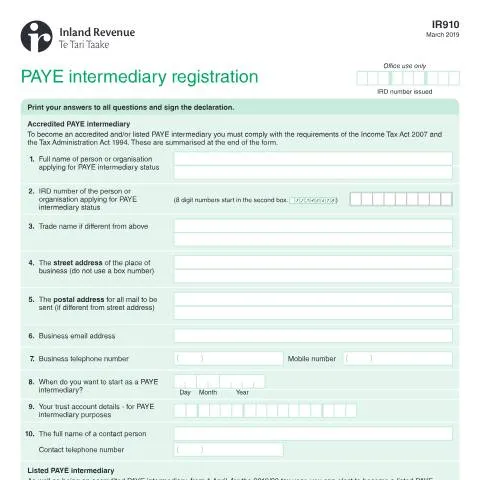
Imagine running a small business in New Zealand and managing employee payroll can feel overwhelming. With the complexities surrounding taxation and employee payments, many businesses turn to PAYE intermediaries for assistance. This is where the IR910 form comes into play. It is essential for individuals and organisations wishing to register as PAYE intermediaries, ensuring compliance with the Income Tax Act 2007 and the Tax Administration Act 1994.
The Application Process for the PAYE Intermediary Registration
Starting your journey as a PAYE intermediary requires careful attention to detail. Completing the IR910 form is the first step. Here’s what you need to know about the application process:
- Eligibility Criteria: Before filling out the IR910, ensure that you meet the requirements outlined in subpart RP of the Income Tax Act 2007. This includes having a trust account and informing employers that the Inland Revenue Department (IRD) does not guarantee payments to employees.
- Gather Required Information: The IR910 form requires specific details such as your full name, the IRD number, business address, and contact details. Prepare these beforehand to avoid delays in submission.
- Completing the Form: Take your time to fill out all sections accurately. Errors or omissions can lead to application rejection, prolonging your registration process.
- Sign and Submit: Make sure to sign the declaration included on the form, certifying that all the provided information is accurate.
Breaking Down the IR910: A Closer Look at Each Section
The IR910 form consists of several crucial sections, each requiring specific information. Here's a breakdown to help you navigate it:
| Section | Description | Common Pitfalls |
|---|---|---|
| 1. Full Name | Your name or the legal name of your organisation. | Using a trade name instead of the registered name. |
| 2. IRD Number | Your unique 8-digit IRD number. | Incorrect formatting of the IRD number. |
| 10. Contact Person | Full name of the designated contact for communications. | Providing a personal rather than a business contact. |
| 11. Listed PAYE Intermediary | Indicate if you wish to be a listed intermediary. | Failure to select "Yes" if applicable. |
SUBMITTING THE IR910: Where to Send It and What to Expect
After completing your form, you must submit it to the Inland Revenue Department (IRD) for processing. The submission address is:
IRD, Private Bag 39984, Wellington Mail Centre, Lower Hutt 5045.
Once your application has been submitted, you may wonder about the timeline. Processing times can vary, so it’s crucial to keep your contact details updated to receive notifications or requests for additional information from IRD.
Managing Your Registration: What Comes After Submission
After submitting your application via the IR910 form, staying informed about your registration status is key. Here’s how to manage the process:
- Track Your Progress: You can contact IRD to inquire about your application status if you haven't received confirmation within a reasonable timeframe.
- Prepare for Compliance: Once registered, ensure you understand your obligations as a PAYE intermediary, including maintaining accurate wage records and timely filing of employer monthly schedules.
- Access to Subsidies: If you choose to register as a listed PAYE intermediary, familiarize yourself with the eligibility criteria to receive subsidies for the employers you manage.
Common Scenarios for PAYE Intermediary Registration
Understanding the context in which the IR910 form is used can help clarify its importance. Here are a few scenarios where this registration is crucial:
- Start-up Businesses: New ventures often need help managing payroll. Registering as a PAYE intermediary can streamline this process.
- Growing Companies: As businesses expand and hire more employees, managing PAYE can become complex. Using a registered intermediary is beneficial for compliance.
- Freelancers and Contractors: Individuals offering services might not want to deal with PAYE issues directly. Partnering with a PAYE intermediary simplifies their financial obligations.
Preparing for Audits and Compliance Checks
Once you are registered, your responsibilities don't end. Compliance with PAYE rules is critical, and IRD may conduct audits to ensure adherence. Here’s how to prepare:
- Maintain Detailed Records: Keep comprehensive wage records and documentation of all deductions made from employee wages.
- Understand Your Obligations: Familiarize yourself with the employer monthly schedules to ensure timely submissions and payments.
- Stay Updated: Regularly review changes to tax legislation that may affect your role as a PAYE intermediary.
Final Steps: Ensuring Long-Term Compliance and Renewal
Becoming a PAYE intermediary is a significant step towards supporting businesses in New Zealand. However, maintaining compliance is equally important. Here are crucial points to consider:
- Continuous Education: Attend training sessions and workshops on PAYE regulations and updates to ensure you remain compliant with evolving laws.
- Renewal of Registration: Be aware of the renewal process for your intermediary status, as failure to renew can affect your credibility and ability to operate.
- Engage with IRD: Build a positive relationship with IRD. Promptly respond to any inquiries and maintain transparency in your operations.
Understanding the PAYE System in New Zealand
The Pay As You Earn (PAYE) system in New Zealand is a crucial part of the taxation framework that ensures employees pay their income tax directly through their employers. This system simplifies the tax compliance process for employees by deducting tax at the source, thereby reducing the burden of annual tax returns for many workers. Understanding the PAYE system is essential for employers, especially those registering as PAYE intermediaries, as it involves careful planning and compliance with IRD regulations.
Under the PAYE system, employers are responsible for calculating the correct amount of tax to deduct from their employees' wages based on their earnings and tax code. This includes a range of deductions, such as student loan repayments and KiwiSaver contributions, which must also be factored into the calculations. It’s critical that employers remain up to date with any changes to tax rates, which may occur, particularly in the Government’s budget announcements each year. The fiscal year in New Zealand runs from 1 July to 30 June, meaning that employers need to be vigilant about their tax obligations and any changes that may affect them.
Employers and PAYE intermediaries are encouraged to utilize online systems provided by the IRD for submitting the necessary PAYE returns, which can greatly streamline the process. This includes using the IRD's online services for checking employees' tax codes, submitting payroll information, and making payments electronically. Compliance with these online processes not only saves time but helps to avoid penalties associated with late or incorrect submissions.
Choosing the Right PAYE Intermediary Structure
When registering as a PAYE intermediary, one of the first considerations is selecting the appropriate structure for your PAYE intermediary services. Depending on your business model and the nature of the payroll services provided, the chosen structure can significantly impact both efficiency and tax obligations. There are several options for structuring your PAYE intermediary services, including operating as a sole trader, partnership, or limited liability company.
1. Sole Trader: This is the simplest structure for small business owners who want to register as a PAYE intermediary. As a sole trader, you will be personally liable for all aspects of the business, including any tax liabilities. While this structure is easy to register, it may not be the best fit for those planning to grow their business or deal with significant liability.
2. Partnership: For those who wish to operate with one or more partners, a partnership can be an effective way to share the responsibilities and risks associated with being a PAYE intermediary. Partnerships come with specific tax obligations, and partners must file their tax returns based on their share of the partnership income.
3. Limited Liability Company (LLC): This structure provides limited liability protection to owners and is often preferred for larger operations. An LLC must comply with more complex legal requirements, including filing annual returns and maintaining proper accounting records. However, the benefit is that it protects personal assets in the event of business debts or legal issues, making it a safer option for those managing larger payrolls.
Each of these structures has its unique set of advantages and disadvantages. Potential PAYE intermediaries should also consider the additional costs associated with different structures, compliance requirements, and the potential need for professional advice in setting up the right framework for their business.
Best Practices for PAYE Compliance and Reporting
Maintaining compliance as a PAYE intermediary entails adhering to a series of best practices that ensure accurate reporting and minimize the risk of penalties. Here are several key practices to consider:
1. Stay Informed About Changes to Legislation: Tax laws and PAYE regulations can be subject to change. It's critical for PAYE intermediaries to stay updated with changes in legislation by regularly visiting the IRD website and subscribing to newsletters or updates. Attending relevant workshops or webinars held by the IRD or business organizations can also provide valuable insights into current compliance expectations.
2. Implement Robust Payroll Systems: Investing in reliable payroll software can help streamline the process of calculating PAYE obligations and ensure accurate reporting. Payroll systems should integrate seamlessly with the IRD's requirements, allowing for the electronic submission of PAYE returns. Additionally, regular audits of payroll data can help identify discrepancies or errors before they become problematic.
3. Maintain Accurate Records: Comprehensive record-keeping is essential for a PAYE intermediary. This includes maintaining records of employee details, tax codes, earnings, and deductions. The IRD requires that these records be kept for at least seven years, so it’s important to have an organized system for storage, whether digital or paper-based.
4. Communicate Openly with Employees: As a PAYE intermediary, clear communication with employees regarding their pay, tax deductions, and entitlements is vital. Regularly provide payslips that itemize all deductions, and be available to answer any employee queries related to their payroll details.
5. Engage with Professional Advisors: For those new to being a PAYE intermediary or those handling complex payroll matters, engaging with a tax advisor or accountant can provide invaluable support. These professionals can help navigate the intricacies of tax compliance, ensuring that all obligations are met while also identifying potential areas for tax savings.
By following these best practices, PAYE intermediaries can help ensure compliance with New Zealand’s tax laws while also fostering a positive working relationship with employees through transparency and reliability in payroll processing.