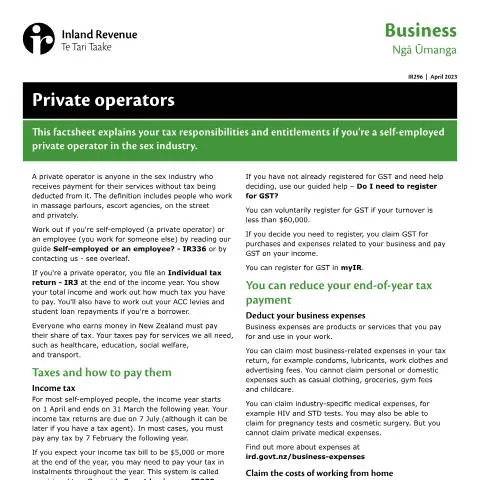
Understanding the Role of IR296: A Guide for Private Operators
Navigating the intricate landscape of tax responsibilities as a private operator in the New Zealand sex industry can be daunting. The IR296 form is pivotal for self-employed individuals in this sector, providing clarity on tax obligations and entitlements. Whether you’re working in massage parlours, as an escort, or operating privately, understanding how to effectively use this document is vital.
The Context of Taxation for Private Operators
Historically, the taxation of the sex industry has evolved within New Zealand's legal framework. The Tax Administration Act 1994 and subsequent amendments have set the stage for how self-employed individuals must operate. Private operators, defined as those receiving payment without tax deductions, are expected to fulfil their tax responsibilities just like any other self-employed person in the nation.
It's also essential to recognize that taxes fund critical services such as healthcare, education, and infrastructure. Consequently, engaging with the IR296 form is not only a legal obligation but also a contribution to the broader economy.
Who Should File the IR296?
The IR296 is specifically tailored for self-employed individuals operating within the sex industry. This includes anyone who engages in activities for which they receive direct payment, such as:
- Escort services
- Massage parlours
- Street-based services
- Private services
To determine whether you are a private operator or an employee, refer to the IR336 guide, which provides a detailed comparison of the two statuses. Being classified correctly is crucial, as it dictates your tax obligations.
Decoding the Steps to Complete IR296
Completing the IR296 form requires careful attention to detail, as inaccuracies can lead to substantial complications. Here’s how to approach filling it out:
- Gather Your Income Records: Start by collecting all payment records received over the tax year. This may include cash transactions, invoices, and digital payment receipts.
- Identify Deductible Expenses: Ensure you’re aware of what business-related expenses can be claimed. Common claims may include:
- Health and safety items like condoms and lubricants
- Advertising costs related to your services
- Work attire specific to your business
- Complete the Tax Return: Utilize the provided sections on the IR296 to input your total income and expenses. Remember to calculate your tax obligations accurately.
- Consult Resources: Don't hesitate to use the guides available at the IRD website, which outline how to navigate tax return regulations effectively.
The Significance of Timeliness in Tax Filing
Understanding the calendar of tax filing is crucial for compliance. For most self-employed individuals, the tax year in New Zealand commences on 1 April and concludes on 31 March of the following year.
- File your Individual tax return (IR3) by 7 July following the end of the tax year.
- If your tax bill is estimated to exceed $5,000, consider the provisional tax system, which may require you to pay tax in instalments throughout the year.
Being late in filing your taxes can lead to penalties, highlighting the importance of maintaining a diligent schedule.
The Distinct Role of the IR296 in the Tax System
The IR296 form serves as a foundational element for self-employed private operators. Unlike the standard employee tax forms, the IR296 addresses the specific needs and challenges of those operating in the sex industry. It ensures that individuals can report their income accurately while benefiting from deductions specific to their line of work.
Moreover, the document aids in establishing a clear record of tax obligations, essential for both compliance and potential audits by the IRD.
What Happens After Submission?
Once the IR296 has been submitted, the IRD will process the tax return. Here’s what to expect:
- Assessment Notification: Typically, you will receive a notification regarding your tax obligations, including any amounts owed or refunds due.
- Payment Schedule: If you owe taxes, ensure you are aware of the payment schedule, as payments are due by 7 February of the following year for any outstanding tax from the previous year.
- Record Keeping: Maintain a copy of your submitted IR296 and any correspondence from the IRD for your records. This will be beneficial for future tax seasons and any potential audits.
Handling Complex Situations with IR296
Occasionally, individuals may encounter unique circumstances that complicate their tax filing. Here are some scenarios and how to address them:
Foreign Operators
If you're a foreign national working in New Zealand, your tax obligations may differ. It's essential to determine your tax residency status as it influences your tax liability. Consult the IRD or a tax professional to clarify your position.
Income Variability
For those with fluctuating income—common in the sex industry—keeping precise records is vital. Consider using bookkeeping software to track income and expenses throughout the year, which can simplify the IR296 completion process.
Referral to an Accountant
In cases of uncertainty, or if you feel overwhelmed, seeking advice from an accountant who specializes in self-employed individuals can provide clarity. They can guide you through the intricacies of the IR296 and your overall tax obligations.
Encountering Refusals or Missing Information
Occasionally, applications might encounter issues, leading to delays or refusals. Understanding the protocol for addressing these situations is essential:
- Missing Documents: If the IRD contacts you regarding missing information, respond promptly with the required documents to avoid penalties.
- Appealing Decisions: Should you disagree with an IRD decision, you have the right to appeal. Details on the appeal process can be found on the IRD website.
Utilizing Online Resources for IR296
In our digital age, the IRD has made significant strides in providing online resources that simplify the filing process. Here are some notable tools and platforms:
- myIR Account: Setting up an account on the myIR platform allows you to manage your tax affairs online, including submitting your IR296 and tracking its status.
- Guided Help: The IRD website provides comprehensive guided help for various tax responsibilities, specifically tailored to private operators.
Paper vs. Digital Submission
Both paper and digital submissions have their merits:
| Method | Advantages | Disadvantages |
|---|---|---|
| Paper Submission | Physical records can be kept for reference. | Longer processing times; potential postal delays. |
| Digital Submission | Immediate confirmation, faster processing. | Requires reliable internet access and a coherent understanding of online systems. |
Ultimately, the choice between these methods depends on personal preference and comfort with digital platforms.
Final Thoughts on Navigating the IR296
Successfully managing your tax responsibilities as a private operator requires diligence, organization, and familiarity with the IR296 form. From understanding your obligations to leveraging available resources, being proactive in handling your tax affairs is crucial for compliance and financial success.
Utilize the information provided here to empower yourself as you navigate the complexities of operating within New Zealand's sex industry, ensuring you fulfill your obligations while maximizing your entitlements.
Understanding the Role of Private Operators in New Zealand's Economy
Private operators play a significant role in various sectors of New Zealand's economy, contributing to job creation, innovation, and service delivery. These private entities range from small businesses to large corporations and often complement the services provided by the government. Understanding how private operators fit into the broader economic landscape can help individuals and businesses navigate the complex environment of economic participation in New Zealand.
One of the main sectors that private operators are involved in is the construction industry. With an increasing demand for housing and infrastructure development, private construction firms have become crucial in addressing New Zealand's housing crisis. The government's initiatives, such as the "KiwiBuild" programme, aim to encourage private investment and collaboration to deliver affordable housing. However, it's essential for operators to be aware of regulatory requirements and standards set by authorities like the Ministry of Business, Innovation and Employment (MBIE) to ensure compliance and quality in their projects.
Another area where private operators thrive is in the technology sector. New Zealand's growing tech ecosystem has seen a surge in startups and established companies offering innovative solutions across various industries. The government has recognized the importance of this sector and provides support through various funding initiatives and incubator programmes aimed at fostering innovation. Entrepreneurs looking to start their tech ventures should explore the resources available through local business support networks and also consider obtaining relevant registrations and licenses as per the regulations laid down by MBIE.
Moreover, private operators in New Zealand are increasingly focusing on sustainability and environmental responsibility. Many businesses are adopting eco-friendly practices not only to comply with regulations but also to meet the growing consumer demand for sustainable products and services. The Ministry for the Environment (MfE) plays a significant role in guiding and regulating environmental practices. Businesses should stay informed about the latest environmental regulations and consider seeking certifications that can enhance their credibility and market position.
Working with Private Operators: Best Practices for Collaboration
Collaboration between public entities and private operators can lead to mutually beneficial outcomes, enhancing service delivery and driving economic growth. For businesses and government agencies alike, understanding best practices for collaboration is crucial to achieving successful partnerships.
First and foremost, clear communication is essential. Both parties should establish a shared understanding of goals, expectations, and responsibilities from the outset. Regular meetings and updates can help keep everyone aligned and address any issues as they arise. Using platforms that facilitate collaboration and document sharing can enhance transparency and ensure that all stakeholders remain informed throughout the project.
In addition, establishing clear performance metrics can help evaluate the success of the collaboration. By setting measurable objectives, both private operators and public entities can track progress and make necessary adjustments along the way. This approach not only promotes accountability but also allows for the identification of best practices that can be applied to future projects.
Another critical aspect of successful collaboration is understanding the regulatory framework governing the partnership. Entities like the New Zealand Government Procurement (NZGP) provide guidelines on best practices for public procurement, helping private operators navigate the compliance landscape. Familiarizing oneself with these guidelines can streamline the procurement process and mitigate the risk of non-compliance.
Lastly, fostering a culture of innovation is vital for collaboration between private operators and public entities. Encouraging creative problem-solving and the sharing of ideas can lead to novel solutions that benefit both parties. Workshops, brainstorming sessions, and innovation challenges can stimulate collaboration and result in valuable insights that enhance project outcomes.
Navigating the Regulatory Landscape for Private Operators
The regulatory landscape in New Zealand can be complex, especially for private operators entering the market. Understanding the key regulations and compliance requirements is essential for successful operation and minimizing legal risks.
One of the primary regulatory bodies for businesses operating in New Zealand is the Companies Office, which oversees company registration and compliance. Private operators must ensure they are correctly registered and comply with the Companies Act 1993, which outlines the legal obligations of companies, including record-keeping, reporting, and governance practices. Failing to meet these obligations can result in penalties and even dissolution of the company.
In addition to company registration, private operators must be aware of sector-specific regulations. For instance, businesses engaging in food production and sale must comply with the Food Act 2014, which governs food safety and hygiene standards. Similarly, operators in the healthcare industry must navigate the Health and Safety at Work Act 2015, which sets out the requirements for workplace safety and employee welfare.
Furthermore, private operators must also consider employment laws when hiring staff. The Employment Relations Act 2000 outlines the rights and responsibilities of employers and employees, ensuring fair treatment and working conditions. It's essential for businesses to familiarize themselves with minimum employment standards, such as minimum wage, leave entitlements, and termination procedures to avoid potential disputes and penalties.
Moreover, private operators seeking to expand or conduct business internationally must also navigate the regulations surrounding international trade and export. The Ministry of Foreign Affairs and Trade (MFAT) provides guidance on compliance with international trade agreements and export regulations. Businesses should stay informed about trade relationships and tariffs that may affect their operations when entering global markets.
In conclusion, navigating the regulatory landscape is crucial for private operators in New Zealand. By staying informed about the relevant laws and regulations, businesses can ensure compliance, minimize risks, and focus on growth and innovation.