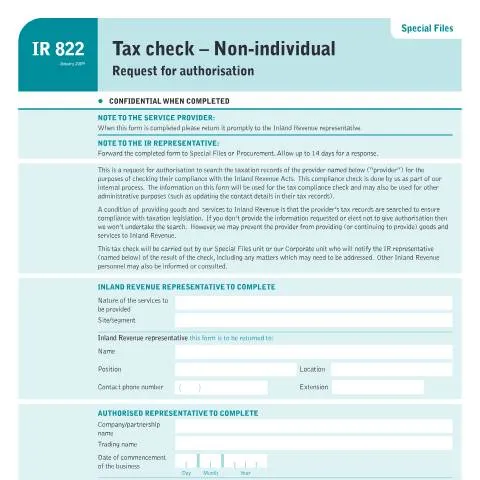
Navigating the IR822: Understanding its Role in Tax Compliance
In the realm of taxation in New Zealand, ensuring compliance is paramount, especially for non-individual entities such as partnerships and companies. The IR822 form, officially dubbed the Tax Check – Non-individual, Request for Authorisation, plays a critical role in this compliance framework. By authorizing the Inland Revenue (IRD) to review tax records, this form safeguards the integrity of the tax system while facilitating transparent operations for businesses that wish to engage with government entities.
Who Needs to Submit the IR822?
The submission of the IR822 is primarily aimed at authorized representatives of non-individual entities. This includes, but is not limited to, companies, partnerships, and trusts that provide goods or services to the IRD. Here’s a detailed look at various scenarios where submission is necessary:
- Companies: Any registered company in New Zealand must complete the IR822 if it wishes to provide services to the IRD.
- Partnerships: Partnerships involved in contracting or providing services to IRD need to submit this form to verify their tax compliance.
- Trusts: Trusts that engage with IRD services also fall under the requirement to submit the IR822.
Moreover, if these entities have had changes in their administrative structure or address, updating their information through this form becomes imperative.
Preparing to Complete the IR822: What You Need
Completing the IR822 effectively requires careful preparation. It’s essential to gather the necessary information and documentation before starting to fill out the form. Here is a checklist of critical information needed:
- Provider Details: You must include the legal name of the provider, trading name, and GST number.
- Contact Information: Provide the complete physical address, phone number, and how long the business has been situated at that location.
- Previous Addresses: If the provider has been at its current address for less than three years, previous addresses need to be included.
- Declaration: The authorized representative must sign and date the declaration, confirming their authority to act on behalf of the provider.
Make sure to double-check all entries for accuracy as errors may lead to delays in processing.
The Submission Channels: Online vs. Paper
When it comes to submitting the IR822, you have options. Understanding the differences can help streamline the process:
| Submission Method | Description | Pros | Cons |
|---|---|---|---|
| Online Submission | Submit the form via the IRD’s online portal with a RealMe digital ID. | Quick processing, instant confirmation | Requires digital ID |
| Paper Submission | Mail the completed form to the address provided on the form. | Accessible for those less tech-savvy | Longer processing times |
Choosing the right method depends on your comfort level with technology and the urgency of your request. Online submissions tend to be processed faster, while paper submissions may require patience.
Timing Is Everything: Submission Deadlines and Processing
Understanding the timing of your submission can greatly impact your compliance status and relationship with the IRD. The IR822 should ideally be completed and submitted as soon as you are aware that your business will be providing services to the IRD. Here’s a timeline to consider:
- Initial Submission: As soon as your business engages in a contract with the IRD.
- Processing Time: Allow for up to 14 days after submission for the IRD to process the request and notify you of the results.
- Follow-Up: If you haven’t received a confirmation within that period, it’s advisable to follow up with the IRD.
This timeline is crucial, especially for businesses that rely on timely payments and contracts with the government.
After Submission: What’s Next?
Once the IR822 is submitted, the IRD will conduct a compliance check on the provider's taxation records. This check is essential to validate the provider's compliance with the Inland Revenue Acts. Here’s what to expect next:
- Results Notification: The authorized representative of the provider will receive communication regarding the results of the compliance check.
- Potential Issues: If there are outstanding tax returns or issues, these will be communicated, and the provider may need to address them.
- Continued Engagement: Only upon successful compliance will the provider be allowed to continue providing goods and services to the IRD.
Understanding this process is essential, as it directly affects the ability of a business to engage with government contracts.
Dealing with Challenges: Errors and Refusals
What happens if your submission is met with refusals or if there are errors in your application? These situations can be stressful, but knowing the steps to take can mitigate complications. Here’s what to do:
- If Refused: If the request is declined, review the reasons provided. It may be due to outstanding tax issues that must be resolved before reapplying.
- Correcting Errors: If you discover an error after submission, contact the IRD as soon as possible to amend the information.
- Additional Documentation: In some cases, the IRD may require additional documents as part of their review. Ensure you submit these promptly.
Always maintain open communication with the IRD to ensure you are aware of any requirements or changes needed to rectify any issues.
Conclusion: The Importance of Compliance for Non-Individual Entities
The IR822 form serves a significant purpose in maintaining compliance within the New Zealand tax system. For non-individual entities, engaging with the IRD requires diligence and a clear understanding of the processes involved. Proper preparation, timely submission, and effective follow-up can ensure a smooth experience. In the end, these steps are crucial for sustaining legal and operational relationships with government bodies, affecting the broader health of your business.
Understanding Non-Individual Tax Checks
When it comes to non-individual entities, such as companies, trusts, and partnerships, the tax obligations can be intricate. Non-individual tax checks ensure that these entities comply with the New Zealand tax laws and regulations as outlined by the Inland Revenue Department (IRD). For instance, non-individuals need to consider various tax types, including corporate tax, Goods and Services Tax (GST), and withholding tax. Understanding these distinct tax responsibilities is crucial for maintaining compliance and avoiding penalties.
Entities must be registered with the IRD to facilitate their tax obligations. If you're managing a non-individual entity, ensure you have your IRD number at hand. For companies, their Income Tax Return must be submitted annually, while trusts have specific requirements regarding income distribution to beneficiaries. Ensuring accurate and timely submissions can prevent unnecessary audits and tax liabilities.
Non-individual entities may also be subject to different tax rates compared to individual taxpayers. For instance, the corporate tax rate in New Zealand is currently set at 28%, which differs significantly from personal income tax rates. Understanding these differences is vital for financial planning and operational decisions.
Requesting Authorisation for Non-Individual Tax Matters
When it comes to non-individual tax matters, requesting authorisation can be a key step in ensuring compliance and smooth operations. Authorisation may be needed for various reasons, such as appointing a tax agent, accessing tax information, or managing tax affairs on behalf of the entity. The process typically involves the completion of specific forms and can be facilitated through the IRD’s online services.
For example, if you're an accountant or tax advisor working on behalf of a company, you may need to fill out the appropriate forms to gain consent from the entity you represent. This often involves the completion of a form known as the IRD 253, which allows the IRD to share tax information with the appointed tax agent. Understanding the nuances of this process is vital—keeping in mind that the entity must provide explicit consent before any information can be shared.
In addition to the forms, it's crucial to be aware of the timeline and any potential issues that might arise during the authorisation process. Typically, once the request is submitted, it can take a few days for the IRD to process it. However, factors such as incomplete information or discrepancies can lead to delays. As such, it’s advisable to ensure all necessary documentation is in order before submission.
Common Tax Compliance Challenges for Non-Individuals
Non-individual entities face a unique set of challenges when it comes to tax compliance. One of the most prevalent issues stems from misunderstanding the various tax regulations applicable to different types of entities. For example, partnerships are often mistaken for sole traders, which can result in incorrect tax filings. Each entity type has specific legal obligations, and being misinformed can lead to substantial penalties.
Another common challenge is the management of GST, particularly for businesses registered for this tax. Ensuring accurate record-keeping and timely filing is essential. Many businesses underestimate the complexity of GST compliance, which can range from correctly charging GST on sales to managing input tax deductions. Regular training for staff, or consultation with tax professionals, can mitigate these risks.
Moreover, changes in tax legislation can create additional challenges. Entities must stay updated on any modifications in tax laws that may impact their obligations. Engaging with tax advisors who are knowledgeable about the latest legislative updates can provide invaluable support in navigating these complexities.
In conclusion, while non-individuals in New Zealand have specific tax obligations, understanding these responsibilities and proactively addressing compliance challenges can lead to more efficient tax management and a reduction in potential liabilities.