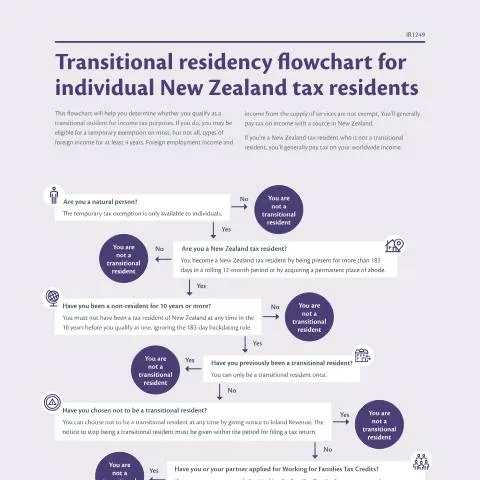
Navigating the Transitional Residency Flowchart: Understanding Your Tax Obligations in New Zealand
When you find yourself moving to New Zealand, the excitement of starting anew can often be overshadowed by the complexities of tax obligations. One crucial aspect for many newcomers involves understanding whether you qualify as a transitional resident. The IR1249 Transitional Residency Flowchart serves as a vital tool in this process, guiding you through the necessary steps to determine your eligibility for a temporary tax exemption. This exemption can significantly impact your foreign income tax responsibilities for up to four years.
Understanding Transitional Residency: Key Considerations
Before diving into the specifics of the IR1249 flowchart, it's essential to grasp what transitional residency entails. This status is exclusive to individuals who meet certain criteria, allowing them to enjoy temporary exemptions on most foreign income types. However, it's important to note that income derived from employment outside New Zealand and income earned from the supply of services do not qualify for this exemption.
Are You a Natural Person?
Eligibility for transitional residency begins with a fundamental question: are you a natural person? This status is exclusively available to individuals, meaning corporations and other legal entities cannot claim the exemption. If you respond negatively to this initial query, you are automatically ineligible for transitional residency.
Your Residency Status
Next, the flowchart prompts you to determine if you are a New Zealand tax resident. According to New Zealand law, you become a tax resident if:
- You are physically present in New Zealand for more than 183 days within a rolling 12-month period.
- You have established a permanent place of abode in New Zealand.
If you do not meet these criteria, you cannot qualify as a transitional resident.
Assessing Your Non-Resident History
If you are a tax resident of New Zealand, the subsequent question examines your past residency status. To qualify as a transitional resident, you must not have been a tax resident in New Zealand for the ten years preceding your current residency. This stipulation excludes you from the transitional residency flow if you have been a tax resident during this period, regardless of the 183-day rule.
The Unique Nature of Transitional Residency: Clarifying Misconceptions
Understanding transitional residency is vital, especially when differentiating it from other residency statuses. Many individuals mistakenly conflate transitional residency with permanent residency or other visa types. It's critical to recognize that:
- Transitional residency provides specific tax benefits that are not available to permanent residents.
- The transitional residency exemption applies for a maximum of four years, after which regular tax obligations resume.
Completing the Flowchart: Step-by-Step Guidance
The IR1249 flowchart requires careful navigation to avoid pitfalls. Here’s a breakdown of the steps involved:
1. Determining Your Status as a New Zealand Tax Resident
Begin by affirming your identity as a natural person. If you are indeed a natural person and a New Zealand tax resident, proceed to the next question. If you are not, the flowchart informs you that you are not a transitional resident.
2. Evaluating Your Non-Resident History
If you qualify as a New Zealand tax resident, it’s time to assess your history. If you have been a non-resident for ten years or more, you may qualify as a transitional resident. If not, you will not qualify.
3. Previous Transitional Residency Status
Have you previously been a transitional resident? This status can be claimed only once. If you hold a previous status, you will be deemed ineligible for transitional residency once more.
4. Choosing Not to be a Transitional Resident
Understanding the flexibility within transitional residency is crucial. You have the option to choose not to be a transitional resident at any time, but this decision must be communicated to Inland Revenue (IRD) within the timeframe designated for filing a tax return.
What Happens After You Submit the Flowchart?
Once you have navigated through the flowchart and confirmed your transitional residency status, the next step involves official notifications and potential tax implications. The transitional residency period begins on the first day of your residency and lasts for up to 48 months, expiring on the earliest of the following:
- The day you choose to cease being a transitional resident.
- The day before you stop being a New Zealand resident.
- 48 months after the month in which you became a resident.
Understanding these timeframes is critical for effective tax planning and compliance.
Completing the IR1249 Flowchart: A Practical Guide
Completing the flowchart can be daunting, but by breaking it down into manageable sections, you can avoid common pitfalls.
Common Confusions: Clarifying Rubrics
The flowchart features various rubrics that might cause confusion. For instance, the question about your previous residents may lead you to misinterpret the timelines involved. Remember, the focus should strictly be on the ten years preceding your current residency.
Documentation and Supporting Evidence
While the flowchart itself does not require document submission, it's advisable to keep thorough records of your residency history and any previous tax statuses. Should your circumstances change, such documentation will support your claims and decisions regarding your residency status.
Submitting Your Flowchart: Channels and Procedures
When it comes to submitting your flowchart results, IRD offers various channels. You can achieve this through:
- Online Submission: By using the IRD online services where you can safely upload your documents.
- Paper Submission: If you prefer traditional methods, you can send your completed form via post to IRD’s office.
- In-Person Submission: Although less common, visiting an IRD office may facilitate immediate clarifications.
Each method has its own timelines and processing durations, so choosing the right channel for your needs is essential.
Following Up on Your Residency Status
After submission, keep an eye on your application. If you do not receive confirmation of your status within a reasonable timeframe, it’s entirely appropriate to follow up with the IRD to ensure your application is being processed.
Challenges and Solutions: Dealing with Errors or Missing Information
Issues may arise during the completion or submission of the flowchart. Here are some common challenges and how to address them:
Missing Information
If you realize that you omitted crucial information post-submission, reach out to IRD as soon as possible. Provide detailed explanations about the missing data, as this can aid in expediting the review process.
Application Rejection
In the unfortunate event of an application rejection, understanding the reason for the decision is crucial. IRD typically provides feedback that can help you adjust your application for resubmission. Be diligent in reviewing their comments and adapting your subsequent claims.
A Comprehensive Resource for Transitional Residency
The IR1249 Transitional Residency Flowchart isn't merely a tool; it is your gateway to understanding your financial responsibilities in New Zealand. The format is designed to be user-friendly, guiding you through complex decisions while highlighting your rights and obligations.
By leveraging this flowchart, you can navigate the intricacies of New Zealand's tax system with greater confidence. Ensure you refer to the official IRD website for the most current and accurate information regarding transitional residency and associated tax conditions.
In conclusion, as you embark on your journey in New Zealand, remember that understanding your tax residency status is crucial for a smooth transition. The IR1249 flowchart will help you make informed decisions and maintain compliance with New Zealand tax laws.
Understanding the Transitional Residency Flowchart
The Transitional Residency Flowchart is a pivotal tool for navigating the complexities of residency in New Zealand. It is particularly significant for individuals who are transitioning from a temporary visa status to a more permanent residency classification. This flowchart outlines the various pathways and requirements, ensuring that applicants clearly understand each step in the process. It is essential to note that each path may have unique eligibility criteria that applicants must meet.
One of the key aspects of the flowchart is its visual representation of the various routes to residency, making it easier for applicants to identify their suitable pathway. Understanding this flowchart not only aids in the preparation of necessary documentation but also prepares applicants for potential pitfalls and timelines associated with each option. It is advisable to carefully review the flowchart before applying to ensure a smooth transition and avoid unnecessary delays.
Common Pitfalls When Following the Transitional Residency Flowchart
While the Transitional Residency Flowchart serves as a helpful guide, applicants often encounter common pitfalls during their residency journey. Awareness of these challenges can significantly enhance one's chances of a successful application. Here are some of the frequent issues faced:
- Documentation Errors: One of the most common issues is the submission of incomplete or inaccurate documentation. Applicants should ensure that they have all the required documents, including proof of identity, tax compliance, and, if applicable, employment verification. Missing even one document can delay the application process.
- Misunderstanding Eligibility Criteria: Each pathway has specific eligibility criteria. Applicants often misinterpret the requirements or fail to recognize when they are ineligible for a certain pathway. It is essential to thoroughly research and understand the criteria outlined in the flowchart.
- Ignoring Application Timelines: Understanding the timelines associated with each transition is crucial. Some pathways require a minimum period of residency or work experience in New Zealand before applying. Missing these deadlines can result in applications being rejected or delayed.
By being cognizant of these pitfalls, applicants can better prepare themselves and approach the residency application process with greater confidence.
Resources for Navigating the Transitional Residency Process
To successfully navigate the Transitional Residency Flowchart and the overall residency application process, applicants are encouraged to utilize various available resources. These tools can provide valuable insights and guidance throughout their residency journey:
- Official INZ Website: The Immigration New Zealand (INZ) website is the best source for official information regarding residency options. It includes detailed guides, the latest updates on immigration policy changes, and specific instructions for filling out forms.
- RealMe Digital ID: Creating a RealMe digital identity simplifies the process of applying for residency and other government services. This digital ID allows applicants to access multiple services with a single login, streamlining the application process.
- Community Support Groups: Engaging with community support groups can provide emotional support and practical advice from others who have navigated the residency process. Online forums and local meet-ups can be excellent resources for sharing experiences and tips.
- Consulting Immigration Advisors: For those who prefer personalized assistance, consulting with a licensed immigration advisor can provide tailored advice based on individual circumstances. Advisors can help applicants understand the flowchart and ensure all application requirements are met.
Utilizing these resources not only enhances applicants' understanding of the residency process but also equips them with the knowledge necessary to avoid common mistakes and streamline their journey to residency in New Zealand.