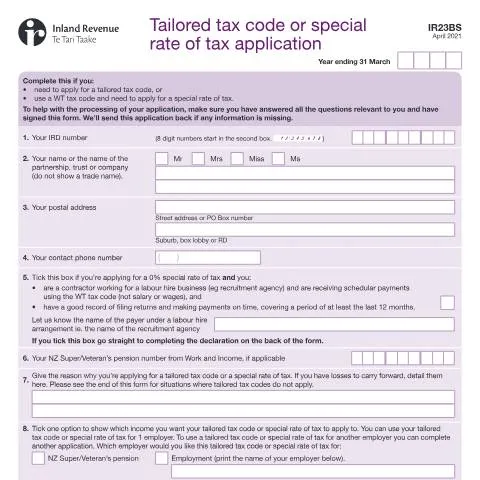
Navigating the IR23BS Form: Your Guide to Tailored Tax Codes and Special Rates
In New Zealand, understanding the nuances of tax obligations can be daunting, particularly for those whose income streams vary or who operate outside the traditional employment framework. Form IR23BS, the application for a tailored tax code or special rate of tax, plays a critical role for contractors and self-employed individuals seeking to optimise their tax deductions. This guide will elucidate its significance, the demographics it serves, and the detailed steps involved in completing and submitting this essential form.
The Historical Context of Tax Codes in New Zealand
Tax codes in New Zealand have evolved considerably, shaped by changing economic landscapes and government policies. The introduction of tailored tax codes arose to accommodate the unique financial situations of contractors and those earning schedular payments, which are not subject to the standard PAYE (Pay As You Earn) system. The aim is to ensure that individuals pay the correct amount of tax throughout the year rather than facing unexpectedly high tax bills during assessments.
Legislative Framework
The Income Tax Act 2007 establishes the foundation for tax codes, while provisions in the Tax Administration Act provide the framework for applications like the IR23BS. This legal backdrop is vital for taxpayers to understand their rights and obligations, especially concerning tailored tax codes.
Understanding the Purpose of IR23BS
Form IR23BS is primarily designed for those needing to apply for a tailored tax code or a special rate of tax. This could include:
- Contractors working under a labour hire arrangement.
- Individuals receiving schedular payments with a Work and Income tax (WT) code.
- Taxpayers with fluctuating incomes who need to adjust their tax deductions.
By securing a tailored tax code, applicants can ensure that their tax deductions align more closely with their actual income, thus avoiding potential financial strain during tax season.
Essential Information Required for Completing the Form
Preparation is key when completing Form IR23BS. Having the right information at hand will streamline the process and enhance the accuracy of your application. Here’s what you need to gather:
- IRD Number: This is an 8-digit number issued by Inland Revenue, essential for identifying your tax records.
- Name of the Applicant: Ensure you provide your full legal name or the name of your partnership, trust, or company.
- Contact Information: A valid postal address and phone number must be included for any follow-up communications.
- Income Estimates: You will need to provide estimates of all income expected from 1 April to 31 March for the relevant tax year.
- Specific Conditions: If applying for a 0% special rate of tax, certain conditions must be met, including a good record of timely tax filings.
Completing the form accurately is vital, as any missing information can lead to delays or a rejection of your application.
The Application Process: Step-by-Step
Once you have gathered the necessary information, the application process can begin. Here’s a detailed look at each step:
- Fill Out the Form: Complete all sections of the IR23BS form, ensuring you answer all relevant questions. Missing information will result in the form being returned.
- Estimate Your Income: Provide realistic estimates for all income, including employment and any schedular payments.
- Sign the Declaration: Make sure to sign and date the declaration on the form, affirming the accuracy of the information provided.
- Submit Your Application: You can either complete your application through myIR or send the completed form to Inland Revenue at the designated postal address.
Timeliness is critical; keep in mind that applications should ideally be made well in advance of the new tax year to minimise any potential issues.
The Implications of Tailored Tax Codes
Securing a tailored tax code is not merely a formality; it has substantial implications for your financial situation. Here are several aspects to consider:
- Tax Deductions: A tailored tax code allows for more accurate deductions, which can prevent overpayment and unnecessary financial burden.
- Financial Stability: With accurate tax deductions in place, individuals can better manage their cash flow throughout the year without the stress of a large tax bill.
- Compliance: By applying for a tailored tax code, taxpayers also ensure compliance with New Zealand tax law, reducing the risk of penalties.
Who Should Consider Applying for IR23BS?
This application is particularly relevant for various groups within the working population:
- Contractors: Those engaged in contractual work are often subject to varying income levels. A tailored tax code helps balance out tax liabilities.
- Self-Employed Individuals: Those running their own businesses can benefit from a tailored tax code that reflects their income variability.
- Freelancers: Freelancers often experience fluctuating income, making this application an invaluable tool for financial planning.
It's essential to evaluate your financial circumstances to determine if applying for a tailored tax code will be beneficial.
Common Scenarios and Exceptions
While Form IR23BS is designed to accommodate a wide range of scenarios, there are specific conditions and exceptions that applicants should be aware of:
- Losses Carried Forward: If you have losses to carry forward, it's crucial to detail them in your application, as they may affect your tax obligations.
- Student Loan Repayments: Tailored tax codes do not apply to student loan repayments, a vital consideration for students and graduates.
- Residential Rental Losses: Recent tax law changes have ring-fenced residential rental losses, which means they cannot be offset against other income streams.
Evaluating Your Financial Situation
Before proceeding with Form IR23BS, carefully assess your financial profile to identify any specific circumstances that could impact your application. This involves considering income sources such as:
- Gross salary and wages.
- Commission or schedular payments.
- Interest and dividends.
- Any income from overseas pensions.
Conclusion: Maximising Your Tax Efficiency
In a landscape where financial obligations can often feel overwhelming, utilising Form IR23BS provides an opportunity for taxpayers in New Zealand to optimise their tax situation. By understanding the importance of tailored tax codes and following the outlined steps for application, individuals can position themselves for greater financial clarity and stability.
Should you have questions regarding specific scenarios or need further clarification, consulting with a tax professional or contacting Inland Revenue directly can provide valuable insights tailored to your individual circumstances.
Understanding Tailored Tax Codes in New Zealand
In New Zealand, the tailored tax code system allows individuals to apply for a tax code that reflects their unique financial circumstances. This is particularly useful for those who have complex income sources or are in specific situations that may not be adequately covered by default tax rates. Tailored tax codes help ensure that the correct amount of tax is deducted from your income, minimizing the risk of underpayment or overpayment.
To apply for a tailored tax code, you will need to complete the IRD's New Tax Code Declaration (IR330) form. It is crucial to provide accurate information about your income, including any additional sources such as rental income, investments, or income from overseas. Be prepared to discuss your expected income for the fiscal year, as this will help the IRD assign a tax code that reflects your anticipated earnings.
Factors that may lead to the issuance of a tailored tax code include:
- Multiple income sources: If you have more than one job or receive income from various sources, a tailored tax code can help ensure each source is taxed appropriately.
- Seasonal work: Those employed in seasonal industries may benefit from a tax code that reflects anticipated fluctuations in income over the year.
- Significant one-time income: If you anticipate receiving a large bonus or inheritance, you might consider applying for a tailored tax code to avoid a higher tax rate being applied to your regular income.
Applying for a Special Rate of Tax
In certain situations, you may be eligible to apply for a special rate of tax, which allows for a different taxation level than standard rates. This can be beneficial for those in unique situations such as temporary work arrangements, special exemptions, or specific tax relief scenarios.
The process for applying for a special rate of tax generally involves the following steps:
- Consult the IRD Guidelines: Before proceeding, check the IRD website for detailed information on eligibility for a special rate of tax, including any specific conditions that apply to your situation.
- Complete an Application Form: Use the appropriate forms, such as the IR330 or others specified by the IRD, to formally request a special rate of tax. Ensure to provide all necessary documentation that supports your application, such as contracts, letters from employers, or financial statements.
- Submit Your Application: Once completed, submit your application online through the IRD’s secure portal or by post if required. It is advisable to keep copies of all submitted documents for your records.
- Await a Response: After submission, the IRD will review your application and notify you of their decision regarding your special tax rate. Be aware that processing times may vary, and the IRD may contact you for further information.
It is also important to be aware that failing to apply for a special rate of tax when you qualify may result in your income being taxed at a higher rate than necessary, leading to overpayment. If you believe you are eligible, taking the time to apply can lead to significant financial benefits.
Consequences of Incorrect Tax Code Applications
Applying for a tailored tax code or special rate of tax comes with responsibilities. If you provide inaccurate information during your application, it may lead to underpayment or overpayment of taxes. Underpayment can result in penalties and interest owed to the IRD, while overpayment means you might have to wait for a tax refund, which could take several weeks or months, depending on processing times.
Furthermore, if your circumstances change (for instance, if you start or stop a second job, or if your income increases significantly), you must inform the IRD promptly. Failing to do so may necessitate back taxes, which can be a significant financial burden. To minimize potential issues, consider the following practices:
- Regularly Review Your Tax Code: Set aside time every few months to review your earnings and tax code to ensure it still reflects your current situation.
- Consult with Tax Professionals: If you are uncertain about your tax code or if you have a complex financial situation, seeking advice from a financial advisor or tax professional can provide clarity and ensure compliance.
- Utilize Online Resources: The IRD provides a wealth of information on their website, including tools to help calculate your ideal tax code based on your personal situation.