Navigating the AD 280 Submission: A Crucial Step for Sellers in the Sharing Economy
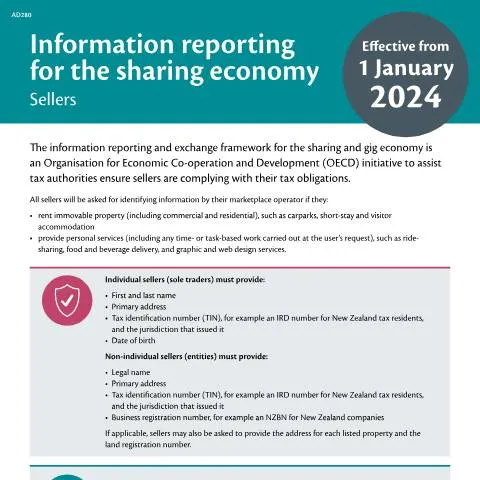
In the dynamic landscape of New Zealand's sharing economy, the compliance requirements for sellers are becoming increasingly vital. The AD 280 2023 form, specifically designed for online marketplace operators, marks the transition into a more structured reporting environment that aids both sellers and tax authorities. As of January 1, 2024, sellers involved in activities ranging from renting out properties to providing personal services must understand the importance of this document.
Understanding the nuances of the AD 280 submission can be the difference between seamless compliance and unnecessary penalties. This article delves into the intricacies of the AD 280 form, providing a comprehensive guide tailored for a variety of scenarios that sellers may encounter.
The AD 280 form plays a pivotal role in the ongoing efforts to enhance tax compliance within New Zealand's sharing economy. Specifically, this document facilitates the annual reporting of seller information by online marketplace operators to the Inland Revenue Department (IRD).
When sellers operate on platforms that facilitate transactions—be it accommodation rentals or personal service provision—they are required to furnish their marketplace operators with specific identifying information. This ensures that tax authorities can maintain an accurate record of economic activities and enforce tax compliance effectively.
Who Is Required to Complete the AD 280 Form?
The scope of the AD 280 form encompasses a broad range of sellers. It is essential to categorize them correctly to ensure compliance.
- Individual Sellers (Sole Traders): This includes individuals renting out properties or providing services on an ad-hoc basis.
- Non-Individual Sellers (Entities): Corporations or other legal entities that engage in sharing economy activities.
Key Information Required from Sellers
Both individual and non-individual sellers must provide crucial data, ensuring that the IRD has pertinent information for tax assessment.
| Seller Type |
Information Required |
| Individual Sellers |
- First and last name
- Primary address
- Tax identification number (TIN)
- Date of birth
|
| Non-Individual Sellers |
- Legal name
- Primary address
- Tax identification number (TIN)
- Business registration number
|
Preparing for the AD 280 Submission: Documentation and Readiness
Before diving into the submission process, sellers should ensure they are fully prepared. Collecting the necessary documentation can save time and reduce the likelihood of errors that could complicate the submission process.
Gathering Required Documents
When preparing to fill out the AD 280 form, consider the following documentation checklist based on the seller type:
- For Individual Sellers:
- Proof of identity (e.g., passport or driver's license)
- Current utility bill or bank statement showing primary address
- IRD number and any other relevant tax identification numbers
- For Non-Individual Sellers:
- Legal business registration documents
- Details of business ownership structure
- Primary address of business
Sellers have options when it comes to submitting their AD 280 form. Understanding the differences between these channels is crucial for timely and accurate reporting.
Online Submission
The preferred method for submitting the AD 280 form is via online channels. This method offers several advantages:
- Speed: Submissions are processed more quickly online than by paper.
- Accessibility: Sellers can submit their information at any time, from anywhere in New Zealand.
- Easier Tracking: Online submissions allow for immediate confirmation of receipt, providing peace of mind.
To submit online, sellers will need to create a RealMe digital ID, which serves as a secure authentication method to access government services.
Paper Submission
For those who prefer traditional methods, the paper submission route is still available. This process may take longer as it involves mailing the form to the appropriate department.
- Prepare the AD 280 Form: Ensure all information is accurate and complete.
- Mailing: Send the completed form to the designated IRD address, which can be found on the official government website.
Once the submission is made, sellers often wonder what the next steps are and how they can monitor their compliance.
Monitoring the Status of Your Submission
Sellers can track their submissions through the IRD's website. Typically, sellers will receive confirmation of their filing, and in some cases, additional information may be requested if the form is incomplete or unclear.
Potential Outcomes Following Submission
After submission, there are a few possible outcomes:
- Acceptance: The submission is processed without issues, and sellers are informed of their compliance status.
- Request for Additional Information: If the IRD requires further details, sellers must respond promptly to avoid penalties.
- Penalties for Non-compliance: If the AD 280 form is not submitted as required, sellers may face fines or additional scrutiny.
Navigating the complexities of the AD 280 form can lead to errors or omissions. Understanding how to rectify such situations is essential for maintaining compliance with tax regulations.
Handling Submission Errors
If a mistake is made on the AD 280 form after submission, sellers should take immediate action:
- Identify the Error: Review the submitted form to understand what needs correction.
- Contact IRD: Reach out to the IRD via their official channels to report the error and seek guidance.
- Submit Corrections: Follow the IRD's instructions for submitting corrections or amendments.
Missing Information: Next Steps
In cases where sellers find themselves needing to provide additional information post-submission, the following steps should be undertaken:
- Prompt Response: Respond to any IRD requests for missing information as quickly as possible.
- Document Everything: Keep track of all communications with the IRD to ensure clarity.
- Follow Up: If you haven't received a response within a reasonable timeframe, follow up on the status of your submission.
Complex Scenarios: Special Cases for Sellers
Certain sellers may find themselves in unique situations that require special consideration when completing the AD 280 form.
Non-Residents and Foreign Sellers
For sellers who are not tax residents in New Zealand, understanding their obligations can be complex. These sellers should consult the IRD's guidelines regarding tax identification numbers and their specific reporting requirements.
Minors Engaging in the Sharing Economy
Minors wishing to operate within the sharing economy must navigate additional regulations. Typically, a parent or guardian must provide consent and may need to complete the AD 280 form on the minor's behalf.
Urgent Submissions
If a seller finds themselves in urgent need to submit the AD 280 form, they may contact the IRD for advice on expedited processing. However, it's crucial to note that the ability to expedite may depend on specific circumstances.
The Bigger Picture: AD 280 in the Tax Compliance Framework
The AD 280 form is not an isolated requirement but rather part of a broader framework established to ensure tax compliance within the sharing economy.
Linking to Other Tax Obligations
Sellers must understand that completing the AD 280 form is part of their overall tax responsibilities. It contributes to the IRD's ability to track income and enforce tax laws effectively.
Cross-Border Information Exchange
As part of the OECD initiative, the information provided in the AD 280 form may be subject to international exchange between tax authorities. This means that sellers operating in multiple jurisdictions should be aware of their reporting obligations in each country.
As the sharing economy continues to evolve, remaining informed of compliance requirements is paramount for sellers. The AD 280 form is a critical aspect of this process, and understanding its implications can aid in smooth interactions with the IRD.
For sellers, keeping abreast of any changes in reporting requirements or tax obligations is vital. Regularly checking the IRD's website or subscribing to updates can help sellers stay compliant and avoid penalties.
In a rapidly changing economic landscape, proactive engagement with tax requirements will empower sellers to thrive in New Zealand's vibrant sharing economy.
Understanding AD 280 2023: Implications for Residents and Businesses
AD 280 2023 is an important piece of legislation in New Zealand that aims to address various socio-economic challenges faced by residents and businesses. One of the primary objectives of this Act is to enhance support for low-income households while simultaneously promoting a sustainable economic environment. In this section, we will explore the nuances of the legislation and its implications for different stakeholders, including residents, small business owners, and government agencies.
One of the key provisions introduced by AD 280 2023 is the adjustment of tax credits for low-income families. The IRD (Inland Revenue Department) has been tasked with reassessing income thresholds to ensure that assistance reaches those who need it most. The changes will be phased in over the next fiscal year, and families will need to apply through the usual tax credit channels. This adjustment is expected to alleviate some financial pressure on households, particularly in light of rising living costs.
The legislation also includes incentives for small businesses that demonstrate a commitment to sustainability. These incentives may take the form of tax breaks, grants, or reduced compliance costs, all managed by the MBIE (Ministry of Business, Innovation and Employment). For business owners, it is essential to stay informed about the criteria for these incentives, as they can vary greatly based on industry practices and the size of the company.
Additionally, the Act envisions a more streamlined process for accessing government services online. This is where the RealMe digital ID will play a crucial role. Residents will find that many applications and services, whether related to tax credits, business licenses, or identity verification, can now be handled through a single digital platform. This not only improves efficiency but also enhances user experience by simplifying the navigation of governmental services.
Furthermore, businesses that participate in the sharing economy will find new guidelines established under AD 280 2023. The DIA (Department of Internal Affairs) is keen to regulate these sectors more effectively to ensure compliance while fostering innovation. Small business owners should familiarize themselves with these new rules to avoid potential penalties, as the government aims to ensure that all income generated through the sharing economy is appropriately reported to the IRD.
Challenges and Opportunities Under AD 280 2023
While AD 280 2023 opens the door to various benefits, it also presents challenges that both residents and businesses must navigate. Understanding the practical implications of the legislation is crucial for making the most of its opportunities while mitigating potential pitfalls.
One significant challenge lies in the compliance requirements associated with the new tax credits and incentives. For instance, families looking to benefit from enhanced tax relief will need to maintain accurate financial records and submit necessary documentation to the IRD. This may be daunting for some individuals, especially if they are not accustomed to managing their tax affairs. To ease this transition, it is advisable for residents to consult with tax professionals or use resources provided by the IRD to ensure full compliance.
On the business front, while the incentives for sustainability are promising, they come with their own set of challenges. Small businesses may need to invest upfront in sustainable practices or technologies to qualify for tax breaks. This could be a barrier for some, particularly those operating on tight margins. However, businesses that adapt early and embrace sustainability may not only benefit from tax incentives but also attract a growing number of environmentally conscious consumers.
Another opportunity lies in the promotion of digital literacy among residents and businesses. With the shift towards online services facilitated by RealMe digital ID, there is a pressing need for educational programs to help individuals and business owners adapt to these changes. Local community centers, libraries, and educational institutions can play a pivotal role in providing resources and training to enhance digital skills, ensuring that everyone can access the benefits of the new legislation seamlessly.
Future Outlook: Monitoring and Evaluation of AD 280 2023
AD 280 2023 is not a static piece of legislation; it is designed to evolve based on ongoing monitoring and feedback from its implementation. The government has set up frameworks for evaluating the effectiveness of the law, which will include regular reviews and adjustments as necessary to meet the changing needs of New Zealand's populace.
The IRD will be responsible for collecting data on the uptake of tax credits and incentives, which will help gauge the legislation's impact on low-income families and small businesses. This data will be invaluable in identifying trends and areas that require further support or adjustments, ensuring that the legislation remains responsive and effective.
Furthermore, the MBIE plans to conduct periodic consultations with stakeholders, including community organizations, business leaders, and residents, to gather insights that can inform future amendments to the law. This participatory approach encourages transparency and accountability and fosters a sense of shared ownership of the legislative process among New Zealanders.
For residents and businesses, staying informed about ongoing evaluations and potential future changes is crucial. Signing up for newsletters from the IRD, MBIE, and DIA can provide valuable updates on how AD 280 2023 is evolving and what new opportunities or challenges may arise as the legislative landscape shifts.
In conclusion, AD 280 2023 has the potential to create meaningful change in New Zealand, but it requires active engagement from all sectors of society to fulfill its promise. By understanding the implications, navigating the challenges, and seizing the opportunities presented, residents and businesses can contribute to a more equitable and sustainable future for all.