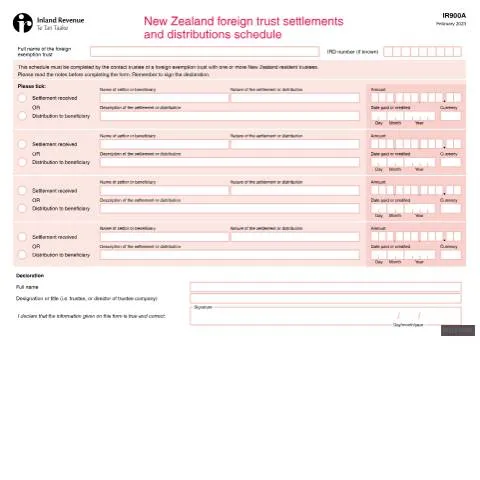
Navigating the New Zealand Foreign Trust Settlements and Distributions Schedule (IR900A)
When dealing with foreign trusts in New Zealand, one of the essential forms you will encounter is the New Zealand Foreign Trust Settlements and Distributions Schedule (IR900A). This document is crucial for both compliance and effective trust management. Let’s delve into its components, the responsibilities it entails, and how to handle your obligations efficiently.
Understanding the Context: When and Why is IR900A Required?
The IR900A form is a schedule that must be completed by the contact trustee of a foreign exemption trust that includes one or more resident trustees from New Zealand. The requirement for this schedule arises during the trust's registration and as part of the annual return process. Accurate completion of this form is vital for:
- Ensuring compliance with New Zealand tax regulations.
- Providing necessary details regarding trust settlements and distributions.
- Updating the Inland Revenue Department (IRD) on relevant transactions.
Failure to comply with these requirements could lead to penalties, making it necessary for trustees to be diligent and informed.
Who Takes the Lead? Identifying the Contact Trustee
The term contact trustee refers to the individual or entity responsible for submitting the IR900A. This trustee typically plays a critical role in the trust’s administration, especially if they are a resident of New Zealand. Their responsibilities include providing annual updates concerning any settlements or distributions made from the trust.
After the appointment of a resident trustee, it is essential for them to compile historical data regarding settlements, especially if all trustees are natural persons and not professional trustees. A proper understanding of who takes charge can be the difference between a smooth operation and compliance issues.
Breaking It Down: Detailed Completion of the IR900A
Completing the IR900A involves several steps that require carefully gathering information and ensuring accuracy. Here’s a structured approach to filling out this schedule:
1. Gathering Basic Information
Start with the fundamental details:
- Trust Name: The official name of the foreign trust.
- IRD Number: Include the IRD number if known.
2. Settlements and Distributions
For each settlement or distribution, you’ll need to document:
- Name of Settlor or Beneficiary: Ensure to properly identify the individual or entity involved.
- Nature of Settlement or Distribution: Specify what it entails (e.g., cash, property).
- Amount: Clearly state the dollar value of the transaction.
- Description: Provide additional details, including currency and date of payment or credit.
It’s essential to ensure that all entries are complete, as incomplete forms may be subject to delays or penalties.
Chronological Workflow: From Trigger to Submission
Understanding the timeline from when a transaction is triggered to its eventual submission is essential for compliance with New Zealand law:
- Trigger Event: This could be a distribution made to a beneficiary or a settlement into the trust.
- Document the Details: As soon as a transaction occurs, record the necessary information immediately.
- Complete the IR900A: Ensure all required fields are filled accurately.
- Sign and Date: The contact trustee must sign the declaration indicating that the information is true.
- Submission: File the completed IR900A either online, via email, or by post to the IRD.
Keeping a checklist of these steps can help in managing the submission process smoothly.
Special Cases: Complex Situations Requiring Extra Attention
In some instances, you may encounter special cases that require additional attention when filling out the IR900A:
Foreign Settlor or Beneficiary
If the settlor or beneficiary resides outside New Zealand, you need to be particularly careful about documenting their details and ensuring compliance with both New Zealand and international tax regulations.
Child Beneficiaries
When dealing with trusts involving minors, it is critical to document who is acting on behalf of the minor beneficiary. This person must be a legal guardian or someone with the authority to manage the child’s financial interests.
Professional Trustees
If any trustees are professional entities, they are obliged to disclose all historical settlements since the trust's establishment, which can complicate record-keeping. Ensure to track these settlements diligently.
Can I Submit it Online? Exploring Submission Methods
The IR900A can be submitted using various methods, each with its own advantages:
| Method | Description |
|---|---|
| Online via myIR | Completing and submitting the form through the IRD’s digital platform provides instant confirmation. |
| Email Submission | Forms can be sent to [email protected] for processing. |
| Postal Submission | Forms can be mailed to IRD, PO Box 2198, Wellington 6140. Ensure to send it via a reliable mail service. |
Selecting the right method depends on your preferences for speed, security, and documentation.
Keeping Your Records Straight: The Importance of Diligence
To maintain compliance, it’s vital to keep accurate and detailed records of all settlements and distributions. This includes:
- Ensuring all transactions are documented in real-time.
- Maintaining records for at least four years prior to the appointment of the New Zealand resident trustee if all trustees are natural persons.
- Updating the IRD about any changes within 30 days, especially if they pertain to contact trustee details.
By staying organized and proactive, you can avoid many common pitfalls associated with trust management.
Final Thoughts: The Path to Compliance
Submitting the IR900A is a critical component of managing a foreign trust in New Zealand. Understanding your obligations as a contact trustee, accurately completing and submitting the form, and maintaining thorough records are all integral to ensuring compliance with New Zealand tax obligations. If you find yourself unsure at any step, consulting with a tax professional familiar with New Zealand's foreign trust regulations can provide valuable guidance.
Understanding the Tax Implications of Foreign Trust Fund Distributions
When managing a foreign trust in New Zealand, it's crucial to grasp the tax implications associated with distributions. The New Zealand tax system requires foreign trusts to declare certain income, and beneficiaries may also face tax responsibilities depending on the nature of the income they receive. One of the primary considerations is whether the distributions qualify as assessable income under the Income Tax Act 2007. Generally, income distributed from a foreign trust to a beneficiary who is a New Zealand tax resident may be taxed, although there are exceptions. For instance, distributions that are capital in nature may not be subject to income tax.
It's essential for beneficiaries to maintain accurate records of the nature of their distributions, as well as any expenses incurred in connection with those distributions. The IRD encourages transparency and diligence when it comes to reporting. The documentation required may include detailed accounts of the trust's income, the specific distributions made, and any relevant agreements that outline the distribution terms. Failure to disclose these can lead to penalties or further scrutiny by the IRD.
Moreover, if a beneficiary receives a distribution that has been subject to foreign tax, they may be able to claim a foreign tax credit in New Zealand, thereby offsetting some of their New Zealand tax obligations. This aspect emphasizes the importance of understanding foreign tax treaties and collaboration agreements that New Zealand has with other countries, which can provide beneficial tax treatments under specific circumstances.
Practical Steps for Establishing a Foreign Trust in New Zealand
Setting up a foreign trust in New Zealand involves several practical steps, each requiring careful consideration and compliance with local regulations. The first critical step is appointing a trustee. This individual or entity is responsible for managing the trust's assets according to the trust deed. A professional trustee, such as a trust company, is often recommended due to their expertise in navigating the legal landscape of trust management.
Next, you must draft a trust deed, which is a legal document outlining the terms and conditions of the trust, including the rights and responsibilities of the trustee and the beneficiaries. The deed should clearly define the nature of the assets placed in the trust, as well as any specific instructions regarding distributions.
Following the establishment of the trust deed, it is necessary to register the trust with the IRD. This registration allows the trust to obtain a unique tax identification number and ensures compliance with the New Zealand tax system. Depending on the trust's nature and the assets held, additional regulatory compliance may be required, particularly if the trust holds foreign investments or assets.
Lastly, maintaining the trust involves ongoing compliance with filing requirements, tax obligations, and meeting any reporting standards set forth by the IRD. Keeping detailed financial records, conducting annual financial statements, and staying abreast of changing tax regulations will bolster the integrity of the trust and help avoid penalties.
Foreign Trust Reporting Requirements and Best Practices
Foreign trusts operating in New Zealand are subject to specific reporting requirements designed to uphold transparency and compliance with tax laws. Under the Foreign Trust Disclosure Rules, trustees must file an annual return with the IRD, detailing income, expenses, and distributions. This obligation extends to any changes in the trust's structure or ownership, ensuring that the IRD has the most accurate and up-to-date information regarding the trust.
A key aspect of compliance is the completion of the IRD form designed specifically for foreign trust disclosures. This form requires comprehensive information regarding the trust's residency status, income sources, and details about the beneficiaries. Failing to file this form or providing inaccurate information can lead to significant penalties, including fines and the disqualification of the trust's tax benefits.
Best practices for managing foreign trust reporting include maintaining organized records throughout the year. This involves systematically documenting all transactions, distributions, and communications related to the trust. Utilizing accounting software or engaging a professional accountant familiar with trust taxation can significantly streamline this process and ensure compliance with New Zealand's legal requirements.
Additionally, trustees should regularly review the trust's financial position and consult with tax advisors to stay informed of any changes in legislation that could impact the trust's financial health or compliance obligations. Engaging in proactive tax planning can help mitigate potential liabilities and enhance the trust's benefit to its beneficiaries.