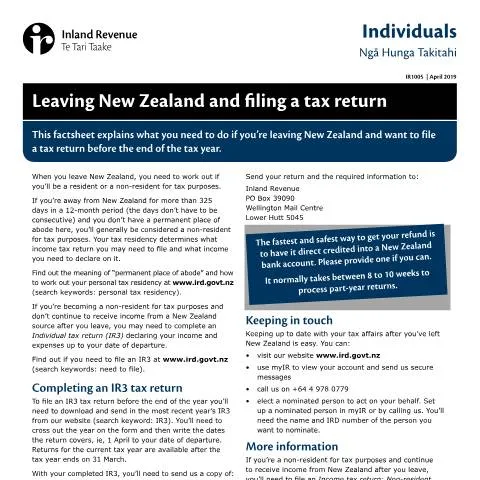
Navigating the Departure Tax Landscape: Understanding Form IR1005
As you prepare to leave New Zealand, the complexities of tax obligations can be daunting. The IR1005 form, officially titled "Leaving New Zealand and filing a tax return," serves as a crucial document in this transition. It helps establish your tax residency status and ensures you meet all necessary filing requirements before your departure. Given the evolving financial landscape and multi-faceted global circumstances, understanding the ins and outs of this form is essential.
Assessing Your Tax Residency Status
Your tax residency status is pivotal in determining your filing obligations. According to New Zealand’s tax regulations, if you plan to be away from the country for more than 325 days within a 12-month period and lack a permanent abode in New Zealand, you are generally classified as a non-resident for tax purposes. Understanding this distinction is key.
Permanent Place of Abode: What Does It Mean?
The term "permanent place of abode" is not merely a legal jargon; it carries significant implications for your tax status. If you have established a permanent home outside of New Zealand and do not plan to return, you are likely to be seen as a non-resident.
- Factors determining your status:
- Duration of absence from New Zealand.
- Your ties and connections to New Zealand, such as property or family.
- Your intentions regarding your stay in the new country.
Recognizing the Importance of Form IR1005
Form IR1005 is not your typical tax document; it plays a pivotal role in clarifying your obligations as you leave New Zealand. This form explicitly outlines whether you need to complete an Individual Tax Return (IR3) based on your income and residency status. Failing to address this responsibility could lead to complications down the line.
Who Needs to File This Form?
Any individual planning to leave New Zealand and who meets the criteria for becoming a non-resident for tax purposes should fill out this form. This includes:
- Individuals moving for extended periods.
- Those relocating permanently.
- People with substantial overseas income.
Completing Form IR1005: A Step-by-Step Guide
Completing form IR1005 can seem intimidating at first glance, but breaking it down into manageable sections can simplify the process. Below is a detailed guide on how to fill it out effectively.
Section 1: Personal Information
The first section requests your personal details, including:
- Your full name
- Your IRD number
- Your New Zealand postal address
Section 2: Departure Details
This section asks for specific details about your departure:
- Date of departure
- Your destination country
- Details of any assets you are taking with you
Section 3: Residency Status Declaration
Here you will need to declare your residency status based on the criteria outlined in the previous sections. Be prepared to provide supporting documentation if you are unsure of your status.
Section 4: Additional Income Sources
If you have income from New Zealand sources after your departure, this section will require you to outline these sources. Providing accurate details is crucial to avoid potential penalties.
Common Pitfalls: What to Watch For
While completing the form, remain vigilant about common mistakes:
- ✗ Omitting your IRD number can delay processing.
- ✗ Incorrectly marking your residency status can lead to filing complications.
- ✗ Failing to provide proof of income and deductions can result in penalties.
Gathering Required Documentation
Before submission, ensure you have all the necessary documents ready. The following list outlines the essential items to include:
- Proof of income: This can include payslips, bank statements, or tax summaries.
- Travel documents: A copy of your airline tickets or travel agent's itinerary with full payment proof.
- Your new postal address: Include your address in the new country, complete with postal code.
Organizing Documentation Based on Individual Circumstances
Understanding what documentation is required can vary based on your individual situation. Here are specific scenarios:
- Salary or Wage Earners: Obtain payslips or earnings summaries from myIR Secure Online Services.
- Business Owners: Collect complete financial records, including profit and loss statements and any other relevant documentation.
- Retirees: Ensure you include documentation of any pension or retirement income sources.
Submission Process: From Completion to Confirmation
Once you have completed the form and gathered the necessary documentation, the next step is submission. You have a couple of options available:
Where to Send Your Completed Form
The form and accompanying documents should be mailed to the following address:
Inland Revenue PO Box 39090 Wellington Mail Centre Lower Hutt 5045
The Benefits of Online Submission
Consider submitting your documentation through myIR. This online service not only speeds up processing time but also allows you to track your submission. If you prefer online filing, wait until the tax year ends on 31 March to utilize this option.
Understanding the Associated Timeline and Processes
After submitting your IR1005 form, it's essential to manage your expectations regarding processing times and follow-up actions.
Processing Times
Typically, part-year returns take between 8 to 10 weeks to process. During this time, remain proactive:
- Check your myIR account for updates.
- Maintain your contact information with the Inland Revenue Department to ensure you receive communications.
Staying Connected: Post-Departure Tax Management
Once you’ve left New Zealand, keeping track of your tax obligations is crucial. You’re not entirely off the hook; you may still have to file tax returns based on your status:
For Non-Residents
If you are a non-resident for tax purposes but continue to earn New Zealand income, you will be required to file an Income Tax Return: Non-resident Individual (IR3NR) every year.
For Tax Residents
Conversely, if you are still classified as a tax resident, your obligations will include filing an IR3 each year to declare income earned both in New Zealand and worldwide. Be aware that New Zealand's relationships with various countries may result in double taxation agreements that could affect your filings.
What Happens If Something Goes Wrong?
Despite your best intentions, complications can arise. Whether it's an error in your form or missing documentation, it's vital to know your options:
Rectifying Mistakes or Omissions
If you've realized you made a mistake after submitting your form, you can:
- Contact Inland Revenue directly for guidance.
- File an amended return once your original form has been processed.
Handling Rejections
In the event that your application is rejected, make sure you:
- Carefully read the rejection notice for specific reasons.
- Take prompt action to address the listed issues.
Final Considerations: Proactive Tax Management
Leaving New Zealand is a monumental decision that comes with various implications, particularly in the realm of taxation. By understanding the nuances of the IR1005 form and your responsibilities as a departing resident, you can navigate this complex process with confidence. Don't forget:
- Stay updated through the Inland Revenue’s website.
- Utilize your myIR account for ongoing management of your tax affairs.
- Consider seeking professional advice if your situation is highly complex.
In conclusion, handling your tax obligations as you leave New Zealand is not merely about paperwork; it’s an essential part of planning your future. By following these guidelines and being proactive, your move can be as smooth as possible.
Understanding Your Tax Obligations Before Leaving New Zealand
Before departing New Zealand, it's essential to have a clear understanding of your tax obligations. This includes knowing whether you need to file a tax return, what to declare, and how to manage your tax residency status. If you are a New Zealand resident for tax purposes, you are generally taxed on your worldwide income. However, if you become a non-resident, only your New Zealand-sourced income will be subject to taxation.
To determine your residency status, consider factors such as the length of your stay overseas, your ties to New Zealand, and your intentions regarding returning. If you are planning to be absent for more than 325 days in any 12-month period, you may be classified as a non-resident, but this requires proper documentation and can involve several nuances.
It is advisable to contact the Inland Revenue Department (IRD) for personalized guidance. You may also want to complete the IR882 form if applicable, outlining your departure from New Zealand and your tax residency changes. This ensures that you are compliant and that your tax obligations are clear.
Filing Your Final Tax Return: The Process Explained
When leaving New Zealand, you will need to file your final tax return, which should reflect all income earned up to the date of your departure. Generally, the tax year runs from 1 July to 30 June, so if you are leaving partway through the year, your return will need to encompass this timeframe. Be sure to include all sources of income, such as salary, rental income, and any investments. Keep in mind, your final tax return is due by the 7th of July following the end of the tax year.
To file your tax return, you can utilize the online services provided by IRD, which offer a streamlined process. If you have a RealMe digital ID, you can easily access your tax account remotely. Ensure that you have all necessary documents at hand, such as your financial records and any supporting documentation regarding deductions you wish to claim.
Consider consulting a tax professional, especially if your tax circumstances are complex, such as having foreign income or property investments. They can provide expert advice on potential tax liabilities and help ensure you are not overpaying or underpaying your taxes.
Implications of Leaving New Zealand on Your Superannuation and Other Investments
Leaving New Zealand can have significant implications on your superannuation and other investments. If you are a member of the New Zealand Superannuation system, it's crucial to understand how your departure affects your benefits. Typically, once you leave New Zealand, you may not be eligible to receive your pension unless you meet specific criteria related to your residency status and the duration of your absence.
Furthermore, if you have investments in funds or shares, consider how these may be affected by your change in residency. Tax liabilities may differ based on your new residency status. For instance, your gains on investments may be taxed differently, and foreign tax credits could come into play if you're liable for taxes in another country. It's recommended to speak with a financial advisor familiar with both New Zealand and international tax laws.
Additionally, ensure that you are aware of any reporting requirements related to your foreign bank accounts or investments to comply with both New Zealand and foreign tax legislations. Staying informed will help you manage your assets effectively and avoid any penalties for non-compliance.