Navigating the KiwiSaver KS2 Form: Essential Insights
Imagine starting a new job in New Zealand and realizing that part of your paycheck will go towards your future savings. This is the essence of the KiwiSaver KS2 form which plays a pivotal role in establishing your retirement fund. The KS2 form is a critical document that streamlines your enrollment in the KiwiSaver scheme, a government initiative designed to help New Zealanders save for retirement. But what does this mean for you, and how do you ensure you complete it correctly?
The Context of the KS2 Form in KiwiSaver Enrollment
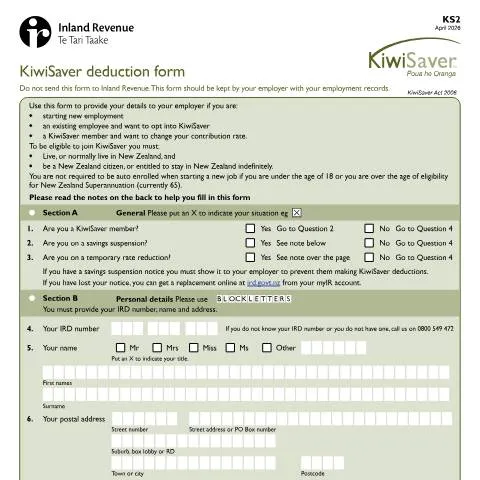
The KiwiSaver scheme, established under the KiwiSaver Act 2006, is meant to encourage individuals to save for retirement while providing valuable government incentives. The KS2 form is essential for anyone who:
- Is starting new employment
- Is an existing employee wishing to opt into KiwiSaver
- Is already a KiwiSaver member wanting to adjust their contribution rate
It's crucial to understand that this form is not just a bureaucratic hurdle but a gateway to securing your financial future. By filling out the KS2 form, you enable your employer to process KiwiSaver deductions directly from your salary.
Who Should Be Completing the KS2 Form?
The form targets a diverse range of individuals:
- New Employees: If you are entering the workforce and are between 18 and 65 years of age, you will automatically be enrolled unless you opt out.
- Employees Over 65: Those aged over 65 can still enroll but must use the KS2 form instead of automatic enrollment.
- Young Adults Under 18: Individuals under 18 must contact their chosen scheme provider directly to enroll, bypassing the employer.
- Current Members Adjusting Contributions: If you're already part of the KiwiSaver but wish to change your contribution rate, the KS2 form facilitates this process.
Completing the KS2 Form: A Step-by-Step Guide
The KS2 form requires careful attention to detail. Here’s a breakdown of the sections you will encounter:
| Section | Description |
|---|---|
| Section A | General information about your KiwiSaver status. |
| Section B | Personal details such as your IRD number and contact information. |
| Section C | Selection of your preferred contribution rate. |
Section A: General Information
Initiating the process in Section A involves indicating your current KiwiSaver status:
- If you are already a member, mark 'Yes' and proceed to the next question.
- If you opt for a savings suspension or a temporary reduction in contributions, provide the relevant details to prevent deductions.
Section B: Personal Details
This section demands accurate personal information. Use BLOCK LETTERS for clarity. Key details include:
- Your full name, including title and surname.
- Your IRD number, which is crucial for tax purposes.
- Your contact number and email address, as this enables communication regarding your KiwiSaver account.
Section C: Contribution Rate Selection
Arguably the most critical part, this section allows you to choose your contribution rate:
- Options typically range from 3.5% to 10% of your gross salary.
- If you do not select a rate, the default of 3.5% will apply.
It’s advisable to consider your financial situation before finalizing your choice. Seek financial advice if unsure about what contribution rate best suits your needs.
Where and How to Submit the KS2 Form?
Once you’ve thoroughly completed the KS2 form, the next step is submission. Unlike many forms that are sent to government bodies, this one is intended for your employer:
- Digital Submission: Some employers may have portals for electronic submission. Always check with your HR department.
- Paper Submission: If submitting on paper, ensure you hand it over directly, preferably in person, to confirm receipt.
Remember, you should never send this form to Inland Revenue. It’s crucial that your employer retains this document with their records for a minimum of seven years.
What Happens After Submission?
After your employer receives the KS2 form, they will process your information:
- If you are a new employee, your employer will evaluate your eligibility for automatic enrollment based on the information you've provided.
- Adjustments to your contribution rates will be reflected in your next paycheck based on your selection.
If you notice any discrepancies or if your deductions do not align with your chosen rate, follow up promptly with your HR department.
Understanding the Broader Implications of Your Contribution Rate
Your chosen contribution rate is not just a number—it directly impacts your retirement savings and eligibility for government contributions. The New Zealand government currently matches contributions up to a certain threshold, enhancing the benefits of participating in KiwiSaver:
- The more you contribute, the higher your potential government contributions, amplifying your savings significantly over time.
- Consider the long-term implications of the different rates. A higher contribution rate can lead to a more comfortable retirement.
Special Considerations for Specific Groups
While the KS2 form applies broadly, there are particular nuances for different demographics:
- Under 18: As mentioned, individuals under 18 will need to directly engage with their chosen KiwiSaver provider—an essential step that bypasses employer involvement.
- Over 65: Individuals over the age of retirement need to be aware that opting into KiwiSaver is entirely voluntary; however, they can still benefit from the scheme.
- Temporary Rate Reductions: If you're facing financial hardships, ensure your employer is aware of your savings suspension or temporary rate reduction to manage deductions appropriately.
Monitoring and Managing Your KiwiSaver Account
Once you're enrolled and deductions are underway, it's vital to keep track of your KiwiSaver contributions. Regularly review your statements to ensure accuracy and validate that your contributions align with your expectations:
- Check if your employer is deducting the correct amount based on your chosen contribution rate.
- Keep an eye on the growth of your savings and government contributions; this will help you understand the long-term benefits of your participation.
Utilizing Online Resources for Ongoing Support
Inland Revenue and other related organizations provide extensive online resources. Your myIR account can be a powerful tool for managing your KiwiSaver contributions, accessing information, and ensuring that everything is running smoothly. Don’t hesitate to utilize these resources to stay informed about your retirement savings and any changes in regulations that may affect you.
Final Thoughts on the KS2 Form and Your Retirement Savings
Completing the KS2 form is a fundamental step in securing your financial future through the KiwiSaver scheme. By understanding the form, knowing how to complete it properly, and monitoring your contributions, you can enhance your retirement savings effectively. Remember, the journey to financial security begins with informed decisions and proactive engagement with your KiwiSaver account.
Understanding KiwiSaver Contributions and Government Incentives
KiwiSaver, New Zealand's retirement savings scheme, is designed to encourage individuals to save for their retirement through regular contributions from both employees and employers. The system is structured to provide a solid foundation for retirement income, supplemented by government incentives that enhance the savings potential of participants.
Contributions to KiwiSaver can vary; however, the typical employee contribution is either 3%, 4%, 6%, 8%, or 10% of their gross salary. Employers are required to contribute at least 3% of their employees' gross pay as well. It's essential to understand that these contributions not only contribute to the retirement fund but can also affect your take-home pay, so it’s advisable to plan accordingly.
On top of these contributions, the New Zealand government offers a range of incentives to further assist savers. One of the most notable is the KiwiSaver Member Tax Credit, which allows eligible members to receive a government contribution of up to $521.43 each year, provided they contribute at least $1,042.86 into their KiwiSaver account. This incentive is automatically added and significantly boosts the total savings over time.
Furthermore, the HomeStart Grant is another government incentive aimed at first-time home buyers who are also KiwiSaver members. This scheme can provide up to $10,000 for individuals or $20,000 for couples purchasing a new home, provided they meet certain criteria. Understanding these incentives is crucial as they can substantially impact your financial future.
Opting Out and Withdrawal Information: Key Considerations
While KiwiSaver is designed to be a long-term savings plan, there are circumstances where individuals might consider opting out or withdrawing their funds. It’s important to know how these processes work and the implications involved.
Opting out of KiwiSaver is an option for individuals who are within the first eight weeks of starting a new job. To do this, one must fill out the appropriate form (the KS2 Opt-Out Form) and submit it to their employer. However, it’s vital to consider that opting out means forfeiting employer contributions and government incentives, which can significantly affect retirement savings.
Withdrawal of funds from KiwiSaver can occur under specific circumstances, including buying your first home, experiencing significant financial hardship, or upon reaching retirement age (currently 65 years). For first-home purchases, it is crucial to have been a KiwiSaver member for at least three years and meet other eligibility criteria related to the type of property and location.
Members may be able to withdraw all their funds, except for the Government Contributions, when they buy their first home. However, those considering withdrawing based on financial hardship must provide evidence to their KiwiSaver provider regarding their current situation. This can include proof of income, expenses, and any debts that may impact their financial stability.
Impact of KiwiSaver on Immigration and Residency Status
For immigrants and temporary residents in New Zealand, understanding how KiwiSaver affects their residency status and long-term financial planning is essential. New Zealand's immigration policies allow certain visa holders to join KiwiSaver under specific conditions.
Temporary visa holders, such as those on work or student visas, may not automatically be enrolled in KiwiSaver. However, if they have a job that qualifies them for KiwiSaver, they can opt to join. These individuals should be aware that contributions to KiwiSaver while on a temporary visa may not be accessible until they either gain permanent residency or reach retirement age.
Permanent residents and citizens, on the other hand, have full access to all KiwiSaver benefits and government incentives, enhancing their retirement savings opportunities. For those looking to transition from a temporary visa to residency, maintaining a KiwiSaver account can be a strategic financial move, demonstrating a commitment to living in New Zealand long-term.
It is also worth noting that those who have lived and worked abroad may be able to transfer their overseas retirement savings into their KiwiSaver account, subject to certain conditions. This can help streamline savings and consolidate assets, providing a more comprehensive retirement strategy.