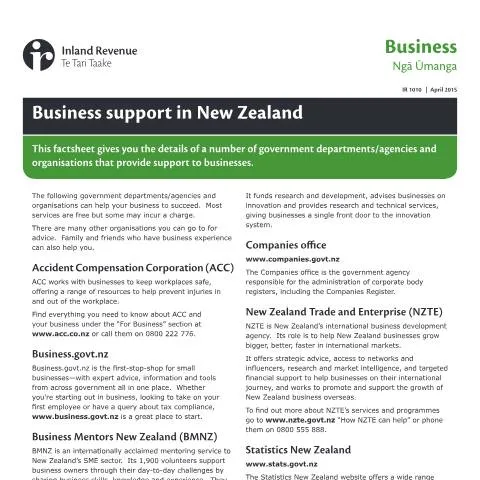
Navigating the Business Support Landscape in Aotearoa
For entrepreneurs and business owners in New Zealand, understanding the various forms of government support available is crucial for success. Among these is the IR1010, a pivotal document that signifies the government's commitment to aiding businesses through tax-related support. However, many individuals often confuse this form with others aimed at various aspects of business operation and compliance.
Unpacking the IR1010: Why It Matters
The IR1010 is specifically designed to assist businesses in navigating the complexities of income tax obligations and securing access to business support services. This form is not merely a bureaucratic requirement; it serves as a gateway to understanding and leveraging various tax benefits and resources offered by the Inland Revenue Department (IRD).
Understanding Its Unique Role
Unlike forms that focus solely on tax returns or financial disclosures, the IR1010 encompasses broader support mechanisms available to businesses. This form allows users to gain insights into:
- Eligible tax credits and deductions.
- Access to government-funded programs.
- Support from local government initiatives.
Each of these elements is vital for fostering a business environment that encourages growth, especially for small to medium enterprises (SMEs).
The Historical Context Behind the IR1010
Diving into the history of the IR1010 reveals the underlying regulatory framework that informs its existence. Following the Official Information Act 1982, the New Zealand government acknowledged the importance of transparency and accessibility in its dealings with taxpayers. The introduction of the Plain Language Act 2022 further emphasized the need for clear communication, making the IR1010 a product of a progressive administrative approach.
Regulatory Framework and Its Implications
The IR1010 operates within a complex legislative environment. This encompasses:
- Income Tax Assessment: Businesses must regularly assess their tax liabilities and entitlements.
- Business Support Initiatives: Government programs are designed to assist businesses facing economic hardships.
Knowing this context helps users appreciate the significance of the IR1010 in aligning their business operations with statutory requirements.
Essential Steps to Successfully Complete the IR1010
Completing the IR1010 requires attention to detail and an understanding of the information sought by the IRD. Here are key components to keep in mind:
Gathering Required Information
Before you begin filling out the form, ensure you have the following information:
- Your IRD number.
- Your business structure (sole trader, partnership, limited company, etc.).
- Details of any previous tax returns and business financial statements.
Filling Out the Form
While the IR1010 is designed with user-friendliness in mind, it is essential to:
- Follow each section methodically.
- Cross-verify the information against your records to avoid discrepancies.
- Utilize the IRD’s resources or seek assistance from a tax professional if in doubt.
Submission: Making Sure It Reaches the Right Hands
Once the IR1010 is completed, the next step is submission. This crucial phase can be completed online or via post, depending on your preference:
Online Submission
Utilizing the IRD’s online services is often the most efficient route:
- Log into your RealMe account.
- Select the IR1010 form from the online portal.
- Upload your completed document and any accompanying files.
Postal Submission
If you opt for postal submission, ensure that:
- You send it to the correct address as specified on the form.
- You retain a copy of the submitted form for your records.
Potential Outcomes: What Happens Next?
After submitting the IR1010, it’s essential to remain proactive. The IRD typically processes forms efficiently, but timeframes can vary based on the complexity of your submission and any additional documentation required.
Expected Timelines
| Action | Timeframe |
|---|---|
| Standard processing | 2-4 weeks |
| Complex cases | 4-6 weeks or more |
| Request for additional information | Time varies; response needed within specified period |
In Case of Hiccups: Addressing Common Issues
As with any bureaucratic process, issues may arise. It’s imperative to know how to address them effectively:
Refusals and Errors
Should your application be denied, or if you discover an error:
- Review the provided reasoning from the IRD.
- Submit a correction or appeal if you believe the IRD made an error.
Missing Pieces
If you realize that you’ve submitted the IR1010 without all required attachments:
- Contact the IRD immediately to provide the missing information.
- Keep records of your communications for future reference.
Complex Situations: Considerations for Special Cases
Certain scenarios warrant special attention when completing the IR1010:
Foreign Entities and Non-residents
If you are a foreign entity operating in New Zealand, the specifics of your income tax obligations will differ:
- Ensure compliance with New Zealand tax laws.
- Seek advice from a tax professional familiar with international operations.
Minors and Vulnerable Individuals
In cases where a minor or someone with a legal guardian is involved:
- The guardian must provide consent and oversight during the completion of the IR1010.
- Clear documentation of the guardianship must accompany the form.
The Broader Framework: The Role of the IR1010 in Ongoing Compliance
Filing the IR1010 is just one step in a larger process of maintaining good standing with the IRD. Regular updates and compliance checks will help safeguard your business’s financial health.
Maintaining Your Obligations
Businesses are encouraged to:
- Keep accurate records of all financial transactions.
- Engage with tax advisors to ensure ongoing compliance.
- Stay informed about changes in tax legislation that may affect your business.
Monitoring Your Submission Status
After submission, there are ways to keep tabs on your IR1010 status:
- Log into your IRD account to check for updates.
- Utilize IRD's communication channels for inquiries regarding your application.
- Maintain a proactive approach; follow up if you have not received feedback within expected timeframes.
In summary, the IR1010 serves as a vital component of the New Zealand business support framework. Understanding its role, the requirements for completion, and the implications of submission are essential for a business seeking to navigate the complexities of income tax while maximizing available support. By focusing on thorough preparation and proactive engagement, businesses can successfully leverage the advantages that come with understanding and utilizing the IR1010.