Understanding the IR719: Unlocking Higher Depreciation Pooling Values
In the intricate world of New Zealand's taxation system, the IR719 form stands as a pivotal document for businesses aiming to optimize their depreciation pooling. When dealing with depreciable property, understanding the implications of this official application is vital. This form grants taxpayers the opportunity to request a higher maximum pooling value than the statutory cap of $5,000 per item. But who exactly should use this form, and what does the journey entail? This article delves deeply into the IR719, offering a comprehensive guide for those seeking to navigate this official application successfully.
When to Initiate Your IR719 Application
The timeline for filing the IR719 can vary based on business circumstances, but specific triggers generally prompt this step. If your business frequently acquires and disposes of depreciable items, or if the costs associated with compliance are becoming overwhelming, it may be time to consider the IR719.
Identifying the Right Moment
Look for signs that suggest you're ready to apply:
- Your average replacement costs for items have risen significantly.
- You maintain a large inventory of similar items that could benefit from a higher pooling value.
- Your compliance costs are becoming a burden and could be materially reduced by pooling.
Understanding when to file is crucial, but it’s equally important to know how long the process will take once initiated.
The Timeline: Key Dates and Processes
Filing the IR719 involves several important dates and processes that can affect your application’s success. Knowing when to apply and what to expect afterward can help you plan effectively.
Application Timeframe
Once you've submitted your IR719 application, the Inland Revenue Department (IRD) typically takes a set period to respond. The specific duration can depend on various factors, including the complexity of your request and the volume of applications being processed at that time. Generally, you can expect to receive a response within:
- 4 to 6 weeks for straightforward applications.
- 6 to 8 weeks for more complex cases requiring additional review.
It is essential to factor these timelines into your financial planning, especially if you anticipate large changes in your asset management.
Consequences Following Submission
After you have submitted your application, several scenarios can unfold:
- Your application is approved, and you are notified with details specifying your new pooling value.
- Your application is declined, along with feedback on the reasons for the decision.
- Additional information may be requested, extending the processing time.
This phase is critical for ensuring that your business remains compliant while working toward more advantageous depreciation strategies.
Who Should Submit an IR719? Profiles and Exceptions
While the IR719 application is geared toward a broad spectrum of businesses, certain profiles may find it more advantageous. Understanding the specific eligibility criteria can guide applicants in determining whether they should proceed.
Business Types That Benefit
Typically, the IR719 is most beneficial for:
- Medium to large enterprises with diverse inventories of depreciable assets.
- Industries involving rapid asset turnover, such as technology or manufacturing.
- Companies facing high compliance costs due to the frequency of acquisitions and disposals.
However, it's essential to note that not all businesses will qualify. The IRD considers several factors in its decision-making process.
Exceptions and Special Cases
Applications from certain categories may face additional scrutiny or restrictions:
- Start-ups with minimal asset history may find it challenging to provide sufficient data.
- Businesses with fluctuating asset values that do not fit neatly into established depreciation categories.
If your business falls into such categories, it's advisable to consult with a tax professional before proceeding.
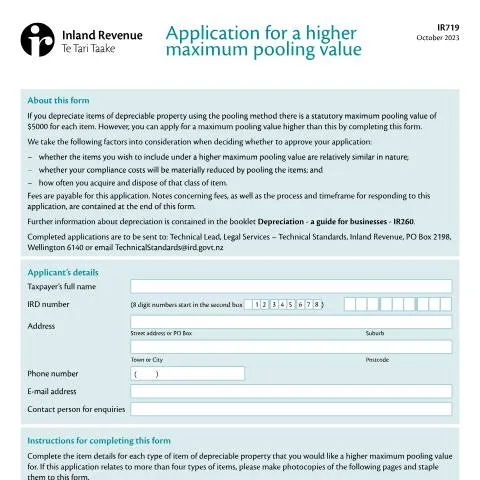
The Structure of the IR719 Form: A Detailed Breakdown
Completing the IR719 correctly is crucial for a successful application. Below is a detailed breakdown of the form's sections, highlighting what each entails.
Personal and Business Information
The initial part of the IR719 will require you to input your personal and business details, including:
- Your full name and IRD number.
- Your business address and contact information.
- A contact person for inquiries about the application.
Providing accurate information here is essential, as discrepancies may delay your application.
Item Details: The Core of Your Application
This section is where you will specify the depreciable items for which you're requesting a higher pooling value. Key inputs include:
- Industry or asset category as listed in the Commissioner’s Table of Depreciation Rates.
- Asset class relevant to your items.
- A detailed description of the specific items, including their current numbers and average ownership period.
Completing these details thoroughly and accurately will significantly impact the outcome of your application.
Financial Justifications
Perhaps the most critical aspect of your application lies in justifying the request for a higher pooling value. You will need to provide:
- The requested higher pooling value (excluding GST).
- Estimates of savings in compliance costs if the application is successful.
- The income year from which you want the new pooling value to apply.
Ensure you provide clear and concise justifications to support your request.
Post-Submission: Navigating Follow-Up Steps
Once your application is submitted, it's essential to understand the potential follow-up actions you may need to take.
What to Expect
After submission, several steps can help streamline the process:
- Maintain open communication with the IRD for any queries or additional information requests.
- Track your submission to ensure it has been received and is under consideration.
Impact on Financial Planning
Don't underestimate the implications of your application on cash flow and financial planning. An approved IR719 can result in significant compliance cost savings, allowing for better resource allocation within your business.
The Broader Context: Historical and Regulatory Implications
The IR719 application exists within a wider regulatory framework designed to facilitate fair and efficient tax practices in New Zealand. Understanding this context can provide additional clarity on why the process is structured as it is.
Regulatory Background
The IRD oversees a myriad of tax regulations aimed at ensuring compliance while supporting business growth. The IR719 is particularly relevant in light of ongoing reforms that promote more efficient depreciation practices in line with current economic conditions.
Historical Evolution
Historically, the maximum pooling value has undergone several changes reflecting the evolving business landscape. The IRD's willingness to consider applications for higher pooling values demonstrates a commitment to adapt tax regulations to the realities faced by modern businesses.
Case Studies: Practical Applications of IR719
Examining real-world examples of how different businesses successfully navigated the IR719 application process can provide valuable insights for prospective applicants.
Case Study: A Tech Company
A medium-sized tech firm faced significant compliance costs due to its frequent turnover of equipment. By filing the IR719, they successfully requested a higher pooling value, resulting in estimated annual savings of NZD $20,000 in compliance costs.
Case Study: A Manufacturing Business
A manufacturing company with multiple asset classes found that pooling its machinery under a higher maximum value not only simplified its accounting process but also streamlined its tax reporting. This shift allowed the business to allocate funds to R&D efforts, further enhancing its competitiveness.
Conclusion: Maximizing Your Benefits through IR719
The IR719 form serves as a crucial tool in the toolkit of New Zealand businesses looking to optimize their depreciation strategies. By understanding the nuances of this application, from the ideal timing to the structural requirements, you can harness its full potential to benefit your business financially.
In a landscape where every dollar counts, making informed decisions about your depreciation pooling could lead to significant savings and ultimately contribute to your business's growth and sustainability.
Understanding the Higher Maximum Pooling Value: A Comprehensive Guide
The Higher Maximum Pooling Value (HMPV) is a critical aspect of New Zealand's tax and revenue framework, particularly for businesses seeking to optimize their financial resources. This section delves into the rationale behind HMPV, its implications, and how businesses can effectively apply for it.
The purpose of HMPV is to allow businesses to access a higher threshold for pooling losses, which can significantly impact cash flow management. In essence, it enables companies to aggregate their losses across different tax years or entities, thereby maximizing their tax deductions and enhancing overall fiscal health.
To qualify for HMPV, businesses must demonstrate that they are operating under specific criteria set by the IRD. This typically includes having a clear track record of revenue generation, meeting certain operational thresholds, and compliance with tax obligations. Additionally, businesses should be prepared to provide sufficient documentation to support their application.
One of the primary considerations for IRD when reviewing an application for HMPV is the sustainability and viability of the business model. Companies that can prove their operational stability and potential for growth are more likely to benefit from the higher pooling value. Furthermore, businesses must adhere to the fiscal year guidelines, ensuring that their financial assessments align with the July to June cycle.
Applying for HMPV involves submitting the appropriate documentation to the IRD, which may include financial statements, tax filings, and any other relevant information. It's advisable to consult with a tax professional who can assist in preparing an accurate and comprehensive application to enhance the chances of approval.
Common Challenges and Solutions in Applying for HMPV
While the application process for HMPV can be straightforward, several challenges may arise that could hinder the approval of a request. Understanding these potential hurdles and knowing how to navigate them can be crucial for businesses looking to maximize their pooling value.
One common issue is inadequate or incomplete documentation. The IRD requires thorough records to substantiate claims for a higher pooling value. Businesses often overlook providing all necessary financial documentation, leading to delays or outright rejections. To mitigate this risk, it is recommended to implement strong record-keeping practices and ensure that all records are up-to-date and easily accessible.
Another challenge is the evolving nature of tax legislation and compliance requirements. New Zealand's tax laws can be complex and subject to change, which may impact how businesses approach their applications. Staying informed about these changes is essential. Businesses should subscribe to updates from the IRD or engage with a tax advisor who can provide timely information regarding legislative changes that may affect HMPV.
Additionally, businesses might face challenges when trying to demonstrate their operational viability, especially startups or those in emerging sectors. To overcome this, businesses should prepare detailed business plans that outline their revenue projections, market analysis, and growth strategies. These documents can help establish credibility and provide the IRD with a clearer picture of the business's potential.
The Role of Professional Advice in the HMPV Application Process
Navigating the intricacies of applying for a Higher Maximum Pooling Value can be daunting. This is where professional advice becomes invaluable. Engaging a tax advisor or accountant who specializes in New Zealand tax law can provide significant advantages throughout the application process.
Tax advisors can assist in identifying whether a business qualifies for HMPV and help tailor the application to meet IRD’s requirements effectively. They can also provide insights into the documentation needed, ensuring that everything submitted is complete and accurate, which minimizes the risk of delays or rejection.
Moreover, professional advisors can help businesses understand the broader implications of HMPV on their financial strategies. For instance, they can provide guidance on how to leverage the HMPV effectively to improve cash flow, reinvest in the business, or manage tax liabilities more strategically. This holistic view can lead to more informed decision-making, ultimately contributing to the business’s long-term success.
It is also worth noting that some tax professionals offer subscription services or retainers, which can be beneficial for businesses that require ongoing support as they navigate the complexities of the New Zealand tax system. By fostering a relationship with a tax advisor, businesses can ensure they have a trusted resource to turn to for future applications and compliance issues.