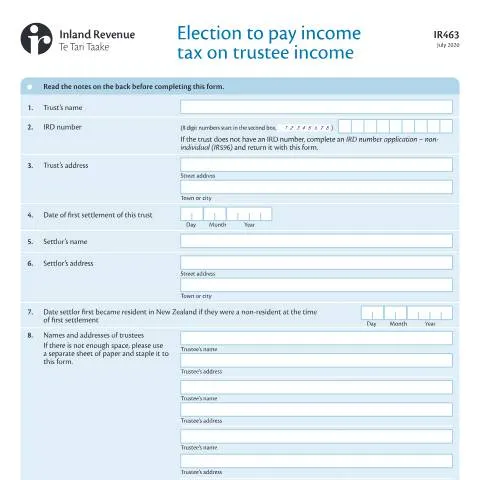
Navigating the IR463 Form: A Comprehensive Guide
Completing the IR463 form, titled "Election to pay income tax on trustee income," is an essential task for trustees in New Zealand looking to make an informed decision about their tax liabilities. This process is especially crucial for those managing foreign or non-complying trusts, as the implications of this election can significantly affect tax obligations and beneficiary distributions. Understanding the intricacies of this form can help avoid pitfalls and ensure compliance with local tax regulations.
The Intricacies of Trustee Tax Responsibilities
The IR463 form is designed to allow trustees, settlors, or beneficiaries to elect to pay tax on trustee income. The election process is critical, particularly for trusts that may not naturally fall under the compliance umbrella established by New Zealand tax law. This election can turn non-complying or foreign trusts into complying trusts, which have distinct advantages in terms of tax treatment.
When a trustee opts to complete the IR463 form, they are essentially declaring their intention to assume responsibility for tax obligations associated with the trust’s income. This decision is particularly relevant for trusts that have non-resident settlors or those established outside New Zealand.
Understanding Different Trust Types
- Complying Trusts: These trusts adhere to New Zealand tax laws and are liable for tax on all trustee income. They enjoy certain protections regarding distributions to beneficiaries.
- Foreign Trusts: Defined as trusts where no settlor has been a New Zealand resident since December 17, 1987. Such trusts may have unique election opportunities.
- Non-Complying Trusts: Trusts that do not meet the criteria of complying trusts and have not been liable for New Zealand income tax since their establishment.
Who Should Complete the IR463 Form?
Identifying the right individuals to fill out the IR463 is paramount to the election process. This form can be completed by any of the following parties:
- Settlor: The individual who created the trust and may have significant insight into its operations.
- Trustee: The individual(s) responsible for managing the trust’s assets and ensuring compliance with applicable laws.
- Beneficiary: Those entitled to receive distributions from the trust may also opt to make an election in specific situations.
Each of these roles carries a unique perspective and rationale for completing the IR463. For example, a settlor who recently became a New Zealand resident may wish to make an election to avoid unwanted tax liabilities on distributions.
Profile of Potential Applicants
The decision to file the IR463 often hinges on the applicant's residency status and trust history:
- New Residents: Settlers who established a trust before moving to New Zealand may need to file if they want the trust to comply with local regulations.
- Non-Residents: If the settlor is a non-resident, they may need to understand how their residency status impacts their trust’s obligations.
- Trustees with Complex Structures: Trusts that involve multiple jurisdictions or have complex beneficiary structures may necessitate specialized tax advice before completing the form.
Step-by-Step Guide to Completing the IR463
The process of filling out the IR463 form involves several specific steps and requires careful attention to detail. Here is how to proceed:
- Gather Necessary Information: Before starting, ensure you have the trust's IRD number, address, settlor details, and trustee information. Missing data can delay processing.
- Complete the Form: Fill in all required fields accurately. Incorrect information can lead to rejection or delays. Pay special attention to the following sections:
- Trust’s name and address.
- Date of first settlement.
- Settlor’s name and residency information.
- Select the Election Notice: Clearly indicate if the election is being made by the trustee, settlor, or beneficiary, and ensure the signature is correctly dated.
- Review for Accuracy: Before submission, double-check all entries to avoid errors that may cause complications.
Deadlines: Timing Your Election
Timing is crucial when it comes to the IR463 form. Depending on the type of trust, different deadlines apply for making an election:
| Type of Trust | Due Date for Election | Effect of Election |
|---|---|---|
| Non-complying and foreign trusts settled in 1989 or later | Due date for filing the tax return for the income year of settlement | Distributions will not be taxable if the election is made. |
| Previously complying trusts | Due date for filing the tax return for the year compliance status was lost | Tax on trustee income distributions reduced. |
| Trusts settled by non-resident settlors | Within 12 months of the settlor becoming a New Zealand resident | Beneficiaries will face different tax treatment on distributions post-election. |
Consequences of Missing Deadlines
Failing to file the IR463 by the due date may result in significant tax implications:
- Trusts may remain classified as non-complying, leading to higher tax burdens.
- Beneficiaries could face unexpected tax liabilities on distributions received.
- Potential penalties for non-compliance may be levied by the Inland Revenue Department (IRD).
What to Expect After Submission
Once the IR463 has been submitted, there are several steps and follow-ups that trustees should be prepared for:
- Confirmation of Receipt: The IRD will acknowledge receipt of the IR463, typically via mail or digital communication.
- Review Period: The IRD may take some time to review the submission, especially if the trust's structure is complex.
- Tax Return Requirements: If the election is approved, the trustee is obligated to indicate the trust’s continued compliance status on subsequent tax returns.
- Potential Queries: Be prepared to respond to any follow-up questions or requests for additional information from the IRD.
What Happens in Case of Refusal or Challenges?
If the IRD rejects the election or raises concerns about the trust’s compliance status, it’s vital to understand the appropriate steps to take:
- Review the Feedback: Carefully evaluate any reasons provided by the IRD for the refusal.
- Consult a Tax Professional: Engaging a tax advisor familiar with New Zealand trust laws can aid in successfully navigating disputes.
- Re-Submission: If possible, adjust the submission based on the feedback and file a corrected IR463.
Understanding Your Obligations: Keeping Track of Compliance
After successfully submitting the IR463 and receiving confirmation from the IRD, it is essential to maintain accurate records and stay compliant with ongoing tax obligations:
- Annual Tax Returns: Ensure that trust income is reported accurately in annual tax returns as required by the IRD.
- Monitoring Status Changes: Should the trust's circumstances change (e.g., alterations in residency status of the settlor), reevaluate compliance requirements and file necessary updates.
- Documentation: Keep detailed records of all trust-related transactions and movements to provide clarity in case of future audits or inquiries.
Resources for Further Assistance
For those looking to deepen their understanding of the implications of the IR463 form and trust taxation in New Zealand, several resources are available:
- IRD Publications: The IRD produces a variety of booklets regarding trusts and estates, notably the "Trusts and Estates – Income Tax Rules (IR288)" that provides comprehensive guidance.
- Tax Advisors: Engaging professionals who specialize in New Zealand trust law can provide tailored advice to meet specific needs.
- Community Forums: Online platforms and local forums may offer support and shared experiences from others who have navigated the IR463 process.
Completing the IR463 form is not just a bureaucratic task; it's an important part of ensuring that trust income is managed effectively and in compliance with New Zealand tax laws. With careful attention to detail and a solid understanding of the implications, trustees can make informed decisions that benefit both the trust and its beneficiaries.
Understanding Trustee Income and the Election Process
In New Zealand, the concept of trustee income refers to the income generated from assets held in trust. For trustees, understanding how this income is taxed is crucial. Income earned by a trust can often be subject to different tax rates than personal income, depending on the type of trust and how the income is distributed. A trustee of a trust may choose to make an election under section HC 7 of the Income Tax Act 2007 to have the trust's income treated in a specific manner for tax purposes. This section allows the trust to elect to pay tax on its income rather than distributing it to beneficiaries.
The election process involves submitting the appropriate documentation to the IRD. This typically includes a written notice to the IRD stating the election's intention, along with any necessary supporting documentation that outlines how the trust's income will be managed. It is essential for trustees to understand their obligations and the implications of this election, as it can significantly affect the trust’s tax liabilities.
Factors Influencing the Election to Pay Income Tax
Several considerations may influence a trustee's decision to elect to pay income tax on trustee income. One primary factor is the income levels of the beneficiaries. If beneficiaries are in lower tax brackets, distributing income may lead to lower overall tax liabilities. Conversely, if the trust itself falls into a higher tax bracket, it may be financially beneficial for the trustee to elect to pay tax at the trust level.
Moreover, the nature of the trust’s assets can also play a role. For instance, if the trust holds significant investments that generate consistent and substantial income, the trustee may find it more advantageous to pay tax at the trust level to simplify the distribution process. Additionally, the timing of distributions can be critical; if beneficiaries do not need immediate access to the income, retaining it within the trust for tax purposes might be the preferred option.
The trust's future plans, including potential changes in beneficiary circumstances, should also be contemplated. If one or more beneficiaries are anticipated to experience significant life changes—such as taking on additional income or changing tax residency—this could affect the overall tax implications and the feasibility of the election. Therefore, seeking professional advice from tax consultants or lawyers who specialize in trust law can provide valuable insights tailored to the trust's specific situation.
Potential Consequences of the Election
Making the election to pay tax on trustee income can lead to various consequences, both positive and negative. One of the key advantages is the simplification of tax management. By electing to pay tax at the trust level, the trustee can manage tax liabilities more efficiently, simplifying the trust's financial administration.
However, there are also disadvantages that trustees must consider. Importantly, once the election is made, it is generally binding for that income year, and changing this election can involve additional complexities and potential penalties. Furthermore, the trust may face a higher effective tax rate than individual beneficiaries, which could diminish the overall amount available for distribution.
Moreover, the trust must comply with annual tax return submissions and maintain accurate record-keeping to reflect the election. This includes documenting all sources of income and any expenses incurred, which must comply with New Zealand’s tax regulations. Failing to adhere to these requirements may result in audits or penalties from the IRD.
It is essential for trustees to thoroughly evaluate the long-term implications of their election decision, including potential changes in tax laws and trust circumstances. Engaging in proactive financial planning and regularly reviewing the trust's performance and tax strategy can help mitigate unforeseen consequences and optimize tax outcomes for the trust and its beneficiaries.