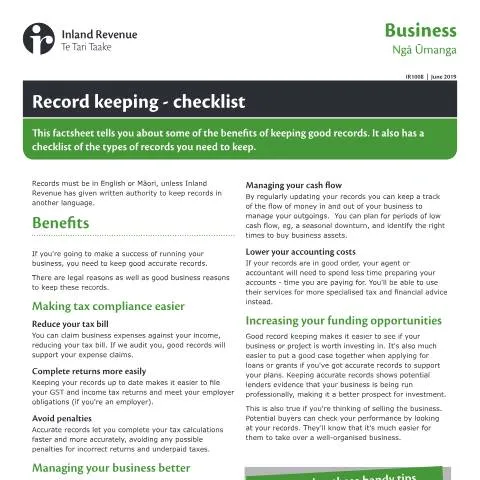
Navigating the IR1008 Record Keeping Checklist: A Key to Business Success
In the dynamic landscape of business in New Zealand, effective record keeping stands as a cornerstone for success. The IR1008 form, officially known as the Record Keeping Checklist, serves as an essential guide for business owners, streamlining the process of maintaining accurate records. This document is pivotal for anyone looking to ensure compliance with tax obligations while enhancing operational efficiency. Whether you're a seasoned entrepreneur or a novice, understanding the nuances of this checklist is crucial.
Understanding When and Why to Utilize the IR1008
There’s a fine line between simply running a business and running a successful one, and the records you maintain can significantly influence that outcome. The IR1008 checklist is designed to help you understand what records are essential and why they matter. From legal compliance to strategic decision-making, the benefits of diligent record keeping are multifaceted.
Key Benefits of Accurate Record Keeping
- Tax Compliance: Accurate records facilitate easier tax filing and can significantly reduce the risk of penalties due to errors.
- Financial Clarity: By keeping track of income and expenses, you can better assess your business's financial health, leading to informed decision-making.
- Improved Cash Flow Management: Regularly updated records allow you to anticipate periods of low cash flow, helping you plan ahead.
- Attracting Investors: Well-maintained records can enhance your credibility with potential investors and lenders, making it easier to secure funding.
Recognizing these benefits emphasizes the importance of using the IR1008 form effectively, positioning your business for sustained growth and compliance.
Who Needs to Fill Out the IR1008?
Virtually every business owner needs to be aware of the IR1008 checklist. From sole traders to large corporations, keeping meticulous records is a legal obligation and a smart business practice. If you're engaging in any form of business activities that involve financial transactions, this checklist is tailored for you.
Special Considerations for Different Business Types
While all businesses benefit from the IR1008 form, certain types may face unique challenges:
- Small Businesses: Often operated by a single individual, small businesses must be particularly meticulous in record keeping to avoid overwhelming penalties during audits.
- Partnerships: Since income and expenses are shared, maintaining clear records not only aids in tax compliance but also in resolving any potential disputes between partners.
- Corporations: Larger entities must adhere to more complex regulations; hence the IR1008 checklist is indispensable for ensuring all legal requirements are met.
Steps for Completing the IR1008 Checklist
Filling out the IR1008 checklist is straightforward but requires attention to detail. Here’s how to approach it:
1. Gather Necessary Documentation
Before you begin, compile all relevant financial records, including:
- Invoices and receipts
- Bank statements
- Asset registers
- Records of liabilities
2. Categorize Your Records
The checklist categorizes records into various sections, making it easier to follow:
| Record Category | Examples |
|---|---|
| Core Records | Cashbooks, accounts receivable and payable |
| Income | Invoices, sales records |
| Expenses | Receipts, invoices for purchases |
| Banking | Bank statements, cheque books |
Each section contains specific records that are necessary for compliance and operational efficiency. Be meticulous in ensuring you have everything listed.
3. Maintain Clarity and Organization
Once you've gathered all documents, ensure they are organized in a way that allows for easy retrieval. This could be through digital folders or physical files. A systematic approach reduces the risk of losing vital records.
Submitting the IR1008 Checklist: Channels and Procedures
When it comes to submission, you have several options depending on your preference and the resources available to you. Each channel has its own benefits and procedural nuances.
Online Submission: The Modern Approach
For those who prefer efficiency, submitting your IR1008 checklist online via the myIR portal is highly recommended. This method not only saves time but also ensures that your records are securely stored. Here's how to do it:
- Log in to your myIR account or create one if you haven't.
- Navigate to the section dedicated to tax records.
- Upload your completed IR1008 checklist along with any supporting documents.
Paper Submission: The Traditional Method
If you opt for the traditional route, ensure that your IR1008 checklist is printed neatly and accompanied by any necessary documents. You can submit this via post:
- Address your submission to the Inland Revenue Department.
- Ensure you use the correct postage to avoid delays.
What If You Encounter Issues Post-Submission?
Submitting your IR1008 checklist is only part of the journey. Problems can arise, and understanding how to navigate them is essential for business owners.
Addressing Rejections or Missing Information
If your checklist is rejected due to incomplete or incorrect information, don’t panic. Here’s what to do:
- Review any notifications from the Inland Revenue Department that highlight the issue.
- Gather the necessary documents or correct the information as instructed.
- Resubmit your checklist through the same channel you initially used.
Keeping Track of Your Submission
To understand the status of your submission, regularly check your myIR account or contact the Inland Revenue Department directly. This proactive approach can help you stay informed and address any potential issues swiftly.
Essential Records to Keep Based on Different Scenarios
Different businesses may have unique requirements when it comes to record keeping. Here’s a breakdown of essential records categorized by specific situations.
Freelancers and Sole Traders
- Invoices issued for services rendered
- Expenses related to operational costs
Partnerships
- Profit-sharing agreements
- Joint venture contracts and operating costs
Limited Companies
- Board meeting minutes
- Compliance documents including annual returns
Preparing for Future Business Growth with Your Records
As your business evolves, so do your record-keeping requirements. The IR1008 checklist is not merely a one-time formality; it's part of an ongoing cycle of management and oversight.
Scaling Your Record Keeping
Consider implementing a dedicated record-keeping system that can grow with your business. Whether through cloud-based solutions or more traditional methods, ensure your records are easily accessible, secure, and organized.
Continuous Improvement and Learning
Engage with available resources, such as seminars and workshops offered by the Inland Revenue Department, to enhance your understanding of tax compliance and record keeping.
By prioritizing effective record management, you not only meet legal obligations but also set your business up for future success. Embrace the IR1008 checklist as a vital tool in your business strategy, ensuring that your records reflect the true potential of your operations.
Understanding the Importance of Record Keeping for Tax Purposes
Record keeping in New Zealand is crucial for maintaining compliance with the Inland Revenue Department (IRD) regulations. Keeping accurate records not only helps businesses and individuals accurately report their income and expenses but also safeguards them against potential audits. In New Zealand, the law requires that you maintain records for at least seven years after the end of the tax year to which they relate. This requirement applies to all taxpayers, including sole traders, partnerships, and companies.
When it comes to tax matters, the IRD expects you to produce records that are clear, comprehensive, and correctly reflect your financial activities. This can include everything from sales invoices and receipts to bank statements and payroll records. Failing to provide adequate documentation can lead to penalties and additional taxes owed, so it’s essential to understand what qualifies as acceptable documentation.
Common Mistakes to Avoid in Record Keeping
While keeping records might seem straightforward, there are common pitfalls that many individuals and businesses fall into. Here’s a checklist of mistakes to avoid:
- Neglecting to Keep Personal and Business Expenses Separate: Mixing personal and business finances complicates record keeping and can lead to inaccuracies in reporting. Open a separate bank account for your business to streamline your financial tracking.
- Failing to Keep Digital Copies: While physical records are essential, digital backups are equally important. Use cloud storage or a secure local system to maintain digital copies of important documents to prevent loss due to physical damage or theft.
- Not Recording Cash Transactions: It’s easy to overlook cash transactions, but every dollar counts. Ensure that you document cash sales and expenses promptly to keep your records complete.
- Inconsistent Record Keeping Practices: Establish a routine for record keeping and stick to it. Inconsistent practices can lead to disorganized records, which complicates tax filing.
Staying vigilant and consistent in your record-keeping practice can save you time and stress, especially during tax season.
Leveraging Technology for Efficient Record Keeping
In today’s digital age, leveraging technology can significantly enhance the effectiveness of your record-keeping efforts. Various software solutions and online services can automate many aspects of record management, making compliance easier and more efficient.
One of the key benefits of using technology is the ability to easily categorize and track financial transactions. Many cloud-based accounting software options allow you to integrate your bank feeds, automatically categorizing transactions and reducing the chances of human error.
Furthermore, automated reminders can help ensure that you maintain your records up to date. For example, scheduling reminders for regular reconciliation of accounts can keep your records accurate and timely. Many solutions also offer built-in reporting features that allow you to generate necessary reports for IRD filings at the click of a button.
However, when choosing a software solution, ensure that it complies with New Zealand's regulations and offers strong security features to protect your personal and financial information. Regular updates and support from the provider are also essential to ensure that you remain compliant as tax regulations evolve.