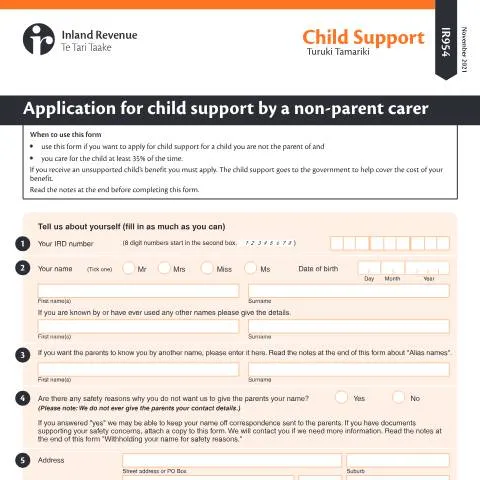
Decoding the IR954: The Role of Non-Parent Carers in Child Support Assessments
In New Zealand, when a child is cared for by someone other than their biological parents, that caregiver may be eligible for financial support through the child support system. The IR954 form, officially titled Application to assess child support by a non-parent carer, serves as a crucial document in this process. This article delves into the intricacies of the IR954 form, highlighting who should fill it out, how to complete it correctly, and the implications of its submission.
Understanding the Stakeholders: Who Should Use the IR954?
The IR954 form is designed specifically for non-parent carers, individuals who provide care for a child at least 35% of the time. This includes grandparents, family friends, or other relatives who have taken on a caregiving role. However, various situations can affect eligibility, making it essential to understand the nuances involved.
Non-Parent Carer Profiles
- Long-Term Guardians: Individuals who have a formal or informal arrangement with the parents may apply. This often includes kinship care arrangements.
- Short-Term Caregivers: Those who provide temporary care, including respite care, can also submit the IR954.
- Emergency Care Providers: In cases where a child is placed in emergency care, the caregiver is eligible to apply for support.
Each profile comes with its own set of circumstances that may influence how the form is filled out and the type of support received.
The Significance of the IR954 in the Child Support Framework
Child support in New Zealand is governed by laws that aim to ensure children receive the financial support needed for their upbringing. The IR954 form plays an essential role in assessing how much financial assistance a non-parent carer may receive. The application process begins with collecting necessary details about the child and their biological parents, allowing the Inland Revenue Department (IRD) to determine the amount of financial support based on the parents' incomes.
Linking Non-Parent Carers with Financial Support
Submitting the IR954 form triggers a formal assessment process that evaluates the financial circumstances of the parents, enabling the non-parent carer to receive child support. If the child has been placed under the care of a non-parent carer, this form must be filed to secure any owed support, especially if the carer also receives a benefit, such as the unsupported child’s benefit.
Detailed Instructions on Completing the IR954
Filling out the IR954 form may appear daunting due to the specific information required. Below is a comprehensive guide on what to include.
Key Sections to Complete
- Personal Information: The form begins with personal identifiers, including your IRD number and full name. For safety reasons, you may indicate if you wish to withhold your name from the child's parents.
- Details of the Parents: You will need to input information for both parents, including their IRD numbers, birth dates, and residential addresses. If a parent is deceased, specify this in the relevant section.
- Child Information: Important details about the child, such as their IRD number and date of birth, must be included. It is critical to confirm if the child was born while the parents were married, as this impacts eligibility.
Navigating the Submission Process: Where and How?
Once the IR954 form is completed, you should submit it as per the guidelines provided by the IRD. The preferred method is online through the IRD’s official portal, which streamlines the process and ensures quicker handling of your application.
Submission Protocols
- Verify Your Information: Double-check all entries for accuracy. Missing or incorrect information can delay processing.
- Documentation: Attach any required supporting documents, especially if you are citing safety concerns that warrant withholding your name.
- Submission Timeline: Aim to submit the form as soon as you commence care for the child, ensuring you meet the eligibility criteria.
Potential Outcomes: What Happens Next?
The IRD will review your application and assess whether the child support can be awarded. Once the assessment is completed, you will receive a notification detailing the decision, including the amount of support payable.
Understanding the Decision
- Approval of Child Support: If approved, you will receive payments directly, which are crucial for meeting the child's needs.
- Denial of Support: If your application is denied, the IRD will provide reasons, and you may have the option to appeal the decision.
What If Your Application Is Rejected?
Receiving a denial can be disheartening. However, understanding the appeal process and your rights is crucial. If your application for child support is rejected, you will typically receive a letter outlining the reasons for the decision.
Steps to Take After a Rejection
- Review Communication: Carefully read the letter to understand why your application was denied.
- Gather Evidence: If you believe the decision was incorrect, compile any additional documentation that supports your claim.
- Contact the IRD: Reach out for clarification and to express your intent to appeal if warranted.
The Historical Context of Child Support in New Zealand
The development of the child support system in New Zealand has roots in the need for children to receive appropriate financial resources, irrespective of parental circumstances. The framework for child support has evolved, reflecting changes in societal attitudes towards caregiving and the roles of non-parent carers.
Regulatory Changes and Their Impact
The Child Support Act has undergone several revisions, strengthening the rights of non-parent carers. The introduction of the IR954 form represented a significant step toward recognizing the contributions of caregivers outside the nuclear family structure.
In Summary: The Importance of the IR954 Form
The IR954 form is a pivotal document for non-parent carers seeking financial support for the children they care for. Understanding how to fill it out correctly, the implications of its submission, and what to do in case of rejection can empower caregivers to secure the support they need. By fostering awareness and providing clear guidelines, New Zealand's child support system aims to ensure that every child has access to necessary resources, reflecting the nation's commitment to child welfare.
For any further assistance or inquiries regarding the IR954 form or child support processes, it is advisable to contact the IRD directly.
Understanding the Role of Non-Parent Carers in Child Support Applications
Non-parent carers play a vital role in the lives of many children, especially in situations where the biological parents are unable to provide adequate care or support. This category includes grandparents, family friends, foster parents, and other guardians who take on the responsibility of caring for a child. Understanding the eligibility and responsibilities of non-parent carers is essential for those looking to apply for child support through the New Zealand system.
A non-parent carer can apply for an assessment of child support if they are primarily responsible for the care of a child and the biological parents are unable or unwilling to meet their financial responsibilities. This does not automatically guarantee the granting of child support, but it provides a framework for evaluating the financial needs involved. The application process requires careful documentation to prove the non-parent carer's relationship with the child and the degree of care provided. This includes providing evidence of residence, day-to-day responsibilities, and communication with parents regarding financial support.
Additionally, the Ministry of Social Development (MSD) may conduct assessments to determine the level of financial support that the biological parents can provide. This may involve evaluating the income and circumstances of the parents and matching it with the needs of the child. Non-parent carers should be prepared for this assessment process, which can include providing personal financial information and demonstrating the ongoing care they provide.
Potential Challenges and Solutions in the Application Process
While the child support application process can be straightforward for some, non-parent carers often encounter specific challenges that can complicate their applications. Understanding these potential hurdles is crucial for ensuring a successful outcome.
One major challenge is the lack of legal recognition. Non-parent carers may not have formal legal custody of the child, which can lead to complications in the eyes of the law. To overcome this, it is advisable to seek legal advice or support from community organizations that specialize in family law. These organizations can provide guidance on how to navigate the legal aspects of child support applications, including potential custody arrangements that may strengthen the application.
Another issue can be the reluctance of biological parents to provide financial support. This can stem from various factors, such as financial difficulties or disputes with the non-parent carer. In such cases, clear communication is key. Non-parent carers can attempt to establish a cooperative relationship with the biological parents, focusing on the best interests of the child. If this is not possible, non-parent carers may need to document instances of refusal to support financially, which can be crucial during the evaluation process.
Lastly, understanding the financial implications is essential. Non-parent carers should be aware of the financial assessments that the IRD will conduct based on the income of the biological parents and the needs of the child. Keeping detailed records of expenses related to the child's care can provide invaluable assistance during this assessment. Non-parent carers should maintain receipts and financial statements that reflect the day-to-day costs incurred while caring for the child, as this information will support their case for child support.
Resources and Support for Non-Parent Carers
For non-parent carers seeking to apply for child support, numerous resources and organizations are available to provide guidance and support throughout the process. The first point of contact should be the Child Support Unit of the IRD, which can provide detailed information about eligibility requirements, necessary forms, and the application process itself. Their website offers comprehensive resources, including FAQs and downloadable forms.
Additionally, local community organizations and legal aid services can offer valuable assistance. Many non-profit organizations focus on family law issues and can provide free or low-cost legal advice to non-parent carers regarding their rights and the application process. These organizations may also offer workshops or information sessions that can help demystify the process of applying for child support.
Support groups for non-parent carers can also be incredibly beneficial. Connecting with others who share similar experiences can provide emotional support and practical advice, as well as create a network of contacts who may have faced and overcome similar challenges.
Finally, utilizing online resources, such as government websites and forums dedicated to family law issues, can enhance understanding of the child support system. The RealMe digital ID can facilitate access to various online services related to child support applications, making the process more streamlined and user-friendly.