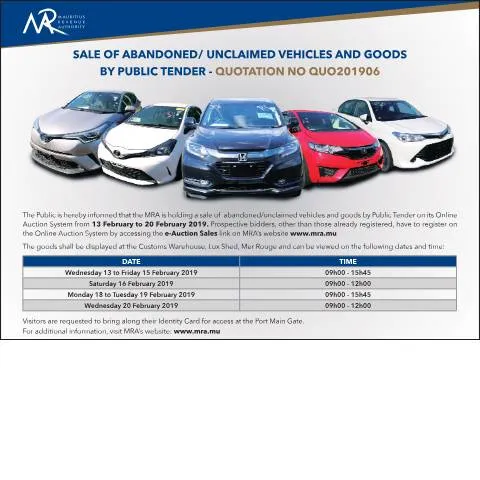
Navigating the Sale of Abandoned/Unclaimed Vehicles and Goods: A Step-by-Step Guide
When it comes to acquiring vehicles and goods that have been abandoned or unclaimed, the process can appear daunting. The official Sale of Abandoned/Unclaimed Vehicles and Goods by Public Tender serves as an essential gateway for prospective bidders looking to acquire these items through a transparent and regulated auction process managed by the Mauritius Revenue Authority (MRA). This guide will walk you through the intricacies of the tender, from registration to the final bid.
The Regulatory Framework Behind the Tender Process
The legal foundation for this process is embedded in the Mauritian legislative framework, particularly the regulations governing public tenders. The MRA, as the primary regulatory body, adheres to both the French civil law and English common law systems defined in the Constitution of 1968 and subsequent amendments, ensuring a comprehensive approach to auctions and public sales.
The tender referenced as PressAdvert130219 emphasizes transparency and fairness, allowing participants a clear avenue to participate in the sale of unclaimed goods, which may include vehicles, machinery, and other assorted items.
How the Tender Works
The auction takes place through the MRA's Online Auction System, running from February 13 to February 20, 2019. This online platform streamlines the process and makes it accessible, ensuring that bids can be placed conveniently and efficiently.
- Registration: Prospective bidders must register on the Online Auction System. This includes creating a user profile and verifying identification through the National ID Card.
- Viewing of Goods: The items available for auction can be viewed at the Customs Warehouse, Lux Shed, Mer Rouge, during specified times prior to bidding.
- Bidding: On the auction day, participants can submit their bids online. The highest bid wins the item.
Timeframes and Important Dates
| Date | Activity | Time |
|---|---|---|
| February 13-15, 2019 | Viewing of Goods | 09h00 - 15h45 |
| February 16, 2019 | Viewing of Goods | 09h00 - 12h00 |
| February 18-19, 2019 | Viewing of Goods | 09h00 - 15h45 |
| February 20, 2019 | Final Bidding | 09h00 - 12h00 |
It is crucial to adhere to these timeframes, as missing any of these dates could result in disqualification from the auction. Potential bidders are advised to mark their calendars accordingly.
Preparing for Your Bid: Essential Documentation
To engage in the bidding process, you will need to present valid identification. This includes:
- National Identity Card: Required for entry into the auction viewing area and to register online.
- Proof of Address: To verify residency, ensure that you have a recent utility bill or similar document.
Having the necessary documents ready will expedite your registration and facilitate a smoother bidding experience.
What to Expect During the Auction
On the day of the auction, registered bidders will log onto the MRA’s Online Auction System to participate. Bids will be placed digitally, ensuring that the process is standardized and secure. Each bid must meet or exceed the minimum bid amount set for each item, and it is vital to monitor the time remaining for each auction item closely.
Understanding the Outcome: What Happens After Bidding?
Following the conclusion of the auction on February 20, 2019, the highest bidders will be notified through the e-auction platform. Upon winning an item, the successful bidder must:
- Make Payment: Payment must be made promptly as per the instructions provided in the notification.
- Collect the Item: Details regarding the collection point and timings will be communicated once payment has been confirmed.
It is imperative to act swiftly to avoid losing the acquired goods, as delays could lead to forfeiture.
Addressing Challenges: What to Do in Case of Issues
Challenges can arise, whether it be a technical issue during registration, documentation problems, or disputes over the auction outcome. Understanding the proper steps to address these issues is crucial:
- Technical Issues: If you encounter challenges while accessing the Online Auction System, contact MRA’s technical support immediately. Provide them with your identification details and specifics of the issue for a timely resolution.
- Documentation Errors: Should there be any discrepancies in your submitted documentation, it is vital to address these before the bidding starts. Reach out to MRA’s offices directly for guidance on rectifying any errors.
- Disputes Over Bids: In the case of contested bids, MRA adheres to a strict protocol. Documentation of the dispute should be submitted for review by the auction committee, who will make a final decision.
Special Considerations for Unique Circumstances
Understanding the framework of the auction process can be especially important for specific groups of individuals, including foreign nationals and minors.
For Foreign Nationals
Foreign individuals wishing to participate in the auction must provide additional documentation verifying their legal status within Mauritius. This may include:
- Visa Information: Proof of residency or work authorization in Mauritius.
- Identification: A valid passport along with the National ID Card equivalent, if applicable.
It is advisable to clarify these requirements with MRA before the bidding period to avoid issues during the auction.
For Minors
While minors cannot legally engage in financial transactions, provisions exist for parental or guardian involvement. A minor wishing to participate must:
- Have an Adult Co-Bidder: An adult must register and act on behalf of the minor.
- Submit Parental Consent: Documentation indicating parental approval is mandatory to accompany bids submitted by the adult.
By adhering to these regulations, minors can partake in the excitement of the auction while ensuring compliance with legal standards.
Conclusion: Seizing Opportunities in Public Tenders
The Sale of Abandoned/Unclaimed Vehicles and Goods by Public Tender presents a significant opportunity for bidders to acquire a variety of items through a well-structured and regulated framework. By understanding the nuances of this process, preparing adequately, and addressing any potential challenges proactively, you are well-equipped to navigate this auction successfully. Remember, staying informed and vigilant opens the door to securing unique finds at competitive prices.
Understanding the Process of Public Tender for Abandoned Vehicles
The sale of abandoned or unclaimed vehicles in Mauritius through public tender is a systematic procedure designed to ensure transparency and fairness. This practice not only aids in decluttering public spaces but also generates revenue for the local authorities. The legal framework governing this process is outlined in the Public Procurement Act, as well as various regulations set forth by local councils and authorities, including the Municipal Council and the District Councils.
Prior to initiating the sale, local authorities are responsible for identifying vehicles deemed abandoned or unclaimed. This often entails a thorough inspection, documentation of vehicle condition, and adherence to predefined criteria. For instance, a vehicle may be classified as abandoned if it has been stationary for an extended period, often exceeding six months, and lacks any identifiable owner. The authorities will typically issue notices in local publications, providing information on the impending sale, submission deadlines for tenders, and other essential details.
Once the vehicles have been identified, the local government conducts an inventory, cataloguing each vehicle with relevant details such as make, model, registration number, chassis number, and the assessed condition. This inventory is crucial as it helps potential bidders make informed decisions. Furthermore, local councils must ensure that the information disseminated is accurate and up-to-date, as it reflects directly on the credibility of the tender process.
Key Documentation and Tender Submission Requirements
When intending to participate in the public tender for the purchase of abandoned vehicles, prospective buyers must prepare and submit specific documentation. A standard requirement is the completion of the tender application form, commonly referred to as Tender Form 1 (2023). This form solicits essential details about the bidder, including their full name, address, contact information, and details about the vehicles they are interested in acquiring.
Additionally, bidders may need to submit proof of identity, such as a copy of their National Identity Card or passport, the latter being particularly relevant for foreign bidders. Alongside this identification, financial documentation is also required to demonstrate the bidder’s capability to fulfill the purchase. This could include bank statements or other financial assessments, promoting a transparent bidding process where financial stability is evaluated.
Another important component of the submission is the deposit. A non-refundable deposit, typically a percentage of the expected sale price, is mandated to ensure that only serious bidders participate. This deposit must be submitted along with the tender application and is usually outlined in the terms and conditions provided by the local authorities.
Post-Tender Procedure and Vehicle Collection
After the tender submission deadline, the local authority undertakes a thorough evaluation of the bids received. Bidders are assessed based on their submitted documentation, offered prices, and compliance with tender requirements. A tender committee, often composed of members from the local government, is tasked with this evaluation process, ensuring impartiality and adherence to legal standards.
Once the bids have been reviewed, the successful bidder will receive a formal notification, usually referred to as a Letter of Acceptance. This document outlines the next steps, including payment instructions and collection details. Successful bidders are generally required to settle the full purchase price within a stipulated timeframe, which will be specified in the Letter of Acceptance.
Upon payment confirmation, the successful bidder must arrange for the collection of the purchased vehicle. Local authorities may provide specific instructions regarding the pickup process, including designated times for collection and any associated fees for storage or processing. It’s critical to comply with these instructions to ensure a smooth transfer of ownership. Additionally, the new owner may need to register the vehicle with the National Transport Authority to obtain official documentation and re-issue of license plates.