Navigating the Waters: A Deep Dive into Form 31 for Pleasure Boats
The shimmering waters of Mauritius attract numerous pleasure boats from around the globe, each carrying the promise of adventure and exploration. However, before embarking on this journey, owners and masters of these vessels must grapple with the essential Form 31: Declaration by Owner/Master of Pleasure Boats. Understanding the significance of this document is paramount for compliance with local regulations, ensuring a smooth sailing experience upon arrival.
Understanding Form 31: The Heart of Pleasure Boat Compliance
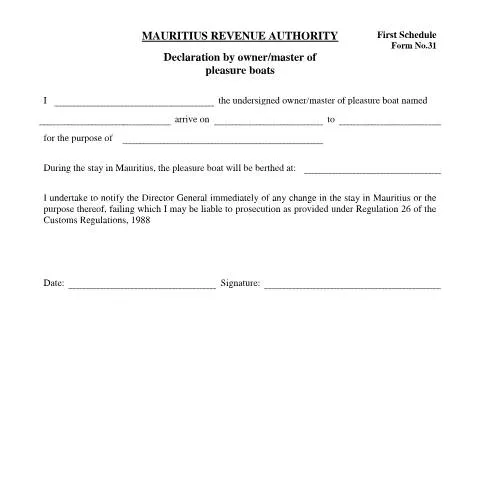
Form 31 serves a critical role within the broader regulatory framework governing pleasure boats in Mauritius. Unlike other forms that might simply require the registration of a vessel or outline specific operational guidelines, Form 31 is specifically designed to declare the intention and particulars of the journey to Mauritian waters. This declaration encompasses the boat's name, its intended purpose during the stay, and the berth location.
Why This Declaration Matters
The form is not merely bureaucratic red tape; it is an essential document that informs the customs and maritime authority of the presence and purpose of the vessel in Mauritian jurisdiction. As stipulated by Regulation 26 of the Customs Regulations, 1988, failing to notify the Director General of any changes in the stay or purpose can lead to potential prosecution, underscoring the importance of accuracy and timeliness in submission.
Who Should Submit Form 31? A Closer Look at the Stakeholders
Typically, the submitter of Form 31 will be the owner or master of the pleasure boat. However, it’s important to delineate the profiles of those involved in this process:
- Boat Owners: Individual or corporate owners bringing vessels for personal use or charter services.
- Masters: Individuals designated by the owner, responsible for the operational management of the vessel.
- Crew Members: In some cases, crew members can assist in completing and submitting the form, but the onus lies with the owner or master.
Special Cases
In certain scenarios, such as vessels owned by non-residents or those on charter, additional considerations may apply. It is advisable for these individuals to consult local authorities or legal experts to ensure all regulatory obligations are met.
Channels of Submission: Digital vs. Paper-Based Approaches
In an age where digital transformation is at the forefront of government services, understanding the channels available for submitting Form 31 can enhance the compliance experience.
Online Submissions through MauPass
The Mauritius government encourages the use of digital services, and Form 31 is no exception. By utilizing the MauPass platform, linked to the National ID Card, users can effortlessly fill and submit the form online. This method is not only efficient but also minimizes the risk of errors associated with handwritten submissions.
Paper-Based Submissions
For those who prefer traditional methods, Form 31 can still be submitted in person at designated offices. This process typically involves filling out the form by hand and submitting it at the relevant customs or maritime authority office. Ensure that the form is completed accurately to avoid delays or complications.
The Process Unfolded: Completing and Depositing Form 31
Completing Form 31 requires attention to detail. The structure of the form itself guides the user through necessary entries, but it’s crucial to understand each section’s implications.
Detailed Breakdown of the Form Sections
| Section | Description |
|---|---|
| Vessel Name | Enter the registered name of the pleasure boat. |
| Arrival Port | Specify the port of entry into Mauritius. |
| Purpose of Stay | Indicate the reason for docking in Mauritian waters, such as leisure, repairs, or events. |
| Berthing Location | Provide the specific location where the vessel will be docked. |
| Notification Clause | Acknowledge the requirement to inform the Director General of any changes during the stay. |
Once filled, the next step is submission. Whether online or in-person, follow any specific guidelines provided by the Mauritius Revenue Authority to ensure compliance.
Potential Pitfalls: Handling Refusals and Missing Documents
Despite careful preparation, there may be instances where a submission is rejected due to errors or missing information. Being informed about the next steps can alleviate stress in these situations.
What to Do in Case of a Refusal
If Form 31 is rejected, typically a notification will be provided detailing the reasons. This feedback is crucial for rectification. Common issues include:
- Incorrect or incomplete entries
- Missing signatures
- Failure to comply with earlier notifications about vessel changes
Upon receiving a rejection notice, promptly address the discrepancies and resubmit the form. Engaging with the Mauritius Revenue Authority can provide clarity on how best to resolve the issues.
The Timeline: Key Dates and What Comes Next
Timeliness is essential in maritime operations, particularly regarding regulatory submissions. Understanding the timeline associated with Form 31 is critical for seamless compliance.
Timeframe for Submission
Form 31 should be submitted prior to the boat’s arrival in Mauritian waters. Ideally, aim to complete this task at least one week in advance of your intended arrival. This allows for any unforeseen issues to be addressed promptly.
The Aftermath: What Happens Post-Submission
Upon successful submission, owners can expect the following:
- Confirmation of acceptance, which may be issued electronically or physically
- Instructions for any additional requirements (e.g., health checks or safety inspections)
- Guidance on local regulations applicable during the stay in Mauritius
Historical Context: The Regulatory Framework Behind Form 31
The necessity for Form 31 stems from a regulatory backdrop designed to ensure the safety and legality of maritime activities within Mauritian waters. The foundation lies in the Customs Regulations of 1988, which were enacted to streamline the administration of customs duties and other regulations related to international shipping.
Over the years, amendments to these regulations have shaped the current requirements for pleasure boats, emphasizing the importance of transparency and accountability from vessel operators. This evolution reflects Mauritius's commitment to maintaining a secure maritime environment while fostering tourism and leisure activities.
Final Thoughts: The Importance of Compliance and Communication
Filing Form 31 is not merely a statutory obligation; it represents a partnership between pleasure boat operators and Mauritian authorities. By ensuring that all requirements are met and maintained, owners and masters of pleasure boats contribute to a culture of compliance that enhances the overall maritime experience in Mauritius.
As you prepare for your journey, remember the importance of vigilance in both documentation and communication. Keeping authorities informed of any changes ensures not just legal compliance but also the safety and enjoyment of your maritime adventure.
Understanding the Legal Framework Surrounding Pleasure Boats in Mauritius
In Mauritius, the ownership and operation of pleasure boats are regulated by a combination of local maritime laws and administrative policies aimed at ensuring safety and environmental protection. The legal framework primarily derives from the Merchant Shipping Act and related regulations, which stipulate the necessary procedures for registration, ownership declaration, and safety standards. The Merchant Shipping (Pleasure Craft) Regulations 2013, in particular, outline the requirements specific to pleasure boats, including limitations on their use, compliance with safety norms, and obligations for owners regarding documentation.
The declaration by the owner or master of a pleasure boat is an essential compliance measure that serves multiple purposes: it ensures that all boats operating in Mauritian waters are registered and adhere to established safety protocols, and it assists local authorities in tracking vessels for regulatory and maritime safety purposes. As such, it is critical for boat owners and operators to familiarize themselves with these regulations to avoid any potential legal issues.
While the general requirements for the declaration process are clear, specific conditions may apply based on the type of pleasure boat and its intended use. For instance, commercial use of pleasure boats necessitates additional licensing and safety inspections, which differ from those applicable to privately owned vessels. Understanding these nuances can significantly facilitate the registration and declaration process.
The Declaration Process: Step-by-Step Guide
Completing the declaration of a pleasure boat can seem daunting, but breaking it down into manageable steps can ease the process. Below is a detailed step-by-step guide to help you navigate the requirements efficiently:
- Prepare Required Documentation: Begin by gathering all necessary documents, which include proof of ownership, identification (such as a National Identity Card), and specific information about the vessel, such as its registration number, type, and size.
- Visit the Relevant Authority: Navigate to the Registrar of Ships, part of the Ministry of Ocean Economy, Marine Resources, Fisheries, and Shipping. This is crucial, as the declaration must be submitted to an authorized representative.
- Complete the Declaration Form: Fill out the appropriate declaration form—commonly referred to as the “Declaration by Owner/Master of Pleasure Boats Form.” Ensure that all information is accurate and complete to prevent delays.
- Review Safety Compliance: Ensure that your pleasure boat meets all safety requirements as mandated by the Merchant Shipping (Pleasure Craft) Regulations. This includes having necessary equipment such as life jackets, fire extinguishers, and navigational tools.
- Submit the Form: Submit the completed form and all supporting documents either in person or through the relevant online platform available through the government’s e-services portal (govmu.org), where applicable.
- Await Confirmation: Upon submission, you will receive an acknowledgment from the Registrar, which may take a few days. Keep this acknowledgment for your records.
- Compliance with Ongoing Requirements: After your pleasure boat has been registered, adhere to any ongoing requirements for safety inspections, renewals, and compliance checks as outlined by the local maritime authority.
This systematic approach to the declaration process not only aids in compliance but also contributes to safer maritime operations within Mauritius’s territorial waters.
Environmental Considerations and Best Practices for Pleasure Boat Owners
As the popularity of pleasure boating continues to grow in Mauritius, focusing on environmental sustainability has become increasingly important. Boat owners are encouraged to practice environmental stewardship by adhering to best practices that minimize their impact on the marine ecosystem.
One of the key aspects of responsible boating is the proper disposal of waste. Pleasure boat owners should ensure that their vessels are equipped with holding tanks for sewage and that they utilize designated pump-out stations at harbors for waste disposal. Discharging waste directly into the ocean is not only illegal but can also lead to significant environmental harm.
Additionally, consideration should be given to fuel management. Using environmentally friendly fuel options, along with ensuring that your boat is well maintained to prevent leaks, can greatly reduce the risk of marine pollution. Regular inspections and maintenance checks can help catch potential issues before they become problematic.
Additionally, owners can participate in local initiatives aimed at keeping marine environments clean, such as beach clean-up events or conservation programs. Engaging with these community efforts helps raise awareness of the importance of protecting Mauritius's unique marine biodiversity.
Finally, staying informed about local regulations and environmental guidelines is crucial. The Ministry of Environment, Solid Waste Management, and Climate Change provides resources and updates that can help pleasure boat owners remain compliant and responsible.
By integrating these environmental considerations into their boating practices, owners not only contribute to the preservation of Mauritius's beautiful marine environments but also enhance their own boating experience by ensuring that future generations can enjoy the same natural beauty.