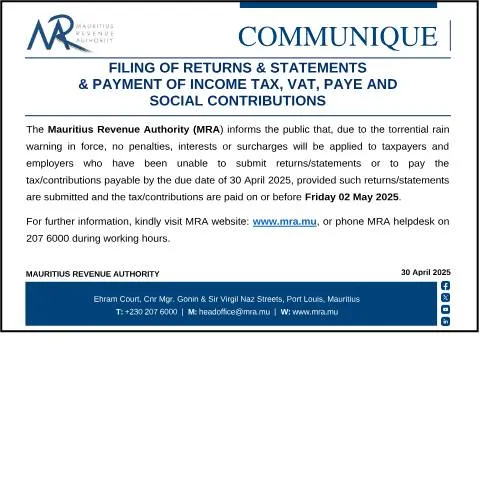
Understanding the Importance of the Filing of Returns & Statements
The Filing of Returns & Statements & Payments of Income Tax, VAT, PAYE, and Social Contributions is not merely a bureaucratic obligation; it is a critical process for ensuring compliance with tax requirements in Mauritius. The deadline for submission is 30 April 2025. Completing this process correctly can prevent unnecessary penalties and establish a healthy relationship with the Mauritius Revenue Authority (MRA).
Key Participants in the Filing Process
This document is primarily submitted by taxpayers, which include individual citizens, self-employed individuals, and businesses engaged in economic activities within Mauritius. Employers are also obligated to file PAYE returns, and any organization making contributions towards social security must ensure they file the necessary statements. Therefore, understanding who must file and under what circumstances is crucial.
Taxpayers
- Individuals earning taxable income above the threshold.
- Self-employed individuals reporting business income.
Employers
- Businesses required to file PAYE statements for their employees.
- Organizations making contributions to the National Pension Fund.
Chronological Process: From Trigger to Submission
Understanding the timeline is essential to ensure that you meet the deadlines. Here’s a detailed breakdown of the steps involved:
- Awareness of Filing Requirements: As a taxpayer or employer, one must be aware of the requirement to file returns and make payments by 30 April 2025.
- Preparation of Documents: Gather necessary documents such as income statements, receipts, and records of previous tax filings.
- Completion of Form: Fill out the official form as indicated by the MRA. Pay attention to each section to avoid errors.
- Submission: File the completed form via the online platform or in person at MRA offices.
Navigating the Details: Form Breakdown
This section elucidates the various components of the form, providing insights to ensure accuracy in completion.
Income Tax Section
The income tax section requires you to declare your total income for the fiscal year. Ensure that you:
- Include all forms of income, such as salary, rental income, and dividends.
- Double-check calculations to avoid discrepancies.
VAT Section
For businesses, understanding VAT obligations is essential. Be sure to:
- List all taxable sales and purchases accurately.
- Claim input VAT only for eligible expenses supported by proper documentation.
PAYE and Social Contributions
Employers must provide detailed information regarding employee earnings. Key areas to focus on include:
- Accurate recording of all wages and salaries.
- Timely updates of any changes in employment status or income levels.
Handling Errors and Missing Information
In the event that your submission is rejected or deemed incomplete, the following steps can be taken:
- Review Notification: Carefully read any notification from MRA detailing the reasons for rejection.
- Gather Missing Information: Rectify the noted discrepancies by collecting the required information.
- Resubmission: Ensure that the resubmitted documents are complete and accurate to avoid further complications.
After Submission: What to Expect
Once the filing process is complete, it is pertinent to understand the subsequent steps taken by the administration:
- The MRA will review your submission and may request further information if necessary.
- Payments made will be processed, and any outstanding balances will be communicated.
- You may receive confirmation of your filing via email or through your online account.
Tracking Your Filing Status
You can follow up on your submission status by:
- Accessing your account on the MRA's digital platform to check the status of your filing.
- Contacting the MRA helpdesk for inquiries regarding your return.
Special Circumstances: Who Needs to Know?
Recognizing that not all situations are straightforward, there are special considerations that may apply, such as:
Foreign Nationals
Foreigners earning income in Mauritius must understand their tax obligations, including:
- Any double taxation agreements that may affect their liabilities.
- Specific forms that must be completed in addition to the standard filing.
Minors and Dependents
In cases where minors are earning income, the following should be considered:
- The need to file under a parent or guardian's tax ID.
- Understanding permissible deductions and tax credits.
Complex Situations
For those with intricate financial situations, it is often advisable to:
- Consult a tax professional to navigate the complexities of tax law.
- Understand the implications of investments, property transactions, and international earnings on your tax status.
Final Thoughts: Staying Informed and Compliant
As the deadline of 30 April 2025 approaches, staying informed is key. The MRA has been proactive in communicating changes and updates, particularly due to external factors such as the recent weather warnings. Taxpayers have been granted extended deadlines until 02 May 2025, and understanding these nuances can alleviate stress and promote compliance.
For more information or clarification, refer to the official MRA website or reach out directly to their helpdesk at +230 207 6000 during working hours. Ensure your filings are accurate, timely, and in line with regulatory expectations to foster a smooth tax experience.
Overview of Tax Compliance in Mauritius
In Mauritius, tax compliance is a crucial obligation for both individuals and businesses. The tax system is primarily governed by the Income Tax Act, the Value Added Tax Act, and other relevant legislations. These regulations ensure that taxpayers adhere to their obligations in a timely manner, which is essential for the economic stability of the country. Tax compliance involves filing returns, making payments, and maintaining accurate records. Failure to adhere to these requirements can lead to penalties, which further underscores the importance of understanding the tax obligations specific to your situation.
Fill in your form directly online
No printing: type your details into the boxes of the official form, tick, then download the PDF ready to send.
- 1Type into the form boxes
- 2Tick in one click
- 3Save and download the PDF
Taxpayers are categorized into various groups depending on their income levels, types of income, and business activities. Understanding these categories and their associated filing requirements is necessary for effective tax management. For instance, individuals earning income from employment are required to file a personal income tax return, while businesses must submit corporate tax returns. Each category has its own deadlines and requirements, which are subject to change as per government directives or updates to the tax laws.
How to File Income Tax Returns in Mauritius
Filing income tax returns in Mauritius involves various steps, which can be completed online for efficiency and convenience. The process begins with the preparation of necessary documents, which typically include your National ID number, proof of income, tax deductions, and any relevant financial statements. Following this, taxpayers must access the Mauritius Revenue Authority (MRA) website to utilize the e-filing system.
When filing your return, ensure that you accurately report all sources of income, including salaries, rental income, and any other earnings. Additionally, be aware of allowable deductions that can reduce your taxable income. After completing the online forms, you will submit your return digitally, and it is advisable to keep a copy of your submitted return for your records. The deadline for submitting income tax returns is generally 30 days after the end of the fiscal year, which runs from 1 July to 30 June.
In case of discrepancies or queries, the MRA provides support to taxpayers. It is critical to address any issues promptly to avoid penalties. Furthermore, taxpayers must also be aware of the assessment process, which may involve the MRA conducting audits to ensure compliance with tax laws.
Understanding VAT Registration and Compliance
Value Added Tax (VAT) is an essential component of the tax system in Mauritius and applies to most goods and services. Businesses whose taxable turnover exceeds the threshold must register for VAT with the MRA. VAT registration is straightforward but requires timely submission of the necessary documents, including proof of business activities and financial records. Once registered, businesses must issue VAT invoices and maintain accurate records of all transactions.
VAT returns must be filed monthly, and payment of VAT due is also required during the same period. The MRA provides an online VAT return submission system that simplifies the process. It is important for businesses to carefully track their input and output VAT to ensure accurate reporting. Incorrect VAT submissions can lead to significant penalties and interest charges, making compliance critical to business operations.
Additionally, understanding the exemptions and zero-rated categories under the VAT Act is essential for businesses operating in specific sectors, such as education and healthcare. Staying informed of any changes to VAT legislation is advisable for sustained compliance.