Navigating the VAT/SP 4/20: An Essential Guide for Taxi License Holders
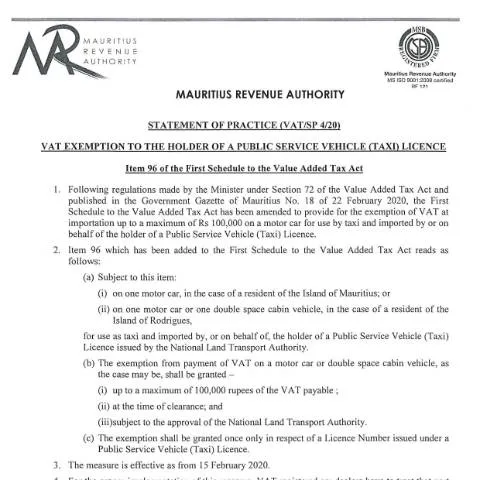
If you hold a Public Service Vehicle (Taxi) License in Mauritius, understanding the intricacies of the VAT/SP 4/20 form is crucial. This form pertains to the Value Added Tax (VAT) exemption available to taxi operators at the time of vehicle importation, specifically crafted to ease the financial burden on service providers in the transport sector. This guide delves into the nuances of its completion, submission, and what to expect post-filing.
Understanding the Context: Why VAT Exemption Matters
The VAT exemption offered through the VAT/SP 4/20 form is a significant financial relief for taxi operators in Mauritius. Under the Value Added Tax Act, the exemption allows for up to Rs 100,000 of VAT to be waived on the importation of qualifying vehicles. This not only helps to reduce the upfront costs of acquiring a vehicle but also plays a vital role in supporting the local economy by fostering a robust transport sector.
Key Regulations Underpinning the Exemption
The regulations concerning this VAT exemption were established under the Government Gazette No. 18 dated 22 February 2020, specifically aimed at improving accessibility to public transport.
- Eligibility: The exemption applies to residents of Mauritius holding a Public Service Vehicle (Taxi) License, allowing them to import one motor car or double space cabin vehicle.
- Approval Requirement: Exemptions are granted only after approval from the National Land Transport Authority, ensuring oversight and compliance with local regulations.
Who Should Submit the VAT/SP 4/20?
This form is exclusively for individuals or entities that hold a valid Public Service Vehicle (Taxi) License. It’s essential to note that the criteria for eligibility can vary based on several factors such as:
- Type of vehicle (single motor car vs double space cabin vehicle)
- Residency status (only residents of Mauritius and Rodrigues are eligible)
- Approval from the National Land Transport Authority
Deciphering the Form: A Step-by-Step Breakdown
Completing the VAT/SP 4/20 requires careful attention to detail. Let’s explore each section of the form to ensure accurate submission.
Section A: Vehicle Details
This section captures critical information about the vehicle you intend to import. Key components include:
- Make and Model: Specify the manufacturer and model of the vehicle.
- Engine Capacity: This can affect tax calculations and should be documented accurately.
Section B: Tax Exemption Application
In this section, you must articulate your request for exemption:
- VAT Amount Requested: Clearly state the amount for exemption, ensuring it does not exceed Rs 100,000.
- Reason for Exemption: You may need to provide justification for the application, which supports your case.
Section C: Supporting Documents
Mandatory documentation to accompany your form includes:
- Copy of the Public Service Vehicle (Taxi) License
- Proof of residency (e.g., utility bill, national ID)
- Invoice of the vehicle to validate the claimed amount
Timelines: Critical Dates and Deadlines
The timelines surrounding the VAT exemption process are essential for timely submission and approval:
- Application Submission: Submit your VAT/SP 4/20 application as soon as you finalize your vehicle purchase details.
- Approval Notification: Typically, approvals are communicated within a designated period, often subject to the National Land Transport Authority's processing times.
- VAT Payment Timeline: If approved, ensure you complete the transaction by the designated clearance date to benefit from the exemption.
The Administration's Role: From Submission to Approval
Once the VAT/SP 4/20 is submitted, several administrative steps follow:
Initial Review
The Mauritius Revenue Authority (MRA) will conduct an initial review of your submission, checking for completeness and adherence to guidelines.
Approval Process
Upon verification, the MRA will coordinate with the National Land Transport Authority for the final approval of your exemption request. This may include:
- Cross-verifying your Public Service Vehicle (Taxi) License
- Ensuring that the vehicle details align with regulatory standards
Tracking Your Application
To maintain transparency, you may follow up on your application status by contacting the MRA directly. This proactive approach can expedite the process.
After Submission: What Comes Next?
Once your application for VAT exemption is approved, you will receive a confirmation. Here’s what you can expect following approval:
Payment Procedures
Should your application be successful, the next step involves the payment of the VAT on any amount exceeding Rs 100,000. The payment process must be adhered to timelines outlined by the MRA.
Compliance Checks
Post-approval, the MRA may conduct compliance checks to ensure that the exemption is utilized correctly. This may involve:
- Verification of vehicle use for public transport
- Regular audits to ensure adherence to regulations
Common Pitfalls and How to Avoid Them
As with any bureaucratic process, it’s vital to be aware of potential stumbling blocks:
- Incomplete Documentation: Ensure all required documents are submitted to avoid delays.
- Incorrect Vehicle Information: Double-check details like make and model, as discrepancies can lead to rejection.
Final Thoughts on the VAT/SP 4/20
Utilizing the VAT/SP 4/20 form is a strategic way to minimize costs associated with purchasing a taxi vehicle in Mauritius. As the transport landscape continues to evolve, staying informed about the processes and requirements for tax exemptions will empower taxi operators to make more financially savvy decisions. Ensure to complete your submissions carefully, track your application diligently, and utilize all available resources for a smooth experience.
Understanding VAT Registration and Compliance for Businesses in Mauritius
Value Added Tax (VAT) in Mauritius is governed by the Value Added Tax Act 1998. Businesses with a taxable turnover exceeding MUR 3 million are required to register for VAT. The registration process is critical for compliance, as it affects your pricing strategy and cash flow management.
To register, you need to complete VAT Form 1, which requires details about your business, including your National ID, trading name, nature of business, and expected turnover. Once registered, you will receive a VAT registration number, which must be displayed on all invoices. It is also important to keep detailed records of all transactions for at least five years to facilitate audits and ensure compliance with the Mauritius Revenue Authority (MRA).
Businesses are required to submit VAT returns quarterly, specifically by the end of the month following the end of the quarter (i.e., by 31 October, 31 January, 30 April, and 31 July). The VAT return includes details of output tax collected and input tax paid, which allows for the calculation of VAT payable or refundable.
Failure to comply with VAT regulations can lead to penalties and interest charges. Being proactive in understanding your obligations can save your business from costly mistakes. Consider consulting with a tax professional who is well-versed in local tax law to navigate the complexities of VAT effectively.
Common VAT Exemptions and Zero-Rated Supplies in Mauritius
Understanding VAT exemptions and zero-rated supplies is crucial for businesses operating in Mauritius, as it can have a significant impact on your pricing and tax obligations. Exempt supplies are goods or services that do not attract VAT, such as financial services, educational services, and certain health care services. This means businesses making exempt supplies cannot claim back input tax on purchases related to these supplies.
On the other hand, zero-rated supplies are taxable at a rate of 0%. This means that while the goods or services are VAT-free, the supplier can still claim back the input tax incurred in the supply chain. Common examples of zero-rated supplies include exports, certain agricultural goods, and basic food items.
It's essential for businesses to be clear about their supply classification to ensure proper VAT handling. For instance, if a company is involved in both exempt and taxable supplies, a careful apportionment of input tax must be conducted to determine how much input tax can be reclaimed. This can get complex, and businesses may benefit from implementing an accounting system that separates these categories clearly.
To report any changes in your business activities that affect your VAT status, you must inform the MRA to avoid penalties or back taxes. Staying updated with the MRA’s circulars and guidelines on VAT can provide insights into any changes in the exemptions and zero-rated categories.
The Role of Technology in Streamlining VAT Processes in Mauritius
In recent years, the Mauritius Revenue Authority (MRA) has made significant strides in digitizing tax processes, including VAT compliance. The introduction of e-filing systems allows businesses to submit VAT returns online, significantly reducing time and administrative burden.
The MRA encourages all VAT-registered businesses to utilize its online portal for submitting their VAT returns, ensuring a smoother process and quicker access to tax information. The use of technology not only helps in the timely filing of returns but also facilitates easier access to records and documents required during audits.
Moreover, businesses can leverage accounting software that integrates with the MRA's systems to automate the calculation of VAT on sales and purchases. This reduces human error and ensures compliance with local regulations. Many software providers have tailored solutions to assist businesses in navigating VAT requirements in Mauritius, including calculating the correct VAT rates and generating necessary reports.
It's also advisable for businesses to stay abreast of any updates from the MRA regarding changes in technology tools or practices that could impact VAT compliance. Engaging with webinars and workshops offered by the MRA can also enhance understanding and efficiency when managing VAT responsibilities.