Understanding the Context and Importance of the MRA Communique
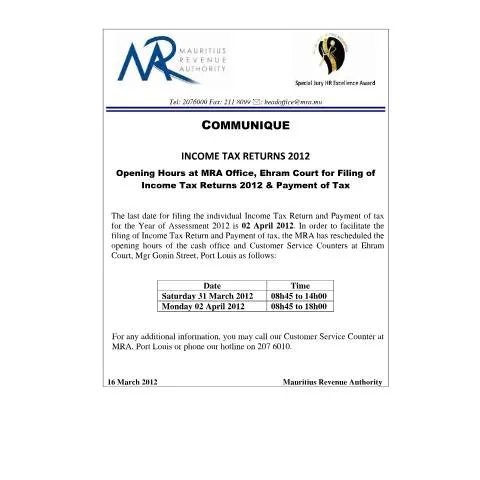
Tax compliance is an essential obligation for every citizen, and the Mauritius Revenue Authority (MRA) plays a crucial role in facilitating this process. The Opening hours at Ehram Court for Payment of Tax and Income Tax Returns 2012 document, issued on 16 March 2012, serves to inform taxpayers about the adjusted service hours for filing income tax returns and making tax payments. The relevance of this document lies not only in its practical implications for taxpayers but also in its role within the broader framework of tax administration in Mauritius.
Key Dates and Their Implications
In the realm of tax administration, timing is everything. The document specifies that the last date for filing individual Income Tax Returns and making tax payments for the Year of Assessment 2012 is 02 April 2012. Understanding this deadline is paramount for taxpayers as failure to comply may result in penalties or late fees.
- Final Filing Date: 02 April 2012
- Extended Office Hours:
- Saturday, 31 March 2012: 08h45 to 14h00
- Monday, 02 April 2012: 08h45 to 18h00
These specific time slots indicate an effort by the MRA to accommodate last-minute filers. Taxpayers should be aware of these hours to ensure they do not miss their opportunity to file on time.
Navigating the Tax Filing Process
The filing process for individual income tax returns can often seem daunting. However, having a clear understanding of the necessary steps can alleviate much of the stress associated with it. The MRA provides structured guidelines for taxpayers, which can be broadly categorized into pre-filing, filing, and post-filing stages.
Pre-Filing Preparations
Before proceeding to file, taxpayers should gather all necessary documentation. This may include:
- Proof of income (payslips, bank statements, etc.)
- Deductions documentation (medical expenses, education expenses, etc.)
- Identification documents (National ID, etc.)
Ensuring that you have all required documents in order will streamline the filing process significantly.
Filing Your Return
Filing can be done in person at the Ehram Court office during the specified hours or through the MRA's online platform. The online filing option, particularly, has been encouraged to simplify the process and reduce waiting times.
Post-Filing Considerations
Once the return is submitted, it is advisable to keep a copy of the filed document for your records. Furthermore, understanding the timeline for processing and any follow-up actions required by the MRA can aid in navigating any queries that may arise later.
Potential Issues and Their Resolution
Taxpayers may encounter various challenges during the tax filing process, such as missing documentation or issues with the online filing system. Being prepared for these potential setbacks can save time and frustration.
Addressing Common Tax Filing Issues
In case of errors or missing documents, taxpayers should:
- Contact the MRA's Customer Service Counter immediately for assistance.
- Check the MRA's official communication channels for any updates or changes in procedures.
- Keep track of all communication with the MRA for accountability.
The Role of Customer Service
The MRA emphasizes the importance of customer service, providing various channels for taxpayers to seek assistance. The hotline at 207 6010 is particularly useful for quick inquiries. Understanding how to effectively utilize these services can ease the filing process.
“Your questions are important to us. We are here to help you navigate your tax filing needs.”
Understanding the Regulatory Framework
The issuance of the communicative document on opening hours is governed by the overarching legal framework that regulates tax collection in Mauritius. It reflects the MRA's commitment to transparency and accessibility, as outlined in the MRA Act and subsequent reforms aimed at enhancing taxpayer services.
Who is Affected by This Document?
This communique primarily targets individual taxpayers in Mauritius. However, it is beneficial to understand the different profiles of taxpayers that may be affected:
| Taxpayer Profile | Specific Considerations |
|---|---|
| Regular Employees | Typically have straightforward filings with predictable income sources. |
| Self-Employed Individuals | May need to track expenses and additional deductions more carefully. |
| Retired Individuals | Should consider any pension income or other retirement benefits that may influence their tax responsibilities. |
Looking to the Future: E-Services and Digitalization
The MRA's push towards e-services signifies a shift in how tax administration is conducted, aiming to simplify processes and make compliance easier for all taxpayers. The online platform is expected to continue evolving, and taxpayers should stay informed about new features and services that can assist in their filing obligations.
Final Thoughts on the Tax Filing Experience
Tax filing, while often viewed as a chore, can be manageable with the right resources and understanding. The MRA's adjustments to opening hours, as communicated in this document, reflect an ongoing commitment to improving taxpayer experience. It’s essential to stay informed, proactive, and engaged with the tax filing process to fulfil this civic duty efficiently.
Understanding Tax Payment Procedures at Ehram Court
When it comes to fulfilling your tax obligations in Mauritius, understanding the procedures and requirements is crucial. Ehram Court, located in Port Louis, serves as a pivotal point for taxpayers to settle their dues, including income tax returns. The process for making payments may vary depending on your specific circumstances, and it’s important to familiarize yourself with the steps involved.
As a first-time taxpayer or returning taxpayer, you need to prepare the necessary documentation before venturing to Ehram Court. You are required to have your National ID Card and any documents related to your income, such as payslips or business income statements. For self-employed individuals, the MRA Form 5 may also be necessary, which provides details about your profits and losses.
Once at the court, you will need to approach the Tax Counter, where officials will guide you through the payment process. If you are filing your Income Tax Return for the first time, it is advisable to consult with the MRA staff at the court. They can provide you with insights on how your tax liabilities are calculated and any exemptions that may apply to you.
Fill in your form directly online
No printing: type your details into the boxes of the official form, tick, then download the PDF ready to send.
- 1Type into the form boxes
- 2Tick in one click
- 3Save and download the PDF
Payment methods at Ehram Court include cash and bank cheques. However, it’s recommended to confirm the accepted payment methods directly with the MRA, particularly with the ongoing push for digital payments.
Accessibility and Assistance for Taxpayers
Ehram Court has made significant strides in ensuring accessibility for all taxpayers. The facility is designed to accommodate individuals with disabilities, featuring ramps and designated parking spaces. Moreover, the MRA has implemented various initiatives to assist taxpayers in understanding their obligations and the processes involved in filing income tax returns.
Taxpayers may benefit from attending workshops or seminars organized by the MRA, which are typically held at Ehram Court. These sessions cover a range of topics, including tax filing, deductions, and the implications of failing to comply with tax regulations. Participating in such events not only provides valuable information but also allows for networking with tax professionals and fellow taxpayers.
In addition, the MRA offers a dedicated helpline and an online chat service through the MRA website for immediate assistance. This can be particularly useful for individuals who may not be able to visit Ehram Court during regular hours due to work commitments or other obligations.
Future Changes and Innovations in Tax Filing
As Mauritius moves towards a more digital economy, the tax filing experience is expected to evolve significantly. The MRA is actively working on enhancing its e-filing system, which allows taxpayers to submit their tax returns electronically. This system aims to simplify the filing process, reduce paperwork, and minimize errors associated with manual submissions.
Taxpayers are encouraged to familiarize themselves with the e-filing platform available through the GOVMU portal. Utilizing the e-filing system will not only streamline your tax submission but also provide immediate confirmation of your submissions, thereby eliminating uncertainty about whether your documents have been received.
Moreover, with updates on tax regulations and the introduction of new policies, staying informed about changes is essential. The MRA regularly publishes updates on its website, and taxpayers are encouraged to subscribe to newsletters or follow them on social media platforms to receive timely information.
In conclusion, being proactive and informed about the tax payment procedures at Ehram Court will greatly enhance your experience. By understanding the requirements, utilizing available resources, and embracing the digital tools offered by the MRA, you can ensure your compliance with tax regulations in Mauritius.