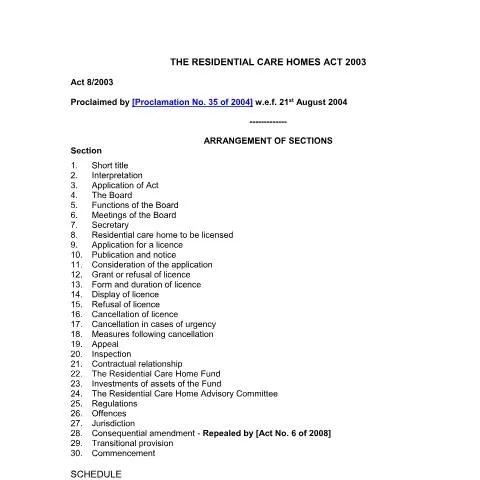
Understanding the Residential Care Homes Act 2003 of Mauritius
The Residential Care Homes Act 2003 is a crucial piece of legislation enacted by the Parliament of Mauritius to regulate establishments that provide residential care services. This Act aims to ensure the safety, quality, and proper management of residential care homes, which cater to vulnerable populations such as the elderly, persons with disabilities, children, and women in need of personal or medical care.
Scope and Application of the Act
The Act applies to any establishment, whether established by statute or otherwise, that offers:
- Personal care and accommodation for elderly persons or individuals with disabilities, including those affected by illness or injury.
- Services for children and women requiring special care.
- Nursing services for individuals suffering from sickness, injury, or infirmity.
- Facilities for pregnant women or women immediately after childbirth.
- Medical and rehabilitative services for persons with mental disorders under medical supervision.
- Places of safety for individuals in distress.
It is important to note that the Act explicitly excludes hospitals, clinics, and educational institutions from its scope. Additionally, the law provides the possibility for the Board to exempt certain establishments from the Act’s provisions based on specific criteria, such as the number of residents or the nature of care provided.
Regulatory Body and Its Functions
The Residential Care Homes Board
The enforcement and oversight of the Act are entrusted to the Residential Care Homes Board, established under Section 4 of the legislation. The Board is composed of representatives from various government ministries, including Social Security, Health, Finance, Public Infrastructure, and Family Affairs, as well as legal and management professionals involved in residential care management.
Key Responsibilities of the Board
The Board's core functions include:
- Supervising and controlling residential care homes to ensure compliance with legal and safety standards.
- Monitoring adherence to licensing conditions by licensees.
- Overseeing the work of inspectors conducting inspections and assessments.
- Developing and enforcing codes of practice for residential care homes to promote quality care.
Licensing and Compliance
One of the central features of the Act is the licensing system, designed to regulate the operation of residential care homes:
- Applicants must submit a formal application for a license, providing detailed information about their establishment.
- The Board reviews applications, considering compliance with safety, health, and operational standards.
- Licenses are granted for specific durations and must be displayed prominently within the establishment.
- Licenses can be refused, canceled, or suspended if the licensee fails to meet the prescribed standards or breaches conditions.
In cases of urgent circumstances, the Board has the authority to cancel licenses immediately and take necessary measures to protect residents.
Inspection and Enforcement
Regular inspections are mandated to ensure ongoing compliance with the Act. Inspectors have the authority to access residential care homes, review records, and assess the quality of care provided. Violations of the law can lead to legal penalties, including fines or imprisonment, as stipulated in Section 26 of the Act.
Fill in your form directly online
No printing: type your details into the boxes of the official form, tick, then download the PDF ready to send.
- 1Type into the form boxes
- 2Tick in one click
- 3Save and download the PDF
Legal and Administrative Framework
The Act provides a comprehensive legal framework for the establishment, regulation, and oversight of residential care homes. It establishes procedures for licensing, inspections, and appeals, ensuring transparency and accountability. The Act also sets out the powers and responsibilities of the Secretary of the Board, who maintains records and facilitates communication between the Board and licensees.
Further Information and Compliance
For individuals or organizations involved in operating or managing residential care homes, adherence to the provisions of the Residential Care Homes Act 2003 is mandatory. The legislation is supported by regulations and codes of practice that specify operational standards, resident rights, staff qualifications, and safety protocols.
It is advisable for license applicants and licensees to consult the official documentation, including the Act and associated regulations, to ensure full compliance. Applications for licenses, renewal procedures, and other administrative processes are typically conducted via the government portals, with online submissions facilitated through the relevant authorities such as the Ministry of Social Security, National Solidarity and Human Rights.