Understanding the GN No. 13 of 2012: A Vital Tool in Insolvency Proceedings
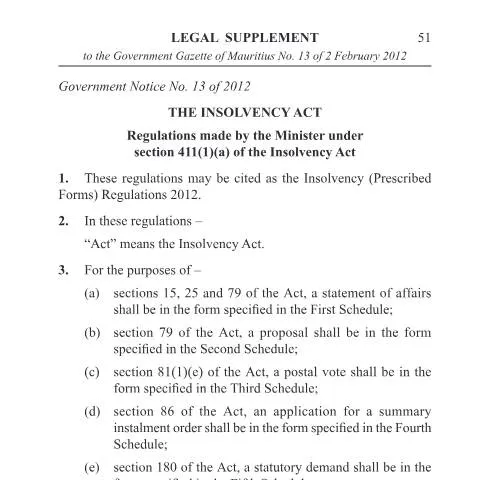
In the realm of insolvency law in Mauritius, the GN No. 13 of 2012 serves a critical function. This document, formally known as the Statement of Affairs, is central to the processes defined under the Insolvency Act. A significant moment occurs when individuals or entities face financial difficulty, necessitating the submission of this statement as part of their insolvency proceedings. It not only outlines their financial situation but also plays a pivotal role in their attempt to regain financial stability.
Navigating the Submission Channels for the Statement of Affairs
Submitting the Statement of Affairs can be approached through various channels, each of which has its unique implications and procedural requirements.
Online Submission
The most streamlined method of submission is through the government’s e-services platform. This digital approach allows users to fill out the GN No. 13 of 2012 online, ensuring timely and efficient processing. To utilize this service, it is necessary to have access to the MauPass single-sign-on system linked to your National Identity Card. The online interface also offers guidance, reducing the risk of errors in submission.
Paper Submission
For those who prefer traditional methods, submitting a physical copy of the form is still an option. This process involves downloading the form, filling it out manually, and submitting it in person at the Supreme Court of Mauritius. While this method may feel familiar, it is less efficient and can lead to longer processing times.
Submission at the Counter
Alternatively, applicants may choose to submit their forms at designated counters in the Supreme Court. This option allows for direct interaction with court officials, providing an opportunity to clarify any questions about the form or the insolvency process. However, the downside could be long queues and potentially extended waiting times, particularly during peak hours.
Positioning the Statement of Affairs Within the Insolvency Framework
The GN No. 13 of 2012 is not an isolated document; rather, it is embedded within a broader framework of legal procedures concerning insolvency. This framework includes several key sections of the Insolvency Act which outline when and how this statement must be used.
- Section 15: Initiating a debtor’s petition requiring the statement to disclose the debtor's financial condition.
- Section 25: Following a bankruptcy order, necessitating an accurate account of the debtor's affairs.
- Section 79: In situations of proposal by an insolvent to creditors, the statement becomes essential for transparency and negotiation purposes.
Each of these sections dictates specific circumstances under which the Statement of Affairs must be submitted, highlighting its integral role in insolvency processes.
Implications for the Individual Submitting the Statement
Completing and submitting the GN No. 13 of 2012 carries significant weight in terms of an individual's rights and obligations. Understanding these implications is crucial for anyone navigating the insolvency landscape.
Rights Granted
Submitting this form can potentially unlock several rights for the individual, including:
- Protection from creditor actions during the insolvency process.
- Possibility of restructuring debts under court supervision.
- Access to financial rehabilitation programs.
Obligations Involved
However, it is equally important to recognize the obligations that come with submission:
- Providing accurate and honest disclosures of financial matters.
- Adhering to timelines stipulated by the court for submission.
- Engaging constructively with creditors throughout the insolvency process.
Failure to meet these obligations could lead to severe consequences, including potential legal action by creditors or even criminal charges for fraudulent disclosures.
Diving Into the Details of the Form: Breakdowns and Potential Pitfalls
Filling out the Statement of Affairs is a meticulous process, and understanding each section can mitigate common mistakes.
Personal Information Section
The first section requires comprehensive personal information, including:
- Full name and any commonly known names.
- National Identity Card Number.
- Contact details (address, telephone).
One must ensure accuracy in this section, as discrepancies could delay processing or result in rejection.
Employment Status and Causes of Insolvency
Next, applicants are required to detail their current employment status. This section asks for information on whether the individual is employed, self-employed, unemployed, or retired. Additionally, individuals must select the primary cause of their insolvency from a list, which includes:
- Unemployment or loss of income
- Ill health
- Excessive debt
- Legal issues
It is advisable to provide thorough explanations to substantiate the chosen causes, as this may impact negotiations with creditors.
Income and Dependents
The statement also requires a detailed account of all income sources and dependents. Inaccuracies or omissions in this section could lead to complications later on.
Checklist for Accuracy:- Ensure all income sources are listed.
- Detail the net monthly amount accurately.
- List all dependents comprehensively, including their relationship and age.
Legal Proceedings and Past Insolvencies
Applicants must disclose any past involvement in insolvencies or ongoing legal proceedings. Failing to disclose this information not only jeopardizes the current submission but could also lead to legal repercussions.
Understanding the Regulatory Framework: Historical Context and Legal Basis
The GN No. 13 of 2012 is rooted in the Insolvency Act, which provides the legal framework for addressing insolvency in Mauritius. This act was enacted to protect both creditors and debtors, ensuring fair treatment throughout the insolvency process.
Over the years, the legal landscape surrounding insolvency has evolved, reflecting changes in the economy and increasing awareness of financial literacy. The implementation of the GN No. 13 of 2012 marks a critical step in enhancing transparency and accountability in insolvency proceedings.
Key Legislative Milestones
- Insolvency Act of 2009: Established the foundational principles of insolvency law.
- Amendments in 2012: Introduced new regulations to streamline insolvency processes and improve borrower protections.
- Recent Developments: Continuous updates in response to economic shifts and societal needs.
Addressing Common Issues: What to Do When Facing Rejections or Errors
Submitting the Statement of Affairs is not the final step; what follows can often be just as critical. Understanding how to handle potential rejections or issues is paramount.
What If Your Submission Is Rejected?
If the Supreme Court rejects your submission, it is crucial to understand the reasons behind the rejection. Common reasons may include:
- Incomplete information.
- Failure to sign the document.
- Inconsistencies in financial disclosures.
Upon rejection, applicants should promptly address the issues highlighted in the rejection notice. This may involve gathering additional documentation or clarifying information. Once rectified, the form can be resubmitted.
Dealing with Missing Documents
In cases where supporting documents are missing, applicants are encouraged to quickly compile the necessary paperwork. The statement cannot be fully processed without complete documentation. Items commonly required may include:
- Proof of income (payslips, bank statements).
- Identification documents (National ID, passports).
Failure to provide these documents may result in further delays, so timely action is essential.
Conclusion: A Critical Ally in Financial Rehabilitation
The GN No. 13 of 2012 is more than just a form; it is a crucial instrument in the path to financial recovery for many individuals facing insolvency. Through awareness and understanding of its significance, submission process, and the implications it entails, users can navigate the complexities of insolvency with greater confidence. The journey may be challenging, but with the right knowledge and preparation, individuals can turn a critical financial setback into an opportunity for renewal and stability.
Understanding the Implications of GN No. 13 of 2012 on Public Procurement
GN No. 13 of 2012, also known as the Public Procurement (Amendment) Regulations, has significantly reshaped the landscape of public procurement in Mauritius. This regulation is a pivotal document that reinforces the principles of transparency, accountability, and fairness in the award of public contracts. Its implementation requires all government entities to adhere strictly to specified guidelines during the procurement process.
Fill in your form directly online
No printing: type your details into the boxes of the official form, tick, then download the PDF ready to send.
- 1Type into the form boxes
- 2Tick in one click
- 3Save and download the PDF
The regulations necessitate that all public tenders must be advertised in the Government Gazette and at least one local newspaper, ensuring maximum visibility and competition among potential suppliers. This is particularly important for small and medium enterprises (SMEs) looking to participate in government contracts, as it opens up bidding opportunities that were previously inaccessible.
Furthermore, GN No. 13 mandates the establishment of a Procurement Committee for each public entity, tasked with overseeing the procurement process, evaluating bids, and ensuring compliance with established regulations. This committee must include members with appropriate qualifications and experience, promoting a more professional approach to public procurement. Stakeholders, including bidders, are encouraged to provide feedback and raise concerns regarding the procurement process, fostering a culture of collaboration and continuous improvement.
For businesses interested in engaging with government projects, it is essential to familiarize themselves with GN No. 13 and the associated procedures to secure a competitive edge. This includes understanding various procurement methods such as open tendering, restricted tendering, and direct procurement, each serving its purpose depending on the nature and urgency of the procurement requirement.
Challenges and Opportunities under GN No. 13 of 2012
While GN No. 13 of 2012 has made strides in enhancing procurement practices, challenges remain that both public entities and private suppliers must navigate. One of the primary challenges is the bureaucratic nature of the tendering process, which can lead to delays and frustration among potential bidders. The requirement for extensive documentation and compliance checks may discourage smaller enterprises from participating, which defeats the regulation's intention to promote inclusivity.
Moreover, the lack of training and capacity building for public officials responsible for managing procurement processes can result in inconsistencies in how regulations are applied, potentially leading to disputes and allegations of unfair practices. It is crucial for the Public Procurement Authority to invest in ongoing training initiatives that equip officials with the skills necessary to execute procurement processes effectively and transparently.
On the flip side, GN No. 13 presents significant opportunities for businesses looking to expand their operations. It allows for more structured competition, which can lead to better pricing and service quality. For firms that can adapt to the regulatory requirements, successful bidding for government contracts can provide a stable revenue stream and enhance their reputation in the market.
Furthermore, the emphasis on transparency and accountability can lead to better governance and reduced corruption in public procurement, creating a more level playing field for all participants. Businesses are encouraged to establish robust compliance mechanisms and build relationships with government agencies to facilitate smoother interactions during the procurement process.
Future Developments and Amendments in Public Procurement Legislation
As Mauritius continues to evolve its public procurement landscape, stakeholders should stay informed about potential amendments to GN No. 13 of 2012 and related regulations. The government periodically reviews and updates procurement laws to align with international best practices and address emergent challenges faced by public entities and suppliers alike.
In recent discussions, there has been a growing consensus on the need to incorporate more digital tools into the procurement process. E-procurement platforms are being explored to streamline bidding, submission, and evaluation processes, reducing paperwork and enhancing efficiency. These platforms could facilitate real-time tracking of bids and provide a more transparent framework for all stakeholders involved.
Moreover, emphasis on sustainable procurement practices is likely to gain traction, with the government advocating for environmentally friendly products and services in public contracts. This shift could lead to more opportunities for companies specializing in green technologies and sustainable solutions.
It is also important for businesses to engage in dialogue with government representatives to voice their concerns and suggestions regarding procurement processes. Active participation in public consultations can help shape future amendments and ensure that regulations remain conducive to fostering a competitive and fair procurement environment.
Ultimately, staying abreast of legislative developments and being proactive in adapting to changes in procurement practices will be essential for both public entities and suppliers seeking success in Mauritius's dynamic public procurement framework.