Understanding GN139_2015: A Key Element in the Corporate Landscape
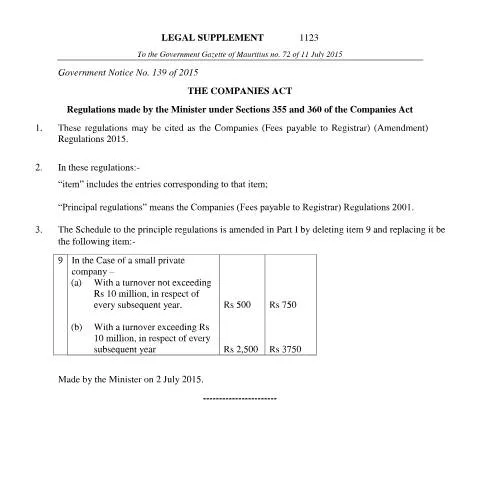
The GN139_2015 form, under the auspices of the Companies Act in Mauritius, serves a pivotal role in the regulatory framework governing corporate entities. It specifically pertains to the fees payable to the Registrar of Companies, a vital aspect for businesses seeking compliance within the dynamic Mauritian market. Understanding the nuances of this document is essential for entrepreneurs, company secretaries, and financial officers responsible for ensuring that their corporate obligations are met.
Historical Context: The Evolution of Corporate Regulation in Mauritius
The backdrop of GN139_2015 is steeped in the regulatory reforms aimed at improving corporate governance and transparency in Mauritius. The Companies Act, initially enacted in 2001, set the groundwork for corporate regulation, but it was the amendments introduced by GN139_2015 that refined the fee structure for local businesses.
Prior to these amendments, the fee schedules were often seen as a hindrance to new and small businesses. By optimizing the fee structure, as outlined in this document, the Government of Mauritius aims to foster entrepreneurship while ensuring that companies contribute fairly to the regulatory framework.
The Legislative Framework
The GN139_2015 was promulgated in accordance with Sections 355 and 360 of the Companies Act, reflecting an ongoing commitment to adapt the regulatory landscape in line with economic realities and business needs. The amendments specifically target the fees related to small private companies, aligning the costs with their turnover, thereby introducing a tiered fee system.
Decoding the Fee Structure: What GN139_2015 Entails
Individuals and entities filling out the GN139_2015 form will need to understand the intricacies of the fee structure established by this amendment. Below is a detailed comparison of the fees as amended:
| Company Turnover | Annual Fee (Rs) | Description |
|---|---|---|
| Not exceeding Rs 10 million | 500 | Subsequent yearly fee for small private companies |
| Exceeding Rs 10 million | 2,500 | Subsequent yearly fee for larger private companies |
| Small private company with turnover not exceeding Rs 10 million | 750 | Initial registration fee |
| Small private company with turnover exceeding Rs 10 million | 3,750 | Initial registration fee |
Who is Required to Submit GN139_2015?
The onus of submitting the GN139_2015 form falls primarily on the registered companies in Mauritius. This includes:
- Small private companies looking to register or renew their registration.
- Larger private companies exceeding the aforementioned turnover thresholds.
Company secretaries and authorized representatives typically handle the submission, ensuring that all necessary details and fees are accurately accounted for.
Step-by-Step Process: From Trigger to Submission
Understanding the procedural flow surrounding the GN139_2015 form can streamline the registration process. Below is a chronological outline of the steps involved:
- Assessment of Company Status: Determine whether the company qualifies as small or large based on its annual turnover.
- Preparation of Documents: Compile necessary documents, including financial statements and proof of turnover.
- Completion of GN139_2015 Form: Fill out the form with accurate financial details and select the appropriate fee category.
- Payment of Fees: Ensure that the requisite fees are paid as outlined in the fee structure.
- Submission: Submit the completed form and proof of payment to the Registrar of Companies.
After Submission: What Comes Next?
Upon submitting the GN139_2015 form, the Registrar of Companies undertakes a review process. Companies can expect the following:
- Acknowledgment: An acknowledgment receipt will be issued, confirming that the submission has been received.
- Review Period: The Registrar will evaluate the application, which may take several weeks depending on the volume of submissions.
- Registration Certificate: If all requirements are met, the company will receive a registration certificate reflecting compliance with the amendment regulations.
Handling Refusals and Missing Documents
In instances where the GN139_2015 submission is refused, or if there are missing documents, it is vital to act promptly:
- Notification: The Registrar will notify the applicant of the specific reasons for refusal.
- Rectification: Companies are encouraged to address the noted issues and resubmit the form with the necessary amendments.
- Time Frame for Resubmission: Applicants typically have a limited window to rectify submissions; they should check with the Registrar for specific timelines.
Proactive Planning: Key Dates and Obligations
Companies should be cognizant of the fiscal calendar, which runs from July 1 to June 30. Key dates include:
- Submission Deadline: Companies must submit their GN139_2015 form and fees before the commencement of the fiscal year.
- Review Notifications: Companies will be notified of any changes or issues within two months of submission, allowing for timely rectifications.
- Annual Reporting: Companies must also prepare for annual financial reports, which will tie back into the information provided in the GN139_2015 form.
Final Thoughts: Navigating the Regulatory Environment
The GN139_2015 form is more than just a compliance document; it is a gateway for businesses to engage with the regulatory framework of Mauritius. By understanding its role, the associated fees, and the submission process, companies can navigate the complexities of registration and compliance efficiently. Staying informed about deadlines, potential refusals, and rectification processes can significantly enhance a company’s administrative efficiency and foster better engagement with the regulatory bodies. Ensuring your company is compliant with GN139_2015 is not just a legal obligation, but a step towards sustainable growth and integrity in the corporate sector.
Understanding GN139_2015: A Comprehensive Overview
GN139_2015, also known as the Government Notice No. 139 of 2015, is pivotal in the administration of local governance in Mauritius. Issued under the aegis of the Ministry of Local Government and Outer Islands, this notice primarily addresses the operational framework for local authorities regarding various administrative processes. The framework outlines roles, responsibilities, and regulations that local government bodies must adhere to while delivering services to citizens.
This notice is significant as it serves as a guiding document for local councils and lays down procedures for public procurement, financial management, and the implementation of projects aimed at enhancing community welfare. Local authorities are mandated to align their actions with the provisions of GN139_2015 to ensure transparency, accountability, and efficient use of public funds. This adherence is essential, particularly in light of the hybrid legal system that governs Mauritius, merging the principles of French civil law with English common law procedures.
Additionally, GN139_2015 encourages participation from local populations in governance processes, emphasizing the importance of citizen engagement and feedback. Local councils are urged to develop strategic communication plans and public consultation processes, ensuring that residents have a voice in decisions affecting their communities. The emphasis is on a participatory approach that not only enhances the legitimacy of local governance but also ensures that service delivery is tailored to the specific needs of various constituencies.
Key Implications of GN139_2015 for Local Government Recruitment
The implications of GN139_2015 extend significantly into the domain of local government recruitment processes, particularly as overseen by the Local Government Service Commission (LGSC). This Government Notice stipulates guidelines that influence the recruitment, promotion, and training of personnel within local authorities. The LGSC is tasked with ensuring that recruitment practices are merit-based and transparent, following the principles laid out in GN139_2015.
Fill in your form directly online
No printing: type your details into the boxes of the official form, tick, then download the PDF ready to send.
- 1Type into the form boxes
- 2Tick in one click
- 3Save and download the PDF
One of the notable aspects of this notice is its emphasis on equal opportunity in recruitment. All local government bodies must ensure that their job advertisements, application procedures, and selection processes reflect a commitment to diversity and inclusivity. This is crucial in Mauritius, where a rich tapestry of cultures and communities exists, and the need for a workforce that reflects this diversity is paramount.
Furthermore, GN139_2015 outlines mandatory training programs for newly recruited staff and existing personnel to ensure they are equipped with the necessary skills and knowledge to fulfill their roles effectively. This training is not only confined to technical skills but also encompasses knowledge of the laws and regulations governing local governance, thereby promoting a culture of compliance and ethical governance.
Additionally, the notice mandates local authorities to adopt performance management systems that are aligned with the strategic objectives of local governance. These systems are designed to assess the performance of local government employees based on clearly defined metrics, thereby fostering a culture of accountability and continuous improvement.
Challenges and Opportunities in Implementing GN139_2015
While GN139_2015 provides a robust framework for local governance, its implementation is not without challenges. Local authorities often face resource constraints, including insufficient funding and manpower, which can hinder their ability to fully comply with the provisions of the notice. The decentralization of powers to local bodies, while beneficial in theory, sometimes results in operational difficulties, especially in rural areas where access to technology and training resources can be limited.
Moreover, resistance to change can be a barrier. Some local councils, accustomed to traditional methods of governance, may find it challenging to adapt to the new practices encouraged by GN139_2015. The transition to an e-governance model, which is heavily promoted, requires not only technological investment but also a cultural shift within the organization. Training and capacity-building initiatives are critical in addressing these barriers and ensuring that employees understand the benefits of these new processes.
However, despite these challenges, there are significant opportunities presented by GN139_2015. The push for transparency and accountability can enhance public trust in local governance. By adopting the procedures outlined in this notice, local authorities can foster better relationships with their constituents, ultimately leading to improved service delivery. The emphasis on community participation can also empower citizens, making them active partners in the governance process rather than passive recipients of services.
In conclusion, while the road to fully implementing GN139_2015 may be fraught with challenges, the potential benefits in terms of increased efficiency, public engagement, and better governance practices provide a compelling case for continued investment and commitment to the notice's principles.