Navigating the Complexities of Practice Note 180116
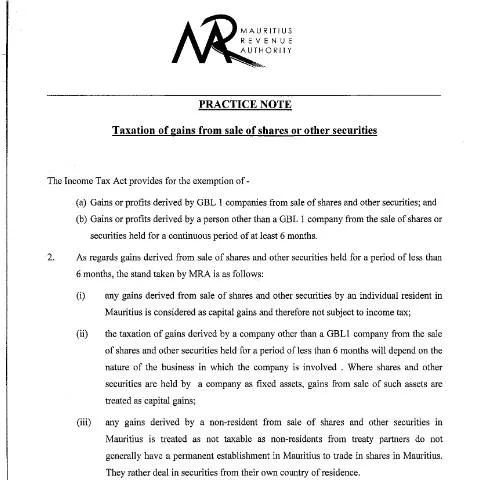
The Practice Note 180116 serves as a crucial document under the purview of the Mauritius Revenue Authority (MRA), outlining the taxation rules regarding the gains from the sale of shares or other securities. Understanding this document can significantly impact both individual investors and companies engaged in trading activities in Mauritius. In this article, we will take a comprehensive look at the various facets of this document, from who must file it to the nuances of filling it out correctly. We will also touch upon unique scenarios, administrative processing, and implications for various stakeholders.
The Essential Role of Practice Note 180116
At its core, Practice Note 180116 outlines the exemptions and conditions under which gains from the sale of shares or other securities may be taxed. This document is key for:
- Individual Investors: It provides guidance for residents on how their investments will be taxed.
- Companies: Businesses need to understand their obligations regarding the sale of shares to comply with tax regulations.
- Non-residents: The document clarifies the tax treatment of non-residents, a crucial aspect for foreign investors considering the Mauritian market.
The rules outlined in this document are based on the Income Tax Act and provide the framework for understanding capital gains, which are generally exempt from income tax under certain conditions. This framework ensures that all stakeholders are aware of the potential tax liabilities or exemptions applicable to their transactions.
Step-by-Step Completion of the Form
Filling out the necessary documentation linked to Practice Note 180116 can appear daunting. However, by breaking down the form into manageable sections, individuals and businesses can navigate the process smoothly. Here are the key steps to consider when completing the associated form:
1. Gathering Required Information
Before completing the form, ensure you have all necessary details at hand:
- Personal Identification: For individuals, a National ID number is essential. Companies must provide their registration details.
- Transaction Details: Specifics of shares or securities sold, including dates and amounts.
- Financial Statements: For companies, relevant documents showcasing the nature of the business involved in trading.
2. Ensuring Clarity in Reporting
When filling out the form, clarity is paramount. Ambiguities may lead to delays in processing:
- Use precise language and avoid abbreviations that may cause confusion.
- Double-check numerical values for potential errors before submission.
3. Special Sections for Unique Cases
The form includes specific sections for unique situations, such as:
- Minors: Special identification requirements for transactions involving minors.
- Non-residents: Additional documentation to prove your residency status may be required.
Addressing these unique cases upfront can help expedite the review process.
Submission Process: Where and How?
Once the form is completed, the next critical step involves submitting it correctly. The submission process entails:
1. Online Submission through MauPass
For a seamless experience, utilize the MauPass platform for online submission. This requires:
- National ID Card: Ensure you have your National ID as it is linked to the Central Population Database.
- Creating an Account: If you do not already have an account, set one up on the government portal.
2. Physical Submission
For those who prefer traditional methods, forms can be submitted in person or via postal service to the relevant office of the MRA. Ensure that:
- You send copies of all relevant documents along with your form.
- Keep a receipt of your submission for tracking purposes.
The Administrative Processing of Your Submission
Once the form is submitted, it enters the administrative processing phase. Understanding how this process works can help alleviate anxiety about the status of your submission.
1. Acknowledgment of Receipt
Upon successful submission, you will receive an acknowledgment from the MRA confirming receipt of your application. This document is vital as it serves as proof that your submission is in the system.
2. Review Period
The MRA will review your submission for completeness and accuracy. During this period, you can:
- Follow Up: Contact the MRA if you have not received feedback within the expected timeframe.
- Provide Additional Information: Be prepared to supply any requested documentation promptly.
3. Decision Notification
After evaluation, the MRA will issue a decision. If your application is approved, you will receive a formal notification outlining the implications of the decision, including any applicable tax exemptions. Conversely, if your application is denied, the notification will include reasons for denial and options for appeal.
Understanding the Broader Context of the Practice Note
Practice Note 180116 does not exist in a vacuum; it is part of a larger framework of tax regulations and policies. Understanding its place within this context is essential for comprehensive compliance:
- Regulations Governing Capital Gains: This practice note forms part of the Income Tax Act, which stipulates general tax obligations applicable to all residents and companies.
- Integrating with Other Forms: Often, the completion of this form is tied to other documentation you may need to submit for broader tax reporting.
Being aware of these connections can facilitate a more coherent approach to fulfilling tax obligations.
Decoding the Form: An In-Depth Look at Its Sections
A meticulous examination of the form reveals various sections, each designed to capture specific information crucial to the processing of your submission. Here’s a breakdown:
1. Personal Information Section
This section requires your basic details. Ensure that:
- All names are spelled correctly.
- Contact information is up-to-date, as the MRA will use this for communication.
2. Transaction Details
Detailing the specifics surrounding your gains is essential:
- Include dates of purchase and sale to substantiate claims of capital gains.
- Clearly outline the amounts gained to avoid discrepancies in calculations.
3. Nature of Business
For companies, the document requires an explanation of the business nature involved in trading shares:
- This may include categorizing shares as fixed assets or inventory, which can influence taxation.
Conclusion: The Practical Implications of Compliance
Understanding and correctly completing the documentation related to Practice Note 180116 is not merely a bureaucratic exercise—it has real financial implications. Non-compliance or errors in submission can lead to unnecessary tax liabilities and potential legal issues. By remaining informed and diligent, both individuals and businesses can navigate the complexities of the taxation landscape in Mauritius effectively.
For those looking to engage in the stock market or manage investment portfolios, being well-versed in these requirements is not just beneficial; it’s essential. Always keep updated with any changes in tax laws or practices through official channels to ensure compliance and optimize your financial strategies.
Understanding the PSC Recruitment Process: A Step-by-Step Guide
The Public Service Commission (PSC) of Mauritius is responsible for the recruitment of various public service positions. Understanding the recruitment process is crucial for applicants seeking a career in public service. The process typically starts with the publication of job vacancies in the official Gazette and on the PSC’s website. It’s essential to keep an eye on these announcements as they provide detailed information about the available positions, including requirements, application deadlines, and specific instructions.
Once a vacancy is identified, applicants must complete the relevant PSC application form, commonly referred to as PSC Form 7. This form requires personal information, educational qualifications, work experience, and any other relevant details. The completed form must be submitted online via the MauPass platform, which is linked to the applicant’s National ID Card. Ensure that all sections of the form are filled out accurately to avoid delays or rejections.
After submission, the PSC evaluates applications based on the criteria set out in the job announcement. Shortlisted candidates may be called for an interview, which could include competency-based assessments or written tests, depending on the nature of the position. It is essential to prepare well for these assessments, as they play a significant role in the final selection process.
Fill in your form directly online
No printing: type your details into the boxes of the official form, tick, then download the PDF ready to send.
- 1Type into the form boxes
- 2Tick in one click
- 3Save and download the PDF
Following the interviews, candidates will be notified of the final decisions via email, and successful candidates will receive an offer letter detailing the terms of employment. It’s advisable to respond promptly to any communications from the PSC and to keep a record of all submitted documents and correspondence.
Understanding this process will not only help applicants navigate their way through recruitment but also increase their chances of securing a position within the Mauritian public service.
Common Challenges and Solutions in the Application Process
While applying for a position within the public service in Mauritius can be straightforward, many applicants encounter challenges that can impede their progress. One common issue is the technical difficulties faced while navigating the MauPass platform. Since the system is linked to the Central Population Database, any discrepancies in personal information can lead to access issues. Applicants should ensure that their National ID Card details match the information in the database.
Another challenge relates to understanding eligibility criteria. Applicants often misinterpret the qualifications or experience required for a specific position, leading to unnecessary applications. It is recommended to carefully read the job description and criteria outlined in the vacancy notice and, if needed, reach out to the PSC for clarification.
Additionally, candidates frequently express concerns about the timelines involved in the recruitment process. The duration from application submission to final decision can vary significantly. To mitigate uncertainties, candidates should regularly check the PSC’s website for updates and be proactive in following up on their applications.
Lastly, preparation for the interview stage is crucial. Many candidates underestimate the importance of preparation and may then struggle during the assessment. Engaging in mock interviews, researching common interview questions, and reviewing the relevant laws and regulations pertaining to the specific role can enhance a candidate’s performance.
By recognizing these challenges and preparing accordingly, candidates can significantly improve their chances of success in securing a position within the public service.
The Role of Continuous Professional Development in Public Service Careers
In the dynamic landscape of public service in Mauritius, continuous professional development (CPD) has become an integral part of career advancement for public servants. Once individuals secure their positions, engaging in CPD activities is essential to remain competent and effective in their roles. This may include attending workshops, seminars, or pursuing further education relevant to their field.
The government of Mauritius encourages public servants to take part in CPD initiatives, recognizing that an informed and skilled workforce benefits public service delivery. Various training programs are available that focus on essential skills such as leadership, project management, and policy analysis. Public servants are also encouraged to participate in interdisciplinary training, which fosters collaboration and understanding across different sectors of public service.
Moreover, the PSC may periodically review the performance and development needs of public servants. This could result in mandatory CPD requirements for certain roles, particularly for those in leadership positions or specialized areas. Public servants should therefore be proactive in seeking out opportunities for development and be prepared to demonstrate how these efforts contribute to their professional growth and the overall objectives of the public service.
In summary, prioritizing continuous professional development is not just beneficial for individual career progression; it also enhances the capacity of the public service to meet the evolving needs of the Mauritian society effectively.