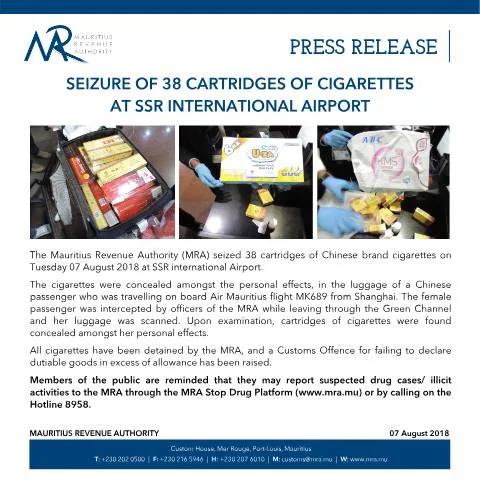
Understanding the Impact of the Seizure at SSR International Airport
The event of 07 August 2018 marked a significant moment in the realm of border control and customs regulation at Mauritius's SSR International Airport. The Mauritius Revenue Authority (MRA) took decisive action by intercepting a Chinese passenger attempting to smuggle 38 cartridges of cigarettes concealed within her personal belongings. This incident not only highlights the ongoing efforts in combating smuggling but also serves as a crucial reminder regarding the legal obligations faced by travelers regarding the declaration of dutiable goods.
Channel of Submission: Reporting Customs Offences
When customs offences occur, such as the one that transpired on that August day, the MRA initiates specific processes for reporting and addressing these violations. The reporting can occur through various channels:
- Online Reporting: The MRA has developed an online platform for reporting illicit activities, including customs violations. Users can report suspicious behavior or activities directly through the MRA Stop Drug Platform on the MRA's official website.
- Telephone Hotline: The MRA operates a Hotline (8958) which citizens can call anonymised for reporting any suspicious customs activities. This approach encourages community participation in vigilance against smuggling.
- In-person Reporting: Individuals can also report in person at the MRA offices or at the Customs House located in Mer Rouge, Port-Louis. There, customs officers are available to take reports and provide necessary guidance.
The Chain of Procedures Following a Seizure
The seizure of contraband goods, like the cigarettes in this instance, sets into motion a series of administrative procedures. After the detection of undeclared goods, the MRA follows a structured approach:
- Initial Inspection: Upon interception, customs officers conduct a thorough inspection of the passenger’s luggage. In this case, the cigarettes were discovered through a luggage scan.
- Detainment of Goods: The seized items, such as the 38 cartridges, are retained by the MRA for further investigation and potential legal action.
- Issuing of a Customs Offence Notice: The MRA escalates the situation by raising a Customs Offence for the traveller, indicating the failure to declare dutiable goods exceeding the allowed limits.
- Legal Proceedings: Depending on the gravity of the offence, the MRA may initiate legal proceedings. This step requires the passenger to navigate through the legal implications of smuggling.
Decoding the Details: Key Sections of the Press Release
The press release related to the seizure contains vital information relevant to all stakeholders, including travelers, customs officers, and legal professionals. Let’s break down the critical components of the document:
| Section | Description |
|---|---|
| Date of Incident | Indicates the specific date on which the customs offence occurred, establishing a timeline for legal procedures. |
| Location | SSR International Airport, highlighting the jurisdiction of the incident and the MRA’s enforcement area. |
| Quantity of Seized Goods | 38 cartridges of cigarettes, illustrating the scale of the offence and the potential financial implications for the offender. |
| Passenger Profile | A Chinese female passenger, which raises questions regarding awareness of customs laws by international travelers. |
| Action Taken | Detention of cigarettes and initiation of a Customs Offence, emphasizing the MRA's proactive stance in enforcing customs regulations. |
| Public Awareness | Encouragement of community reporting through the MRA Stop Drug Platform, underscoring the role of the public in customs enforcement. |
The Traveller’s Perspective: Rights and Responsibilities
Travelers should be acutely aware of their rights and responsibilities when entering Mauritius. The legal framework surrounding customs regulations is designed to ensure both the protection of national interests and the fair treatment of individuals. Among the essential elements are:
- Declaration of Goods: Travelers must declare all dutiable goods upon entry. Failing to do so can result in significant penalties, as seen in the August incident.
- Understanding Allowances: Each passenger is allowed a specific allowance for dutiable goods. It is crucial to familiarize oneself with these limits to avoid inadvertent violations.
- Legal Recourse: Individuals implicated in customs offences retain the right to contest the charges through legal channels, although they must navigate a complex system of customs laws.
Legal Framework: History and Context of Customs Enforcement in Mauritius
The enforcement of customs regulations in Mauritius operates within a hybrid legal system, merging principles from French civil law with English common law. This framework influences how customs offences are defined, prosecuted, and penalized:
- Customs Act: Governs the conduct of customs operations in Mauritius, outlining the responsibilities of the MRA and the rights of travelers.
- PSC Act 1955: While primarily focused on public service recruitment, this Act also underscores the overarching legal context within which public officials operate, including customs officers.
- Constitution of 1968: Provides the foundational legal principles guiding administrative justice, ensuring that customs enforcement respects citizens' rights.
The historical perspective showcases Mauritius's commitment to combating smuggling and protecting its economy, particularly in light of increasing global concerns regarding illicit trade.
Exceptions and Special Cases: Navigating Complex Situations
While the standard procedures are outlined, the MRA is also prepared to address special situations, including those involving foreign nationals, minors, and other complicating factors:
- Foreign Nationals: Travelers entering Mauritius from international destinations may face different scrutiny levels, depending on the country of origin and their prior travel history.
- Minors: In instances where minors are involved, the legal implications can differ. Guardians or accompanying adults may be held accountable for any customs violations committed by minors.
- Urgent Situations: Circumstances such as medical emergencies or urgent departures may influence how customs procedures are applied, although they do not exempt individuals from legal responsibilities.
The Broader Implications of Customs Enforcement on Society
The seizure incident serves as a microcosm of larger societal issues, including public health, safety, and economic integrity. The consequences of smuggling extend beyond individual offenders, impacting the wider community:
- Public Health Risks: The importation of unregulated goods poses significant health risks, particularly concerning tobacco products that may not meet national health standards.
- Economic Effects: Smuggling undermines local businesses and tax revenues, creating an uneven playing field for legitimate enterprises.
- Community Safety: Engaging the public in reporting suspicious activities fosters a community-oriented approach to law enforcement and encourages citizen responsibility.
The incident at SSR International Airport is a reminder of the diligent work undertaken by customs authorities to safeguard the nation’s borders and ensure compliance with legal norms. Each seizure not only serves as a deterrent to future violations but also enhances public awareness regarding the importance of adhering to customs regulations.
Detailed Analysis of Legal Framework Surrounding Customs Seizures
The seizure of contraband, such as the 38 cartridges of cigarettes at SSR International Airport, falls under the purview of several legislative frameworks in Mauritius. The Customs Act of 1988 regulates the importation and exportation of goods, including the prohibition of the importation of certain items without the necessary permits or declarations. Article 6(1) of the Customs Act stipulates that any goods imported contrary to this act are forfeitable and may be seized by customs officials. This legal foundation establishes not only the authority of the customs officers but also the obligations of individuals involved in the transit of goods.
In the case of the seized cigarettes, customs authorities would have acted under the belief that these goods were either smuggled or imported without necessary duties being paid. According to the Customs Department, items such as cigarettes require adherence to strict regulations, including the payment of duties as per the Excise Act. This is particularly important as the Government of Mauritius strives to control the illegal tobacco trade and mitigate health risks associated with smoking. Understanding these legal implications is crucial for anyone involved in importation and exportation to ensure compliance with Mauritian law.
Procedures Following Seizure: What Happens Next?
Once an item is seized, the process does not end with the mere confiscation of the goods. There are several steps that follow, which are critical to understand for individuals or entities affected by such actions. The first step involves a formal notice of seizure issued by the customs authority, which outlines the reasons for the seizure and provides an opportunity for the owner to contest the decision. Depending on the nature of the goods, customs may also arrange for the goods to be destroyed if they are deemed hazardous or illegal.
In the specific incident of the 38 cartridges of cigarettes, the individual involved has the right to appeal the seizure. This can be done by contacting the Mauritius Revenue Authority (MRA) within a stipulated timeframe, typically within 30 days of the seizure notice. The appeal must include supporting documentation and a clear explanation of the circumstances surrounding the case. The MRA will then conduct a review, and a decision will be made. If the appeal is denied, the individual may have further recourse through administrative courts.
Fill in your form directly online
No printing: type your details into the boxes of the official form, tick, then download the PDF ready to send.
- 1Type into the form boxes
- 2Tick in one click
- 3Save and download the PDF
Moreover, it is important to note that repeat offenders or those found attempting to smuggle goods can face harsher penalties, including fines or even imprisonment, under the provisions set forth in the Customs Act. This underscores the importance of abiding by Mauritian customs regulations when travelling or conducting international trade.
Impact of Seizures on Tourism and Travel in Mauritius
The seizure of goods at major travel hubs such as SSR International Airport not only highlights the operational rigor of customs authorities but also raises broader implications for tourism and travel in Mauritius. Increased vigilance against smuggling and illegal imports acts as a deterrent for potential violators but could also create an environment of unease among tourists who may be unfamiliar with local regulations.
For the tourism industry, it is vital to educate travelers on what items are permissible for import and the repercussions of non-compliance with customs regulations. Many tourists may inadvertently carry items that are restricted without realizing it, leading to potential seizures that could mar their travel experience. Local tourism boards and agencies can play a significant role in disseminating this information through brochures, websites, and social media platforms.
Additionally, the impact of seizures extends beyond individual cases. Significant confiscations can lead to a perception of increased law enforcement presence, which can be interpreted positively or negatively by travelers. On the one hand, it reinforces the idea that the country is serious about regulating illegal activities; on the other hand, it can deter tourists who are concerned about overzealous enforcement of customs laws.
Ultimately, a balanced approach is necessary to ensure that the enforcement of customs regulations does not negatively impact Mauritius's reputation as a welcoming tourist destination. Effective communication, educational initiatives, and a clear understanding of customs practices are paramount in maintaining this balance.