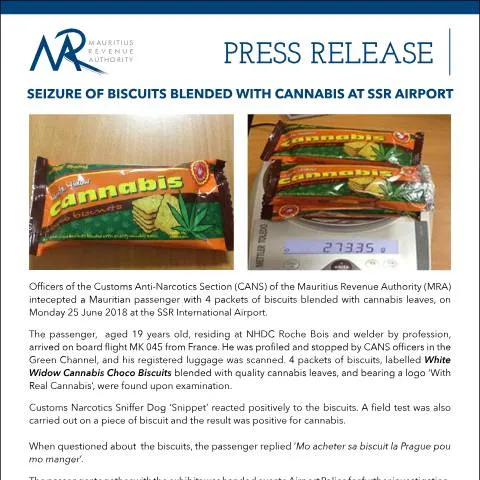
The Context of the Seizure: A Closer Look at Customs Operations
On June 25, 2018, a significant event unfolded at the SSR International Airport that not only highlighted the efforts of the Mauritius Revenue Authority (MRA) but also raised awareness about the intersection of drug trafficking and consumer behavior. The seizure of biscuits blended with cannabis leaves serves as a critical reminder of the ongoing challenges faced by customs officials in tackling illicit substances entering the country.
The operation was conducted by the Customs Anti-Narcotics Section (CANS), a specialized unit of the MRA responsible for intercepting contraband and ensuring compliance with national laws regarding narcotics. The case in question involved a 19-year-old Mauritian passenger returning from France, who was subjected to profiling and stopped in the Green Channel for further inspection.
The Role of Profiling in Drug Interdiction
Profiling, in the context of customs operations, refers to the practice of evaluating travelers based on specific criteria to determine the likelihood of involvement in illegal activities. This process is pivotal for customs officers, as it helps identify high-risk individuals who may be attempting to smuggle prohibited items.
- Factors Considered in Profiling:
- Travel history and duration of stay in foreign countries
- Behavioral indicators such as nervousness or evasiveness
- Type of luggage and items being carried
- The Importance of Intelligence:
- Collaboration with international agencies to gather data on drug trafficking trends
- Use of technology to analyze passenger information effectively
In this instance, the passenger's profile prompted officers to conduct a luggage scan, leading to the discovery of four packets of biscuits, branded as "White Widow Cannabis Choco Biscuits." The use of a narcotics sniffer dog, 'Snippet,' further corroborated the presence of cannabis, underscoring the sophistication of the tactics employed by customs to combat drug smuggling.
Navigating the Consequences: Rights and Obligations of Travelers
Travelers must be acutely aware of their rights and obligations when entering Mauritius, especially regarding the importation of goods. The penalties for attempting to bring illicit substances into the country can be severe, including fines and imprisonment.
Legal Framework Governing Drug Trafficking
The legal landscape for drug-related offenses in Mauritius is governed by strict laws that reflect a zero-tolerance approach toward narcotics. Under the Dangerous Drugs Act, individuals caught in possession of illegal substances, even in minimal quantities, face serious repercussions.
- Potential Legal Consequences Include:
- Criminal charges leading to imprisonment
- Fines based on the quantity and type of substance involved
- Impact on Personal Record:
- A criminal record that may affect employment opportunities and travel.
The passenger involved in the biscuits seizure was handed over to the Airport Police for further investigation, illustrating the procedural steps taken once a customs violation is detected.
Understanding the Documentation Process: Reporting and Follow-up Actions
In the event of an arrest or seizure, the next steps are critical for the individuals involved as well as for the authorities. Reporting suspected drug trafficking is an essential component of the MRA's strategy to combat narcotics. Citizens are encouraged to report any illicit activities directly through the MRA's Stop Drug Platform or via the hotline at 8958.
Procedure for Reporting Illicit Activities
Individuals can take an active role in combating drug trafficking by reporting suspicious behavior. The process involves:
- Gathering relevant information regarding the suspected activity.
- Contacting the MRA through the designated channels (hotline or website).
- Providing details such as location, descriptions, and any other pertinent information.
This collaborative approach between the public and law enforcement enhances the effectiveness of drug interdiction efforts and deters future illicit activities.
Distinguishing Characteristics: The Seizure Document and Related Forms
The seizure of the cannabis-infused biscuits resulted in a formal documentation process. This event is documented officially by the MRA, reminding citizens of the importance of transparency and accountability in customs operations.
Key Differences Among Related Documents
While various forms exist within customs operations, the document pertaining to the seizure of narcotics differs in focus and purpose from more general forms. Here are some distinctions:
| Document Type | Purpose | Characteristics |
|---|---|---|
| Seizure Report | Record of confiscated items and legal proceedings | Includes details of the incident, items seized, and persons involved |
| Declaration Form | Declare imports upon entry | Standard form that outlines items being brought into the country |
| Investigation Report | Document results of an ongoing investigation | Includes evidence gathered, findings, and next steps in the legal process |
The specificity of the seizure report ensures that all aspects of the incident are documented, providing a clear record for legal proceedings and future reference.
Timeline of Events: From Arrival to Seizure
The sequence of events leading to the seizure of the cannabis biscuits is crucial for understanding the operational workflow of customs enforcement. Here’s a chronological breakdown:
- Arrival at SSR International Airport: The passenger arrives on flight MK 045 from France.
- Profiling and Inspection: CANS officers identify the passenger for inspection based on profiling criteria.
- Luggage Scanning: The passenger's registered luggage is scanned, indicating potential contraband.
- Discovery of the Biscuits: Upon further examination, the biscuits are identified as containing cannabis.
- Use of Sniffer Dog: 'Snippet' reacts positively, confirming the presence of drugs.
- Handing Over to Authorities: The passenger and seized items are transferred to Airport Police for additional investigation.
This timeline illustrates the meticulous nature of customs operations and the critical importance of each step in enforcing drug laws.
Common Pitfalls: Areas of Caution for Travelers
While traveling can be an exciting endeavor, it is essential to remain vigilant about the items being carried. The case of the cannabis biscuits serves as a cautionary tale for travelers, highlighting common pitfalls that can lead to legal troubles.
Key Considerations for Travelers
When preparing for travel, here are several areas where travelers often encounter issues:
- Awareness of Prohibited Items:
- Familiarize yourself with the list of banned items in Mauritius.
- Do not assume that what is legal in one country is legal in another.
- Documentation:
- Ensure all necessary documentation for your items is complete and accurate.
- Keep certificates for any substances that may require legal medical documentation.
- Transparency:
- Be honest when questioned by customs officials.
- Attempting to conceal items can worsen legal ramifications.
By remaining informed and cautious, travelers can significantly reduce the risk of encountering legal issues while enjoying their time abroad.
Final Thoughts: The Implications of Drug Seizures in Mauritius
The seizure of cannabis-infused biscuits at the SSR International Airport represents more than just a standard customs operation; it embodies the ongoing struggle against drug trafficking in Mauritius. The MRA's commitment to enforcing regulations serves as a protective measure for the public, promoting awareness and compliance among travelers.
It is crucial for citizens to recognize their role in this effort by reporting suspicious activities and understanding the legal ramifications of drug trafficking. Through collaboration and vigilance, the fight against illegal narcotics can continue to gain traction, ensuring a safer environment for all Mauritians.
Fill in your form directly online
No printing: type your details into the boxes of the official form, tick, then download the PDF ready to send.
- 1Type into the form boxes
- 2Tick in one click
- 3Save and download the PDF
Legal Framework Surrounding Cannabis in Mauritius
The legal landscape regarding cannabis in Mauritius is multifaceted, shaped by both historical and contemporary laws. Cannabis, classified as a prohibited substance under the Dangerous Drugs Act 1988, has strict regulations governing its possession, use, and trafficking. The act outlines penalties for various levels of infringement, including severe fines and imprisonment. In addition to the national legislation, local authorities may impose further regulations that add layers of complexity to enforcement and compliance.
This legal framework emphasizes a zero-tolerance approach towards narcotics, which has been the cornerstone of Mauritius’s drug policy. Consequently, any incident involving cannabis, including the seizure of cannabis-infused products at places like SSR International Airport, falls under this stringent oversight. In the case of biscuits mixed with cannabis, the authorities would meticulously assess the composition of the product, the quantity of cannabis present, and the intent behind its transport. This evaluation is crucial in determining whether the case will lead to criminal charges or if it falls under the purview of administrative sanctions.
Moreover, Mauritius's commitments to international agreements on drug control, such as the United Nations Single Convention on Narcotic Drugs (1961), further solidify the country's position against the trafficking and distribution of cannabis. Individuals found in possession of cannabis-infused foods, such as biscuits, could be subject to severe penalties. The involvement of international transgressors in these cases amplifies the seriousness of the situation, as international laws and treaties are invoked, adding an extra layer of scrutiny.
Impact on Tourism and the Local Economy
The seizure of cannabis-infused biscuits at SSR International Airport not only raises legal questions but also casts a shadow on Mauritius's reputation as a tranquil tourist destination. The island has positioned itself as a premier location for leisure and business tourism; however, incidents involving drugs can have detrimental effects on its image. Tourists may feel apprehensive about visiting a place where narcotic-related issues surface, potentially affecting overall visitor numbers and, by extension, the local economy.
The tourism sector is a significant contributor to Mauritius's GDP, with thousands of jobs depending on the industry's stability. A negative incident like the seizure at the airport could result in reduced tourism, affecting local businesses, hospitality services, and employment rates. Stakeholders within the tourism industry may need to act swiftly to mitigate any damage to the island's image and reassure potential visitors of their safety and the government's commitment to maintaining a drug-free environment.
Additionally, the incident could spur discussions surrounding cannabis legalization and its economic potential. Some advocates argue that controlled legalization could provide economic benefits, including job creation and tax revenue. This juxtaposition of strict prohibition against potential economic gains presents a complex debate for policymakers, businesses, and the public. Whether the government will reconsider its stance amidst growing global conversations about cannabis remains to be seen, but the incident serves as a catalyst for ongoing discussions.
Public Reaction and Awareness Campaigns
Following the seizure of cannabis-infused biscuits at SSR International Airport, public reaction has been a mix of concern and disbelief. The incident has sparked conversations among various sectors of society about the risks associated with cannabis, especially as it pertains to food products. Many citizens are becoming increasingly vigilant about what they consume, leading to heightened awareness regarding the ingredients in packaged foods.
In light of such incidents, awareness campaigns by governmental and non-governmental organizations are becoming increasingly vital. These campaigns aim to educate the public about the dangers of drug use and the legal ramifications of possessing or consuming prohibited substances. Schools, community centers, and social media platforms are often utilized to disseminate information, highlighting both health risks and legal consequences associated with drug-related offenses.
Furthermore, the government might consider partnerships with health organizations to develop comprehensive anti-drug campaigns that combine education with preventative measures. These initiatives could focus not only on cannabis but also on the broader spectrum of drug abuse, providing a holistic approach to tackling substance-related issues in Mauritius. Such proactive strategies are essential in fostering a more informed population, ultimately contributing to a safer and healthier society.