Understanding the Context: A Major Drug Seizure in Mauritius
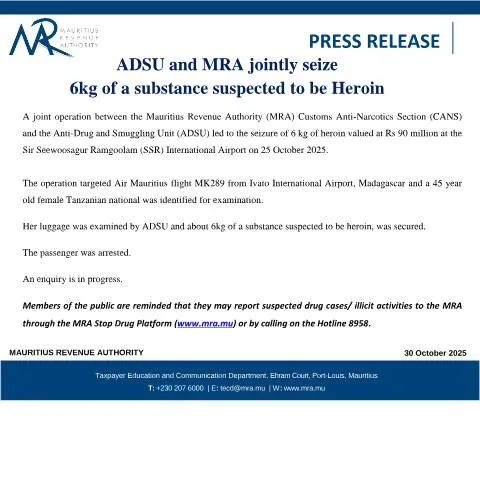
On 30 October 2025, the Mauritius Revenue Authority (MRA) in collaboration with the Anti-Drug and Smuggling Unit (ADSU) conducted a high-profile operation that spotlighted the ongoing battle against drug trafficking in Mauritius. The joint effort led to the seizure of 6 kg of a suspected narcotic substance, believed to be heroin, at the Sir Seewoosagur Ramgoolam (SSR) International Airport. This event underscores the critical role that governmental agencies play in maintaining national security and public safety.
The Chain of Events Leading to the Seizure
The successful operation was not a random occurrence but rather a well-coordinated initiative targeting a specific Air Mauritius flight (MK289) arriving from Ivato International Airport in Madagascar. The operation's intelligence identified a 45-year-old Tanzanian national who was subjected to a rigorous examination of her luggage. This meticulous approach reflects the MRA and ADSU’s commitment to proactive measures in combating drug smuggling.
Breaking Down the Operation: Roles of MRA and ADSU
The collaboration between MRA and ADSU exemplifies a unified front in the fight against drug trafficking. Each agency brings its distinct capabilities to the table:
- Mauritius Revenue Authority (MRA): Primarily responsible for administering customs laws, MRA’s Customs Anti-Narcotics Section (CANS) specializes in the detection of illegal substances entering the country.
- Anti-Drug and Smuggling Unit (ADSU): Tasked with tackling drug-related offences, ADSU plays a critical role in the investigation and enforcement of drug laws, contributing expert knowledge and operational support during seizures.
Through this joint effort, both agencies demonstrated their capability to respond promptly and effectively to threats posed by drug trafficking.
Consequences of the Seizure: Legal and Social Implications
The immediate consequence of this seizure was the arrest of the individual involved, who now faces legal repercussions under Mauritian law. The inquiry initiated following this event aims to unravel potential networks and further illicit activities connected to this case. Importantly, this operation serves a dual purpose:
- It acts as a deterrent against would-be traffickers, sending a clear message that Mauritius is vigilant in its fight against drug-related crime.
- It reinforces public awareness about the dangers of drug trafficking and the importance of reporting suspicious activities.
Reporting Mechanism: What Citizens Can Do
Public involvement plays a crucial role in combatting drug trafficking. Citizens are encouraged to remain vigilant and report any suspected illicit activities. The MRA facilitates this through the MRA Stop Drug Platform, a resource available for the public to confidentially submit information regarding drug-related offences. This platform can be accessed via the MRA website or by calling the dedicated hotline at 8958.
By actively participating in this initiative, citizens contribute to the broader efforts against drug smuggling and create a safer environment for all Mauritians.
Filling Out the Documentation: Key Guidelines
In the wake of such operations, it is crucial that individuals involved in any related investigative processes understand the official documentation required. Although this specific operation does not necessitate public documentation, knowing steps for related situations can be beneficial. Here are some key pointers if you find yourself needing to fill out forms related to drug investigations:
- Identify the Correct Form: Depending on your role (witness, informer, etc.), make sure to select the appropriate form from MRA or ADSU.
- Complete All Required Sections: Incomplete forms can lead to delays. Ensure all fields are filled out accurately.
- Provide Supporting Evidence: When necessary, attach any relevant documents that can substantiate your claims or observations.
- Consult with Authorities: If uncertain about the process, do not hesitate to reach out directly to MRA or ADSU for guidance.
Future Outlook: Strengthening Collaborative Efforts
This recent drug seizure not only illustrates the effectiveness of current operations but also emphasizes the need for ongoing collaboration between various governmental bodies. The government’s commitment to tackling drug trafficking remains steadfast, with continued efforts to enhance training for customs and law enforcement officials.
By investing in resources and technology, Mauritius aims to bolster its capabilities in identifying and intercepting drug smuggling attempts before they can affect local communities.
Public Awareness and Education: A Collective Responsibility
As Mauritius navigates the complexities of drug trafficking, the role of public education cannot be overstated. Initiatives aimed at informing citizens about the dangers of drug abuse and trafficking can play a crucial role in prevention. Programs offered through various channels, including schools and community workshops, aim to equip individuals with knowledge and resources to make informed choices.
Furthermore, partnerships with NGOs and community organizations can amplify these messages, creating a cohesive effort towards eradicating drug-related issues.
Conclusion: The Role of Documentation in Drug Enforcement
While the specifics of the seizure highlighted in this press release do not directly involve public documentation, the situation underscores the broader framework within which drug enforcement operates. Understanding the processes, reporting mechanisms, and the roles of different authorities can empower citizens and stakeholders in their response to drug-related crimes.
For those who wish to stay informed, regular updates from the MRA and ADSU can provide valuable insights into ongoing operations and evolving strategies in the fight against drug trafficking. By fostering a culture of vigilance and cooperation, Mauritius can continue to make significant strides in safeguarding its communities against the threats posed by illicit drugs.
Impact of Drug Seizures on Public Safety and Policy in Mauritius
The recent joint operation by the Anti-Drug and Smuggling Unit (ADSU) and the Mauritius Revenue Authority (MRA), resulting in the seizure of 6kg of a substance suspected to be heroin, highlights a critical aspect of public safety and national policy in Mauritius. Drug trafficking and substance abuse pose significant threats to the social fabric and health of the population. In response to such incidents, the government of Mauritius has continuously refined its policies and strategies to combat drug-related crimes.
Public safety is a primary concern, as drug trafficking not only fuels addiction but also leads to various criminal activities, including violence and theft, which further undermine community safety. The seized quantity of heroin indicates a potentially larger network at play, requiring immediate and coordinated efforts among law enforcement. The effectiveness of the ADSU and MRA in this operation showcases the importance of inter-agency collaboration in tackling organized crime. This is part of a broader approach adopted by the government, which includes enhanced training for law enforcement officers, improved intelligence-sharing practices, and community outreach programs aimed at prevention and education.
Fill in your form directly online
No printing: type your details into the boxes of the official form, tick, then download the PDF ready to send.
- 1Type into the form boxes
- 2Tick in one click
- 3Save and download the PDF
Furthermore, the government is increasingly turning to technology to streamline drug enforcement efforts. Tools such as data analytics are employed to identify trafficking patterns and hotspots, enabling law enforcement to allocate resources more efficiently. As Mauritius continues to attract foreign investment and tourism, maintaining a safe environment remains paramount, and drug seizures like this one play a pivotal role in safeguarding that objective.
Legal Framework Governing Drug Seizures and Prosecutions in Mauritius
The legal framework surrounding drug seizures and prosecutions in Mauritius is multifaceted, involving various laws and regulations that govern the actions of agencies such as the ADSU and MRA. The Dangerous Drugs Act 1988 serves as the cornerstone legislation, outlining the definitions, penalties, and enforcement mechanisms related to drug offenses. Under this act, the authorities are empowered to conduct searches, seizures, and arrests while ensuring compliance with legal standards and human rights protections.
In instances of drug seizures, such as the recent operation involving suspected heroin, the process is initiated by thorough investigations that often involve undercover operations and surveillance. Once the substance is acquired, it is subjected to rigorous testing by the Forensic Science Laboratory, which plays a crucial role in confirming the identity and purity of the suspected drug. The outcome of these tests is instrumental in the prosecution process, as it provides the evidence needed to secure convictions in court.
Moreover, the prosecution of drug-related offenses can result in severe penalties, including lengthy prison sentences and substantial fines. The judicial system in Mauritius aims to balance punitive measures with rehabilitation programs, reflecting a growing recognition of addiction as a public health issue. As a result, courts may also consider alternative sentencing that includes mandatory rehabilitation for offenders, thereby addressing the root causes of drug abuse while maintaining public safety.
The Role of Community Engagement in Drug Prevention Strategies
The fight against drug trafficking and abuse in Mauritius is not solely the responsibility of law enforcement agencies; community engagement plays a crucial role in fostering a collaborative approach to prevention and education. In light of recent drug seizures, it is imperative that local communities are actively involved in addressing the challenges posed by substance abuse.
Community outreach initiatives, often spearheaded by non-governmental organizations (NGOs) and local government bodies, aim to raise awareness about the dangers of drug use and trafficking. These programs focus on educating young people about the risks associated with drugs, promoting healthy lifestyle choices, and providing support services for those struggling with addiction. Schools, in particular, have become focal points for such initiatives, where educational workshops and support groups can make a significant impact on youth decision-making.
In addition to educational efforts, community engagement also involves the establishment of support networks for families affected by drug use. By fostering an environment of understanding and support, communities can help individuals navigate the challenges of addiction and encourage recovery. Engaging local leaders, religious organizations, and parents in these efforts enhances the effectiveness of prevention strategies, creating a collective responsibility for safeguarding the community's well-being.