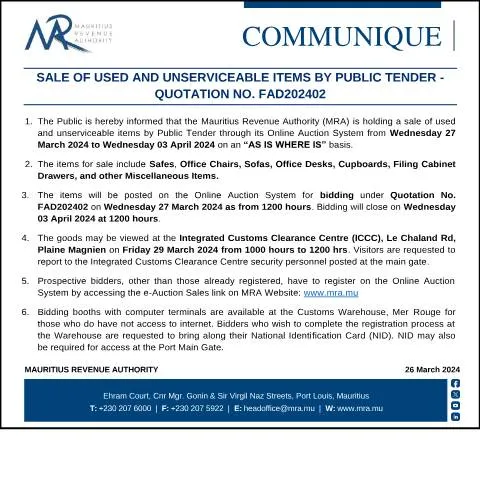
Unveiling the Sale of Used and Unserviceable Items: A Unique Opportunity
The Mauritius Revenue Authority (MRA) is set to conduct a sale of used and unserviceable items, an event that sparks interest among public and private sector entities alike. Scheduled from March 27, 2024, to April 3, 2024, this public tender offers a chance for bidders to acquire various goods under the quotation reference FAD202402. This sale is particularly noteworthy for its “AS IS WHERE IS” basis, meaning that buyers will accept the items in their current state without any guarantees or warranties. Such events are essential for managing government assets efficiently while enabling the community to benefit from surplus inventory.
Timeline of the Sale: Key Dates to Remember
Understanding the timeline associated with the sale can significantly enhance one’s bidding strategy. Here's a breakdown:
- Start of Bidding: March 27, 2024, at 12:00 hours
- End of Bidding: April 3, 2024, at 12:00 hours
- Viewing of Items: March 29, 2024, from 10:00 hours to 12:00 hours, at the Integrated Customs Clearance Centre (ICCC)
- Registration for New Bidders: As soon as possible, preferably before the bidding starts
Prospective bidders should mark these dates on their calendars, as these represent critical milestones in the bidding process.
Distinguishing Features of FAD022024 Compared to Other Forms
This specific sale, quotation number FAD202402, is distinct from other administrative forms related to public tenders in several ways. Unlike standard procurement processes that may involve more extensive documentation and evaluation criteria, this document focuses on the sale of items without additional procurement complexities. Understanding these differences can help bidders better navigate the tendering landscape.
The Nature of Goods on Offer
Items up for auction include:
- Safes
- Office Chairs
- Sofas
- Office Desks
- Cupboards
- Filing Cabinet Drawers
- Miscellaneous Items
Each of these items has been deemed unserviceable or surplus, reflecting the continuous efforts of MRA to offer value to the community through transparent sales.
Registration Process for Prospective Bidders
For individuals or entities looking to participate in this sale, registration is a prerequisite. The steps to register are outlined below:
- Visit the MRA's official website.
- Navigate to the e-Auction Sales link.
- Complete the online registration form with your details.
- Submit your National Identification Card (NID) for verification.
New bidders who do not have internet access can also register at the Customs Warehouse, Mer Rouge. However, it is essential to have your NID for this process.
Viewing the Items: What to Expect
One of the highlights of the auction is the opportunity to view the items in person. This viewing is scheduled for
March 29, 2024, from 10:00 hours to 12:00 hours at the ICCC located on Le Chaland Rd, Plaine Magnien. Visitors are advised to report to the security personnel posted at the main gate, who will facilitate access.
This step is crucial, as physical inspection allows bidders to assess the condition and suitability of items before committing to bids.
Understanding the Auction Process: From Bidding to Winning
Engaging in this auction requires familiarity with the bidding process. Here’s a chronological outline of the key stages:
- Registration: Ensure you are registered and verified in the Online Auction System.
- Item Viewing: Attend the scheduled viewing to evaluate items.
- Placing Bids: Bidding opens on March 27 at 12:00 hours. Participants can place bids through the Online Auction System.
- Monitoring Your Bid: Keep track of your bid status and adjust if necessary until the closing time.
- Auction Closure: Bidding ends on April 3 at 12:00 hours. The highest bidder at this time will win the item.
- Payment and Collection: Successful bidders will receive instructions on payment and item collection.
This systematic approach ensures a fair bidding environment and allows for transparency in the sales process.
Post-Auction Procedure: What Happens Next?
Once the auction concludes, successful bidders must adhere to specific guidelines for payment and collection. Here’s what to expect:
- Winning bidders will receive official notification via email or through the MRA’s Online Auction System.
- Payments must be made within the specified timeframe as indicated in the winning notification.
- Items must be collected within the period designated by the MRA, typically communicated in the notification.
Failure to comply with payment and collection guidelines may lead to forfeiture of the winning bid, emphasizing the importance of understanding and adhering to these protocols.
Conclusion: Engaging in a Transparent and Efficient Sale Process
The upcoming sale of used and unserviceable items by the MRA presents a unique opportunity for interested bidders to acquire goods at potentially reduced prices. By familiarizing themselves with the timelines, registration requirements, item offerings, and auction process, participants can engage effectively in this transparent and structured auction. This sale not only reflects MRA's commitment to fiscal responsibility but also offers a chance for the community to benefit from government surplus while ensuring a fair bidding process for all participants.
As the sale dates approach, potential bidders are encouraged to prepare thoroughly, ensuring their readiness to make informed decisions during the bidding process.
Understanding the Procedures for Public Tender in Mauritius
The public tendering process in Mauritius is governed by a set of rules and regulations that ensure transparency, fairness, and competition. When engaging in the sale of used and unserviceable items by public tender, it is crucial to familiarize yourself with the procedural requirements as stipulated by the relevant authorities, primarily governed by the Financial Management Act and guidelines provided by the Ministry of Finance. The tendering process encompasses several key stages, including the advertisement of the tender, submission of bids, evaluation of proposals, and the award of the contract. Each of these stages must be adhered to meticulously to ensure compliance with local laws.
Fill in your form directly online
No printing: type your details into the boxes of the official form, tick, then download the PDF ready to send.
- 1Type into the form boxes
- 2Tick in one click
- 3Save and download the PDF
It is important to note that all tenders must be advertised publicly, allowing potential bidders sufficient time to prepare their proposals. The standard practice is to publish these tenders in widely circulated newspapers and on official government portals, such as govmu.org. Upon closing of the tender, bids are evaluated based on predefined criteria that often include the bid price, compliance with specifications, and the bidder's track record. Successful bidders are then notified formally, and a contract is established that outlines the terms of the sale.
Moreover, bidders should ensure that they are registered with the Public Procurement Authority (PPA) and possess a valid tax compliance certificate from the Mauritius Revenue Authority (MRA). This registration not only streamlines the bidding process but also affirms the bidder's commitment to ethical practices. Ensuring adherence to these procedural guidelines mitigates risks and enhances the likelihood of a successful bid.
Key Considerations for the Disposal of Unserviceable Items
When dealing with the sale of unserviceable items, various considerations come into play that can impact both the financial and operational outcomes of the transaction. First and foremost, it is essential to conduct a thorough inventory assessment to determine the condition and value of the items to be sold. This assessment should include an evaluation of the items’ potential for refurbishment versus their current state of non-functionality. Understanding the market demand for such items can also influence the pricing strategy, ensuring that the sale proceeds align with expectations and financial goals.
The classification of items as 'used' or 'unserviceable' must also comply with the criteria set forth in public procurement guidelines. Items categorized as unserviceable may require specific documentation detailing their condition and reasons for disposal, thus providing transparency to potential bidders. Furthermore, any environmental compliance issues should be addressed; for instance, if items are hazardous, appropriate disposal methods must be outlined to mitigate any legal liabilities.
Another consideration is the communication strategy employed during the tender process. Clear and comprehensive specifications should be included in the tender documents to avoid ambiguity and ensure that bidders are well-informed about what they are purchasing. This includes not only the physical characteristics of the items but also any limitations regarding their use or resale. Such clarity enhances bidder confidence and can lead to more competitive bidding.
Legal Implications and Compliance in Tendering
Legal compliance is a critical aspect of the public tendering process for selling used and unserviceable items. Bidders and government entities alike must be aware of the legal ramifications of failing to adhere to the established procurement regulations. Non-compliance can result in penalties, including disqualification from future tenders or legal action. To mitigate these risks, all parties involved should have a thorough understanding of relevant laws, such as the Public Procurement Act and the Financial Management Act, which govern the tendering processes in Mauritius.
Moreover, it is advisable for bidders to seek legal counsel or expert advice when preparing their proposals, especially if they are new to the public tendering process. Understanding the legal framework surrounding the tendering process will not only enhance the quality of bids submitted but also ensure that all required compliance documentation is included, such as the relevant tax clearance certificates from the MRA or proof of registration with the PPA.
Furthermore, the evaluation stage of the tender process is similarly governed by strict legal guidelines. Tender committees must evaluate all bids fairly and impartially, ensuring that no conflicts of interest exist. To uphold transparency, it is often recommended that the evaluation process is documented comprehensively, detailing how decisions were made and the rationale behind selecting the winning bid. This documentation can serve as a safeguard against potential disputes or challenges to the tender award.