Navigating the Terrain of Abandoned Goods: Your Step-by-Step Guide
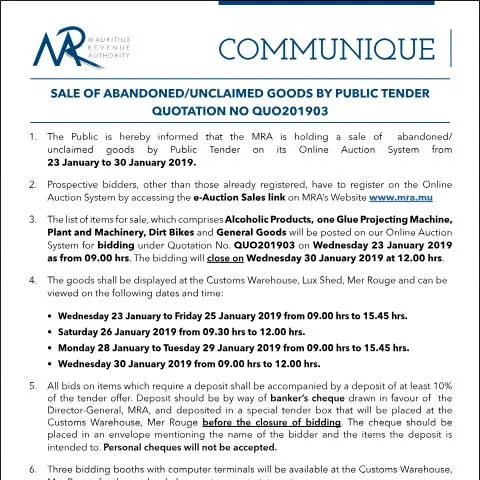
In the bustling environment of public tenders, the opportunity to acquire abandoned or unclaimed goods can be both exciting and daunting. The Sale of Abandoned / Unclaimed Goods by Public Tender, specifically referenced as Communique03of2019, sets the stage for a unique auction event administered by the Mauritius Revenue Authority (MRA). This guide aims to equip potential bidders with comprehensive insights into the procedures, requirements, and nuances of engaging in this public tender process.
Understanding the Auction Timeline: Key Dates to Remember
Successful participation in the auction hinges upon understanding its timeline. Here’s a detailed breakdown:
| Event | Date | Details |
|---|---|---|
| Sale Commencement | 23 January 2019 | Bidding opens at 09:00 hrs |
| Viewing of Goods | 23 - 25 January 2019 | 09:00 - 15:45 hrs |
| Viewing on Saturday | 26 January 2019 | 09:30 - 12:00 hrs |
| Final Viewing | 28 - 30 January 2019 | 09:00 - 15:45 hrs (28-29) and 09:00 - 12:00 hrs (30) |
| Bidding Closure | 30 January 2019 | Bidding closes at 12:00 hrs |
After the bidding closes, successful bidders will be contacted with further instructions regarding payment and collection of their items. It's crucial to mark these dates on your calendar to ensure you don't miss any opportunity to participate.
Who Needs to Register? Demystifying Bidder Eligibility
Participation in the MRA’s auction is open to various individuals and entities, but there are specific prerequisites:
- New Bidders: Prospective bidders not previously registered must complete the registration process on the Online Auction System.
- Registered Bidders: Individuals already registered can continue using their accounts to place bids without additional registration.
- Age Requirement: Bidders must be of legal age, which is 18 years in Mauritius, to engage in bidding.
It’s essential for bidders to prepare ahead. Ensure your registration is completed well before the auction date, as this will streamline your bidding experience.
Decoding the Bidding Process: Step-by-Step Navigation
Once you've registered, understanding the auction process is paramount. Here’s how to navigate the bidding:
Step 1: Registering for the Auction
Access the MRA’s website and locate the e-Auction Sales link. Fill out the necessary registration information. Once completed, you will receive a confirmation.
Step 2: Viewing the Goods
Viewing the items up for auction is critical. During the designated dates outlined above, visit the Customs Warehouse at Lux Shed, Mer Rouge. Pay close attention to the condition and details of the items, as this knowledge will inform your bidding decisions.
Step 3: Preparing Your Bid
When preparing to submit your bid, remember:
- For items requiring a deposit, ensure you have a banker’s cheque for at least 10% of your bid amount.
- Deposit cheques must be made payable to the Director-General, MRA and placed in a special tender box before bidding closes.
Step 4: Submitting Your Bid
Bids can be placed online via the auction system or in person using bidding booths available at the Customs Warehouse. For those unfamiliar with online systems, the physical booths serve as an alternative.
Step 5: Closing and Confirmation
After the bidding closes, successful bidders will receive confirmation regarding their bids, alongside instructions for payment and collection of goods. Ensure that you check your provided contact details for updates.
Common Pitfalls: Avoiding Missteps in Your Bid Submission
While navigating through the auction, several common missteps can hinder your chances of success:
- Failing to provide a valid deposit cheque will disqualify your bid.
- Incorrectly filling out your bid form can lead to a bid rejection.
- Not verifying your registration status prior to the auction can result in missed bidding opportunities.
To mitigate these risks, meticulously review your submission and ensure compliance with all requirements outlined by the MRA.
Preparing Necessary Documentation: What to Bring
Participation in the auction isn’t just about placing bids. Proper documentation is key. Here’s a rundown of the essential documents you should have:
- Identity Card: Bring your National Identity Card for access to the Customs Warehouse.
- Banker’s Cheque: Ensure you have a banker’s cheque for at least 10% of your intended bid.
- Registration Confirmation: If you are a registered bidder, carry proof of registration to expedite access.
Being well-prepared with the correct documents not only enhances your experience but also ensures compliance with MRA regulations.
Post-Bidding: What Happens After the Auction
Once the bidding concludes, the journey doesn’t stop there. Here’s what you can expect:
- Notification: Successful bidders will be notified promptly via the contact details provided during registration.
- Payment: Complete your payment as instructed, ensuring timeliness to avoid forfeiting your items.
- Collection: Arrange to collect your items from the Customs Warehouse as outlined in the notification.
Failure to adhere to these steps can result in the loss of your winning bid, so maintain close communication with the MRA for updates.
Conclusion: Embracing the Opportunity
The Sale of Abandoned / Unclaimed Goods by Public Tender presents a tangible opportunity for savvy bidders to acquire unique items, often at competitive rates. By understanding the processes and preparing adequately, participants can navigate this auction with confidence and clarity. Embrace this opportunity with diligence, and you may just walk away with a valuable find!
Understanding the Legal Framework for Sale of Abandoned Goods in Mauritius
The sale of abandoned or unclaimed goods in Mauritius is governed by a hybrid legal framework that combines principles from French civil law and English common law. Primarily, the procedural aspects of this practice are influenced by the Public Procurement Act and specific regulations pertaining to public tenders. The legal basis for the disposal of such goods is typically found in sections of the Civil Code and administrative directives from relevant ministries.
According to the provisions set out in the Public Procurement Act, any goods that remain unclaimed for a specified period can be put up for public tender. The Public Service Commission (PSC) oversees these tender processes, ensuring transparency and fairness in the sale. It is vital for prospective bidders to familiarize themselves with the tender conditions, as specified in the relevant tender notices, which outline eligibility criteria, bidding processes, and the type of goods available for sale.
Goods that qualify for sale may include anything from lost and found items at public transport facilities to equipment left unclaimed by their owners. The government typically holds an inventory of such items, making it accessible to the public before the tender date. Additionally, the selling authority must comply with specific notification procedures to inform the rightful owners of the abandoned goods before moving forward with the tender.
The timeline for the entire process, from notification to tender closing, is crucial; hence, understanding the particulars of each tender notice, including submission deadlines and required documentation, is essential for a successful bid.
How to Participate in the Tender Process for Abandoned Goods
Participating in the tender process for abandoned goods requires a clear understanding of the steps involved, which can be daunting for first-time bidders. Here’s a detailed guide on how to navigate this process effectively:
1. Research Available Tenders: The first step is to regularly check announcements on the government portal (govmu.org), where all active tenders are posted. Tenders for the sale of abandoned goods are usually listed under the Public Procurement section. It is advisable to subscribe to notifications or updates from this portal to ensure you do not miss any new listings.
2. Review Tender Documents: Once you find a relevant tender, download and review the tender documents thoroughly. Each document contains critical information, including the description of the goods, conditions of sale, and specific requirements for bidding. Make note of any discrepancies or additional information needed.
3. Prepare Your Bid: After understanding the requirements, prepare your bid. This often includes a completed bid form and any supplementary documents required, such as proof of identity, business registration (if applicable), and a financial proposal. Ensure that your bid adheres to the format specified in the tender notice to avoid disqualification.
4. Submission: Bids must typically be submitted electronically through the appropriate tender submission platform indicated in the tender notice. Ensure you submit your bid before the deadline, as late submissions are generally not considered.
5. Attend the Opening Session: If your bid progresses, you may need to attend a public opening session where bids are reviewed. This is a critical phase where transparency is ensured, and you may have the opportunity to ask questions or seek clarifications on the process if needed.
Understanding the tender process not only increases your chances of securing goods but also equips you with the knowledge necessary to navigate future public procurement opportunities effectively.
Post-Tender Procedures and Ownership Transfer
Winning a bid in a public tender for abandoned goods is merely the beginning of a structured process that culminates in the formal transfer of ownership. Understanding the post-tender procedures is crucial for bidders to ensure a seamless transition.
1. Notification of Award: Once the tender closing date has passed and bids have been evaluated, the successful bidder will receive a notification of award. This document will include details about the awarded items, the total amount payable, and further instructions on how to proceed.
2. Payment Process: The successful bidder must comply with the payment instructions as outlined in the notification of award. Payments are typically made through designated bank channels, and a payment receipt is essential for the next steps in the ownership transfer.
3. Collection of Goods: After payment has been processed, the successful bidder will receive instructions on how to collect the goods. This may involve scheduling a pickup appointment or attending a designated location for collection. It is crucial to have all necessary documentation at hand, including the payment receipt and identification, to facilitate a smooth pickup process.
4. Transfer of Ownership: The last step involves the formal transfer of ownership, which may require additional documentation, such as a transfer form or a declaration of receipt. Ensure you complete this paperwork accurately and retain copies for your records, as proof of ownership is vital for any future transactions involving the purchased goods.
Understanding these post-tender procedures is essential for ensuring you are fully compliant and can enjoy the benefits of your successful bid without any administrative hitches.