Navigating the Requisition for Stores of Locally Purchased Goods
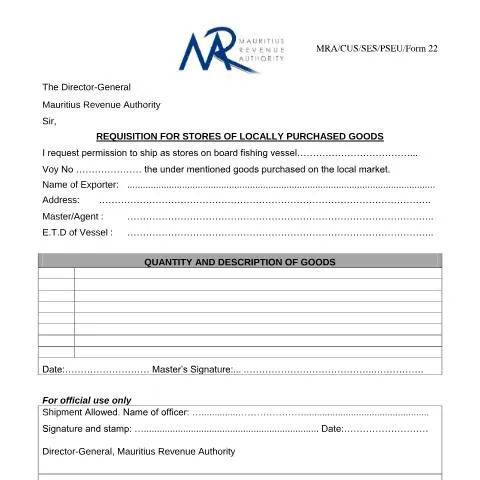
When it comes to the operational needs of bank fishing operators in Mauritius, the Requisition for Stores of Locally Purchased Goods (Form 22) plays a pivotal role. This document facilitates the process of obtaining essential supplies needed for fishing vessels, ensuring that operations run smoothly and comply with local regulations. Understanding the intricacies of this requisition is crucial for operators who wish to efficiently manage their logistics.
Clarifying the Role of Form 22 in Maritime Operations
Form 22 is exclusively designated for bank fishing operators, thus distinguishing it from other procurement forms used within different sectors. The Mauritius Revenue Authority (MRA) mandates this form to streamline the requisition of goods purchased on the local market. This specificity means that only those in the bank fishing industry can utilize Form 22, ensuring that the requisition process is tailored to their unique operational requirements.
- Purpose: To formally request permission to ship locally purchased goods aboard fishing vessels.
- Eligibility: Only bank fishing operators may complete and submit this form.
- Regulatory Compliance: Adherence to the guidelines set forth by the MRA is essential to avoid penalties.
Understanding the Form’s Structure
Form 22 is designed to collect critical information regarding the shipment of goods. Each section of the form serves a specific purpose, ensuring that all necessary details are captured effectively.
- Exporter Information: This includes the name and address of the exporter from whom the goods are acquired.
- Vessel Details: Operators must provide the name of the fishing vessel, the voyage number, and the estimated time of departure (ETD).
- Description of Goods: A detailed account of the quantity and type of goods being requisitioned.
- Signature of the Master/Agent: This reinforces accountability for the goods being shipped.
Common Pitfalls and How to Avoid Them
Filling out Form 22 may seem straightforward, but operators can encounter challenges that may delay their requisition. Here are some common issues to be vigilant about:
- Incomplete Information: Failing to fill in all required fields can lead to rejection. Double-check that the exporter’s details and goods description are complete.
- Mismatch in Quantity: Ensure that the quantity of goods listed corresponds with what was purchased. Discrepancies can raise red flags during processing.
- Signature Verification: The form must be signed by the master or agent of the vessel. An unsigned form is automatically deemed invalid.
What If Your Requisition Gets Rejected?
Receiving a rejection for your Form 22 can be disheartening, but understanding the recourse available is important. In the event of a rejection, the following steps should be taken:
- Review the Feedback: The MRA typically provides reasons for rejection. Examine these closely to identify any corrections needed.
- Rectify Errors: Make the necessary adjustments to the form and ensure all requirements are met before resubmitting.
- Follow-Up: After resubmission, do not hesitate to follow up with the MRA to confirm receipt and inquire about the status of your requisition.
Understanding the Regulatory Framework
The necessity for Form 22 is rooted in the regulatory environment governing fishing operations in Mauritius. The Public Service Commission Act of 1955 and related regulations form the backbone of maritime operations, emphasizing the importance of accountability and traceability in the requisitioning of goods. This framework not only protects the interests of the operators but also ensures the sustainability of maritime resources.
Moreover, the Fiscal Year in Mauritius runs from July 1 to June 30, which plays a significant role in planning for procurement cycles and inventory management for bank fishing operators. It is advisable to align requisition schedules with this fiscal timeline to enhance operational efficiency.
Consequences of Non-Compliance
Failing to adhere to the requisition process can have serious repercussions:
- Operational Delays: Inability to procure necessary goods may halt fishing operations.
- Penalties: Non-compliance with MRA regulations can result in fines and sanctions against operators.
- Reputation Damage: Frequent discrepancies or non-compliance can tarnish an operator’s reputation within the industry.
Step-by-Step Guide to Completing Form 22
Completing Form 22 requires attention to detail. Here’s a step-by-step guide to ensure a smooth process:
- Header Section: Fill in the request details clearly, including your name and business information.
- Exporter Information: Accurately include the exporter’s name and address.
- Vessel Information: Specify the name of the fishing vessel and voyage number.
- ETD: Enter the estimated time of departure in a clear format (e.g., DD/MM/YYYY).
- Goods Description: Detail the quantity and type of goods precisely. Ensure it matches what was purchased.
- Signature: Have the master or agent sign and date the form.
Post-Submission: What Happens Next?
After submitting Form 22, it is essential to understand the subsequent steps involved:
- Processing: The MRA will review the requisition for completeness and compliance.
- Approval: If approved, a customs officer will verify the shipment details before allowing the goods to be shipped.
- Communication: Operators will receive formal notification regarding the approval or rejection of their requisition.
It is advisable to maintain a copy of the completed form for your records. This will aid in tracking your requisition and serve as documentation in case of any discrepancies.
Tracking Your Requisition Status
Operators can track the status of their requisition through direct communication with the MRA. Keeping a record of the submission date and any reference numbers provided will facilitate this process. Here are some practical tips:
- Contact Information: Use the official contact details provided by the MRA for inquiries.
- Document Reference: Always refer to your requisition number when inquiring about status updates.
- Follow-Up Timing: Allow a reasonable time for processing before making inquiries, typically 5-7 working days.
The Importance of Maintaining Accurate Records
For bank fishing operators, maintaining accurate records of requisition forms, invoices, and shipping documents is critical. This practice not only supports compliance with MRA regulations but also enhances operational efficiency. By having well-organized records, operators can quickly provide documentation during audits or inspections.
Additionally, accurate record-keeping aids in evaluating purchasing patterns, managing inventories, and making informed decisions about future requisitions. Operators are encouraged to utilize digital tools for streamlined record management, ensuring easy access and secure storage of documents.
Conclusion: The Road to Seamless Operations
Engaging with the Requisition for Stores of Locally Purchased Goods (Form 22) may seem daunting, but with a clear understanding of its purpose, structure, and submission process, bank fishing operators can navigate it effectively. Awareness of potential pitfalls and compliance requirements will empower operators to manage their fishing operations seamlessly, ensuring that they are well-equipped to meet both regulatory obligations and operational demands.
Understanding the Requisition Process for Locally Purchased Goods
The requisition process for locally purchased goods in Mauritius is a vital procedure that ensures transparency and accountability within government and local authorities. To begin with, it is essential to comprehend the context and purpose behind the requisition. This will help applicants understand the steps they must follow, the roles of various stakeholders, and the documentation required.
A requisition for stores involves submitting a formal request for goods or services needed for governmental functions. It encompasses a variety of items, from office supplies to maintenance materials. The process is governed by specific regulations and guidelines set forth by the Public Procurement Act 2006, which outlines how public entities should conduct procurement. This Act aims to promote fairness, transparency, and competition in the procurement process.
To initiate a requisition, the first step is to identify the goods or services required. Departments must conduct an internal assessment to determine their needs and ensure that they align with budgetary constraints and operational requirements. Upon identifying the items needed, departments should prepare a detailed requisition document. This document typically includes:
- Description of the goods or services requested, including specifications and quantities.
- Justification for the requisition, explaining the necessity of the items.
- Estimated costs, which should align with budgetary provisions.
- Anticipated delivery timelines to ensure that the procurement aligns with operational schedules.
Once the requisition document is prepared, it should be submitted to the relevant procurement authority within the department. Each department has its own procurement officer who is responsible for reviewing requisitions, ensuring compliance with applicable regulations, and recommending them for approval.
The procurement officer's role is critical in this process. They must verify that the requisition meets the necessary criteria and that funds are available for the purchase. Depending on the value of the goods, additional approvals may be required from higher authorities, such as the Permanent Secretary or the relevant Minister.
Furthermore, all requisitions must be recorded and tracked to maintain transparency and accountability. This is where e-services come into play. The government of Mauritius is increasingly adopting digital solutions to streamline administrative processes. The use of an electronic procurement system allows for efficient management of requisitions, providing a centralized platform for tracking requests, approvals, and inventory management.
Common Challenges in Requisitioning Locally Purchased Goods
Navigating the requisition process for locally purchased goods can present various challenges for departments and local authorities in Mauritius. Understanding these challenges is essential for mitigating risks and ensuring that the requisition process is as smooth and efficient as possible.
One common issue relates to the clarity and completeness of requisition requests. In some instances, requisition forms are submitted with insufficient information, leading to delays in processing. To avoid this, departments are advised to provide thorough descriptions of the items needed, including specifications and justifications for the purchase. Regular training sessions can be beneficial to ensure that all staff involved in the requisition process are well-informed about requirements and protocols.
Another significant challenge is the management of budgets and resources. Departments may find themselves constrained by financial limitations, impacting their ability to procure necessary goods. It is crucial to engage in effective financial planning, which includes regular reviews of departmental budgets and forecasting future needs. Moreover, understanding the fiscal year cycle, which runs from July 1 to June 30, allows departments to allocate resources effectively and prioritize requisitions accordingly.
Supply chain disruptions can also pose challenges during the requisition process. External factors such as global supply chain issues may affect the availability and delivery timelines of locally purchased goods. To combat this, it is advisable for departments to establish relationships with multiple suppliers. By diversifying suppliers, they can mitigate risks associated with reliance on a single vendor, thus ensuring that procurement processes remain fluid even in the face of unforeseen circumstances.
Additionally, there may be instances where the procurement officer identifies anomalies or discrepancies in requisitions, which can lead to further complications. Such issues may require clarification or additional documentation, prolonging the approval process. It is essential for departments to maintain clear communication with procurement officers and promptly address any queries regarding requisitions.
Lastly, compliance with the Public Procurement Act and other regulations can be daunting for those unfamiliar with the legal framework. Continuous training and capacity-building initiatives are essential to ensure that all stakeholders understand the policies governing the requisition process. Maintaining up-to-date knowledge of relevant laws, regulations, and procedures will contribute to smooth operations and minimize risks of non-compliance.
Best Practices for Efficient Requisition Management
Efficient requisition management is key to ensuring that locally purchased goods are procured in a manner that is timely, cost-effective, and compliant with laws and regulations. By adopting best practices, departments in Mauritius can enhance their procurement processes and improve overall operational efficiency.
One best practice is to implement a standardized requisition form, such as the PSC Form 7 or LGSC Form 7a, depending on the department's jurisdiction. Utilizing a standardized form simplifies the requisition process and reduces the likelihood of errors. Standard forms provide a consistent structure for requests, facilitating easier review and approval processes.
Another effective strategy involves establishing a centralized inventory management system. By tracking inventory levels in real-time, departments can better manage their procurement needs and reduce instances of over-ordering or stock-outs. Utilizing digital tools to monitor inventory also allows for more strategic planning regarding future purchases based on usage patterns and consumption rates.
Regular audits of procurement processes can further enhance requisition management. Conducting periodic reviews allows departments to identify inefficiencies, bottlenecks, and areas for improvement within their procurement systems. These audits can provide valuable insights into the requisition process, enabling departments to refine their practices based on data-driven decisions.
Collaborating with suppliers is also important for efficient requisition management. Building strong relationships with local vendors can lead to more favorable terms, including better pricing and prioritized delivery timelines. Departments are encouraged to engage with suppliers regularly to negotiate contracts and establish clear expectations regarding quality, delivery, and support.
Lastly, fostering a culture of transparency and accountability is crucial. Open communication among all stakeholders involved in the requisition process ensures that everyone is informed and aligned. Departments should encourage feedback from staff regarding their experiences with the requisition system, as this can lead to improvements and foster a collaborative environment focused on achieving operational excellence.
By embracing these best practices, departments in Mauritius can streamline their requisition processes, ensuring that locally purchased goods are acquired efficiently and in compliance with established regulations.