The Significance of the Renewal of Licences for Sale of Alcoholic Products
Every year, the renewal of licences for the sale of beer, rum, liquor, and other alcoholic products is a crucial aspect for businesses operating within this sector in Mauritius. This process not only ensures compliance with the regulatory framework but also maintains the integrity of alcohol distribution in the country. As we delve into this essential document, it’s important to understand its origins, the regulatory backdrop, and the critical procedures that license holders must adhere to.
Understanding the Regulatory Framework
The Renewal of Licences for Sale of Beer, Rum, Liquor, and Alcoholic Products is governed under Part III of the Excise Act of 1994. This act lays the foundational legal structure for the sale, distribution, and taxation of alcoholic beverages in Mauritius. The Mauritius Revenue Authority (MRA) plays the pivotal role of enforcing these regulations, ensuring that all licensed entities comply with the established laws.
The rationale behind this regulatory framework is twofold: it safeguards public health while also promoting responsible drinking and preventing misuse of alcoholic products. Annual renewal of these licences helps to monitor and regulate the market, allowing authorities to keep track of who is permitted to sell alcohol and under what conditions.
Step-by-Step Process: From Trigger to Submission
The journey towards renewing an alcohol licence commences several months prior to its expiration. Typically, license holders receive notifications from the MRA regarding the upcoming renewal. Here’s a detailed breakdown of the process:
- Notification: License holders are informed of the renewal period well in advance, typically via official communication from the MRA.
- Preparation: License holders should gather the necessary documents, including proof of payment, their original licence from the previous year, and any additional documentation required by MRA.
- Submission: The completed renewal application, along with the required documents and payment, must be submitted either in person at designated MRA offices or through online channels, depending on the facility provided by MRA.
- Assessment: Upon submission, MRA officials will review the application and documents. Any discrepancies or missing information may lead to delays.
- Issuance: Once approved, a new licence will be issued, officially allowing the continued sale of alcoholic products.
The Role of the Renewal Document in the Application Process
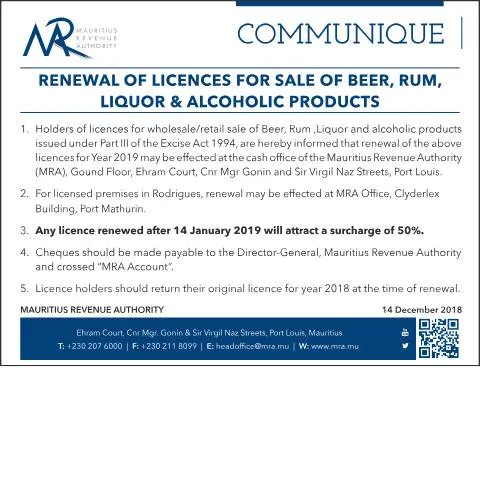
This specific document, Renewal of Licences for Sale of Beer, Rum, Liquor & Alcoholic Products (Renewal141218), serves as a formal application that needs to be filled out accurately by all license holders. It contains important information such as:
- Name and address of the business
- Type of licence being renewed
- Details of the previous licence
- Payment information and confirmation
Proper completion of this document is critical, as any errors may lead to delays or outright rejection of the application. The MRA prioritizes accuracy and completeness in these submissions to maintain efficient processing times.
Diverse Channels for Licence Submission: Online vs Offline
The Mauritius Revenue Authority has made significant strides towards digitizing many of its services, including the submission of licence renewals. There are typically two primary channels through which applications can be submitted:
| Channel | Description | Advantages | Disadvantages |
|---|---|---|---|
| Online Submission | Utilizing the MRA's digital portal to submit applications |
|
|
| In-Person Submission | Delivering application directly to MRA offices |
|
|
Special Circumstances: Navigating Uncommon Scenarios
While the renewal process is generally straightforward, certain special circumstances can complicate matters. Here are a few cases that may require additional attention:
- Foreign Nationals: Non-citizens seeking to renew licences may face additional scrutiny regarding their eligibility. Documentation proving residency and business operations in Mauritius will be required.
- Minors: It is illegal for anyone under the age of 18 to hold a licence for the sale of alcoholic beverages. This restriction necessitates careful verification of age upon renewal.
- Complex Situations: Situations such as licence revocation, transfer of ownership, or significant changes in business structure may warrant a more complex submission process. In such cases, it is advisable to consult directly with MRA officials.
- Urgent Renewals: If the renewal period is approaching and the application has not been submitted, it is essential to act swiftly. Note that any renewal post the deadline, specifically after 14 January, incurs a surcharge of 50%.
Identifying the Distinctions: Licences and Their Variations
The Renewal of Licences for Sale of Beer, Rum, Liquor, and Alcoholic Products is not the only document that enterprises in the alcohol sector may encounter. There are various types of licences, each serving distinct purposes:
| Type of Licence | Description | Renewal Form Required |
|---|---|---|
| Wholesale Licence | For businesses selling alcohol in bulk to retailers | Yes, Renewal of Licences for Sale |
| Retail Licence | For establishments selling directly to consumers | Yes, Renewal of Licences for Sale |
| Special Events Licence | For temporary sales during specific events | No, different application process |
Understanding the distinctions among these licences is paramount to ensure that the correct renewal application is submitted, as misapplications can result in further complications.
Breaking Down the Form: Key Sections and Common Pitfalls
When filling out the Renewal of Licences for Sale of Beer, Rum, Liquor, and Alcoholic Products form, particular attention must be given to each section to prevent errors. Here’s a closer look at the key components of the form:
- Business Information: Ensure that the details reflect the current operating name and address. Spelling mistakes or outdated information can cause delays.
- Licence Number: The licence number from the previous year must be accurately entered without alteration.
- Payment Details: Indicate the method of payment clearly. If paying by cheque, ensure it is made out to the Director-General, Mauritius Revenue Authority, and crossed as “MRA Account”.
Attention to detail in these areas can significantly reduce processing times and diminish the likelihood of complications during the renewal process.
Final Remarks: The Path Forward
Renewing a licence for the sale of beer, rum, liquor, and other alcoholic products in Mauritius is an essential process that demands diligence and understanding of the relevant regulations. By adhering to the structured steps outlined above, businesses can navigate the renewal process efficiently, ensuring they remain compliant and continue serving their customers responsibly.
For further insights or updates regarding this process, it is beneficial to frequently check resources provided by the Mauritius Revenue Authority or consult directly with their representatives. Staying informed will not only help in avoiding penalties but also enhance compliance with local laws governing the sale of alcohol.
Fill in your form directly online
No printing: type your details into the boxes of the official form, tick, then download the PDF ready to send.
- 1Type into the form boxes
- 2Tick in one click
- 3Save and download the PDF
Understanding the Types of Licenses for Alcohol Sales in Mauritius
In Mauritius, the sale of alcoholic beverages is meticulously regulated under the Liquor Licensing Act. Understanding the different types of licenses is crucial for any entrepreneur aiming to sell beer, rum, liquor, and other alcoholic products. The primary categories include:
- Retail License: This license allows the holder to sell alcoholic beverages directly to consumers for on-premises consumption. It is essential for bars, restaurants, and nightclubs.
- Wholesale License: A wholesale license enables the holder to sell alcoholic products in bulk to retailers. Businesses holding this license often supply bars and restaurants.
- Special License: This category includes licenses for specific occasions, such as festivals or events. Special licenses are temporary and require an application detailing the event.
- Import License: For entities looking to import alcoholic beverages from abroad, an import license is mandatory. This process involves compliance with customs regulations and public health standards.
Each license type has distinct application processes and criteria, reflecting the level of scrutiny involved. Understanding these nuances is important for compliance and successful operation.
Documentation and Compliance Requirements for License Renewal
When renewing a license for the sale of alcohol, it is essential to have a comprehensive understanding of the documentation and compliance requirements set forth by the relevant authorities. Typically, the following documents are needed:
- Completed Application Form: Depending on the license type, this may include PSC Form 7, which needs to be accurately filled out, specifying the business details, license type, and duration.
- CID Clearance Certificate: A certificate from the Criminal Investigation Department (CID) is necessary to confirm that the applicant has no criminal background that would disqualify them from holding a liquor license.
- Tax Compliance Certificate: Obtained from the Mauritius Revenue Authority (MRA), this document demonstrates that the applicant has met all tax obligations, which is crucial for the renewal process.
- Proof of Premises: Depending on the establishment's location, proof of the premises' ownership or rental agreement is required, along with plans or photographs of the site.
- Health and Safety Compliance: Applicants must provide evidence of compliance with health and safety regulations, including fire safety certificates, sanitation approvals, and other local government requirements.
Renewal applications submitted without the required documentation may face delays or rejections. Therefore, it is advisable to double-check all submissions against the checklist provided by the Ministry of Local Government.
Common Challenges and Solutions in the License Renewal Process
Renewing a liquor license in Mauritius can be fraught with challenges, particularly for those unfamiliar with the regulatory landscape. Here are some common issues encountered during the renewal process and suggested solutions:
- Incomplete Documentation: One of the leading causes of delays in the renewal process is submitting incomplete or incorrect documentation. To mitigate this, applicants should create a thorough checklist based on the requirements available on the official government portal and seek assistance from local experts if needed.
- Delays in Processing: Administrative bottlenecks can lead to delays in the processing of applications. To address this, applicants should consider submitting their renewal applications well ahead of the expiration date—ideally, at least three months in advance—to accommodate any unforeseen delays.
- Challenges with Compliance: Ensuring that the establishment meets the health, safety, and beverage standards can be daunting. It is advisable for applicants to conduct an internal audit of their premises before application submission. Hiring a compliance consultant can also provide invaluable insights into meeting all regulatory requirements.
- Unexpected Fees or Fines: Restaurants and bars sometimes overlook outstanding fees or fines that need to be settled before the renewal is processed. Regular internal audits of tax and licensing records can help preemptively identify and address any outstanding obligations.
By anticipating these challenges and proactively addressing them, license holders can ensure a smoother renewal process and continue their business operations without interruption.