Navigating the Re-Exports Process: Understanding Form 35
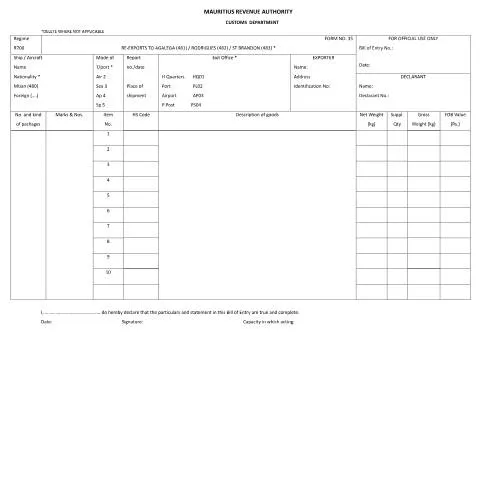
In the vibrant trade landscape of Mauritius, the Re-Exports to Agalega, Rodrigues, and St Brandon form, officially designated as Form 35, plays a pivotal role for exporters. As you prepare to export goods to these distinct territories, it’s crucial to grasp the nuances of this particular document, its purpose, and the intricacies involved in its completion and submission.
The Importance of Form 35 in Mauritius' Trade Framework
Form 35 is not just a piece of paperwork; it is a gateway to facilitating trade between the Mauritius main island and its dependencies of Agalega, Rodrigues, and St Brandon. Its origin lies in the legal framework governed by the Customs Department under the Mauritius Revenue Authority (MRA). This form is essential for ensuring that goods exported to these territories comply with local regulations and standards while also enabling the collection of relevant duties.
Who Needs to Submit Form 35?
The submission of Form 35 is paramount for various stakeholders involved in trade, particularly:
- Exporters: Individuals or businesses exporting goods to Agalega, Rodrigues, or St Brandon must complete and submit this form.
- Customs Agents: Professionals who act on behalf of exporters must accurately fill out the form, ensuring compliance with all regulatory requirements.
- Logistics Companies: Those responsible for transporting goods between Mauritius and its dependencies need to ensure that Form 35 accompanies their shipments.
Form 35: A Detailed Look at Its Composition
Understanding the structure of Form 35 is crucial for a successful submission. It contains several key sections that require careful attention to detail:
| Section | Description | Key Considerations |
|---|---|---|
| Exporter Information | Details about the exporting entity, including name and identification number. | Ensure the identification number matches the official records. |
| Declarant Information | Information of the person declaring the goods. | Must include the Declarant Number for tracking purposes. |
| Goods Description | Details about the items being exported including HS Code. | Use accurate HS codes to avoid classification issues. |
| Weight and Value | Net and gross weight of the goods alongside their FOB value. | Ensure weights are precise to prevent delays in processing. |
| Declaration Statement | Confirmation of the truthfulness of the information provided. | Signature must match the name of the declarant. |
Gathering Required Documentation: A Step-by-Step Guide
Completing Form 35 accurately requires meticulous preparation of supporting documents. Here’s how to gather the necessary paperwork:
1. Identify Goods Being Exported
Begin by compiling a comprehensive list of all goods intended for export. Ensure that:
- Each item is classified correctly under its respective HS Code.
- Weight and value details are logged precisely.
2. Obtain Identification Documents
Ensure that both the exporter and declarant possess valid identification. This includes:
- National ID cards or business registration documentation.
- Declarant identification numbers as provided by the MRA.
3. Verify Logistics Arrangements
Check that all logistical arrangements for transportation are in place. This includes connecting with:
- Shipping or airline companies for accurate transport details.
- Customs agents who can assist with the submission process.
Submission Process: How to Submit Form 35
Once Form 35 is completed and all supporting documents are gathered, the next step is to submit the form. Here’s how:
1. Digital Versus Physical Submission
The MRA encourages the use of e-services for submissions through their portal. Depending on your preference, you can:
- Submit digitally using the MauPass single-sign-on tied to your National ID or the Central Population Database.
- Opt for a physical submission at designated Customs offices if necessary.
2. Track Your Submission
Once submitted, keep track of the status of your Form 35. You can:
- Utilize the MRA's online tools to monitor the progress of your application.
- Contact the Customs Department directly for updates if necessary.
Post-Submission Protocol: What Happens Next?
After the submission of Form 35, the Customs Department will initiate a review process. Here’s what to expect:
1. Processing Timeline
Typically, the review process can take several days, depending on:
- The completeness of the provided information.
- The volume of submissions being processed at the time.
2. Receiving Feedback
Once the review is complete, you will receive feedback indicating:
- Approval of your re-export request.
- Requests for additional information if necessary.
Handling Rejections and Rectifications: The Next Steps
In the unfortunate event that Form 35 is rejected or returns with queries, it’s essential to understand how to proceed:
1. Reasons for Rejection
Common reasons for rejection may include:
- Inaccurate information in the submission.
- Missing supporting documentation.
2. Rectification Process
If your submission requires corrections, act promptly:
- Review the feedback provided to pinpoint exact issues.
- Submit the corrected Form 35 along with any additional documents required.
Potential Pitfalls: Common Mistakes to Avoid
Successful navigation of the re-export process hinges on attention to detail. Here are pitfalls to be wary of:
1. Incomplete or Incorrect Information
Double-check all fields before submission. Small errors can lead to significant delays.
2. Failure to Attach Supporting Documents
Always attach all necessary documentation to avoid queries from the Customs Department.
3. Not Following Up
After submission, don’t hesitate to follow up to ensure no additional information is required.
Conclusion: Empowering Yourself as an Exporter
Mastering the nuances of Form 35 empowers exporters and enhances the efficiency of trade between Mauritius and its dependencies. By understanding the requirements and processes involved, you can navigate the complexities of re-exports with confidence. Whether it’s ensuring that your documentation is in order or knowing what steps to take after submission, being informed puts you in the best position to succeed in the vibrant trade ecosystem of Mauritius.
Understanding the Legal Framework for Re-Exports to Agalega, Rodrigues, and St Brandon
When engaging in re-exports to the territories of Agalega, Rodrigues, and St Brandon, it is crucial to understand the legal landscape that governs these transactions. The re-export process falls under the Mauritian Customs and Excise Act, which stipulates specific guidelines and procedures for goods being exported from Mauritius to these islands.
The first requisite for re-exportation is the sourcing of the correct export declarations, which must be lodged with the Mauritius Revenue Authority (MRA). Importantly, the MRA provides guidelines that specify what constitutes eligible goods for re-export, including restrictions on perishables and controlled substances. Documentation, such as the original import permits and invoices, is essential to ensure compliance with the regulations in place.
Fill in your form directly online
No printing: type your details into the boxes of the official form, tick, then download the PDF ready to send.
- 1Type into the form boxes
- 2Tick in one click
- 3Save and download the PDF
Additionally, it is pertinent to note that there are various forms associated with re-exports. For instance, you may need to complete the Customs Declaration Form C25 for the re-export of goods, clearly detailing all relevant information, including the Harmonized System (HS) codes, quantities, and pricing. Understanding the specifics of the HS codes used for re-exportation can significantly streamline the customs process and help avoid delays.
Further, re-exporters must ensure compliance with both Mauritian law and the regulations specific to the receiving territories. For example, Rodrigues has its own local guidelines that may differ from those applicable on the mainland. Familiarity with these regional regulations can prevent issues and enable smoother transactions.
Logistical Considerations and Best Practices for Re-Exports
Re-exporting goods to Agalega, Rodrigues, and St Brandon involves logistical considerations that can impact the efficiency of your operations. One of the critical aspects to consider is the mode of transportation. While sea freight is the most common method for shipping goods to these islands, evaluating options for air freight can offer advantages in terms of speed, especially for goods that are time-sensitive.
Moreover, understanding the logistics of the supply chain is essential. It involves not only the transportation of goods but also storage and handling procedures. Engage with reliable freight forwarders who have experience in handling re-exports to these territories. They can provide insights into the best routes and methods for transporting goods, helping you navigate any challenges that may arise.
Ensuring that goods are appropriately packaged and labelled is another best practice. This includes adhering to the international standards for packaging to protect items during transport. Additionally, precise labelling with clear descriptions of the contents and destination can expedite customs clearance processes at both the point of departure and the destination.
Another vital practice is to establish solid communication channels with local authorities in Agalega and Rodrigues. This proactive approach allows you to stay updated on any changes in local regulations that may impact re-export activities, including any new tariffs or duties that may be applied to imported goods.
Tax Implications and Financial Considerations for Re-Exports
Re-exports to Agalega, Rodrigues, and St Brandon can carry specific tax implications that businesses should carefully consider. The Mauritius Revenue Authority (MRA) plays a pivotal role in overseeing taxation for exports, including value-added tax (VAT) exemptions that may apply to goods being re-exported from Mauritius.
Generally, re-exported goods are eligible for VAT refunds, provided that proper documentation is maintained. It is crucial to keep track of all invoices and export declarations to substantiate any claims for VAT refunds. The MRA provides guidelines on the necessary documentation needed for this purpose, including the submission of VAT refund applications through their e-filing system.
Additionally, businesses should be aware of potential customs duties that may apply to re-exports. While many goods may be exempt from duties when re-exporting, certain categories might still incur charges depending on the nature of the goods and their intended destination. Consulting with a tax advisor familiar with cross-border trade regulations can assist in navigating these complexities effectively.
It is also advisable to consider fluctuations in currency exchange rates when dealing with international transactions, as this can impact overall costs and profitability. Businesses should remain vigilant and may consider hedging strategies to mitigate risks associated with currency volatility.
Lastly, maintaining robust financial records is essential not only for compliance with MRA regulations but also for conducting effective business operations. Using accounting software that caters to the specific needs of businesses engaged in re-exports can simplify financial tracking and reporting processes.