Skip to content
Government & admin

Understanding the F20 Form: A Key to Company Compliance

Official documentGovernment & admin
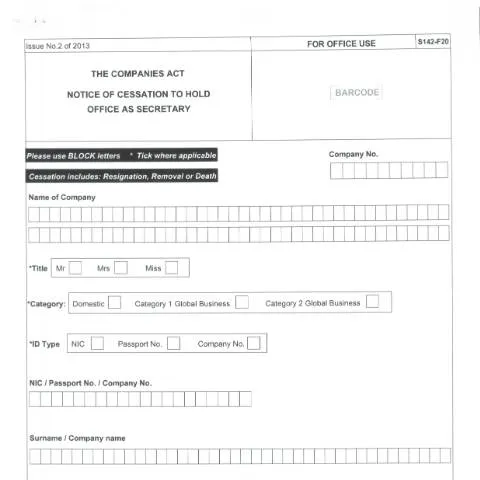
PreviewDocument preview: Understanding the F20 Form: A Key to Company Compliance — Government & admin (CERFA n°F20-1)
Official document

What would you like to do?

Complete the fields, sign, then download.

Every company in Mauritius operates within a meticulously structured legal framework, defined by various official documents and forms that facilitate compliance and governance. Among these critical documentation tools is the F20 Form, known as the Notice of Cessation to Hold Office as Secretary. This form plays a pivotal role in informing the Registrar of Companies about a secretary's cessation of duties, whether due to resignation, removal, or death.

Understanding the Lifecycle of the F20 Form

The journey of the F20 form begins with a significant event—a secretary vacating their position. This can occur for several reasons, including voluntary resignation or unforeseen circumstances such as death. Consequently, understanding the timeline associated with this form is crucial.

Timeline of Events

  • Immediate Action Required: The company must notify the Registrar within 14 days from the date the secretary ceases to hold office.
  • Post-Submission: Once submitted, the Registrar updates the company records. This is crucial for maintaining transparency and legal compliance.

Who Should File the F20 Form?

The onus of filing the F20 falls on the company itself, specifically through its directors or authorized representatives. This ensures accountability and proper documentation in the company's operations. Furthermore, it’s essential to recognize the designated representatives who can submit the form on behalf of the company.

Authorized Representatives

  • Directors of the company
  • Registered agents
  • Shareholders with authority

Completion Guidelines for the F20 Form

Completing the F20 form might appear straightforward at first glance, but there are specific details that require careful attention. Proper completion is vital to avoid delays or complications in processing.

Essential Sections to Fill Out

  1. Company Information: Enter the name and registration number of the company accurately.
  2. Details of the Secretary: Indicate the date when the secretary ceased to hold office. This includes crucial fields such as:
    • Date of cessation
    • Date the company became aware of the cessation (if applicable)
  3. Authorized Signatures: The form must be signed by a director, secretary, or registered agent.

A Closer Look at Document Processing and Follow-Up

Once the F20 form has been duly filled and submitted, the administrative processing begins. Understanding how to track the progress of your submission can save time and alleviate concerns.

Steps for Tracking Your Submission

  • Keep a copy of the submitted form for your records.
  • Verify that the submission has been sent to the correct address, either via mail or electronically.
  • Contact the Registrar to confirm receipt of your submission after the stipulated processing time.

Handling Issues: What If Things Don’t Go as Planned?

Issues may arise during the submission and processing of the F20 form. It is imperative to know how to navigate these challenges promptly.

Common Issues and Resolutions

  1. Document Rejection: If your form is rejected, the administration will provide reasons. Address these issues immediately and resubmit with necessary corrections.
  2. Missing Information: The registrar may contact you for any missing fields. Ensure that all areas are filled in before submission to minimize this risk.

Consequences of Non-compliance: The Importance of Timely Submission

Failure to submit the F20 form within the stipulated time frame can lead to serious repercussions for the company. Understanding these consequences emphasizes the importance of timely compliance.

Potential Repercussions

  • Legal Penalties: The company could face fines or other legal ramifications.
  • Reputational Damage: Failure to adhere to procedural requirements may tarnish the company’s reputation among stakeholders.

Specific Cases: Foreign Nationals and Complex Situations

While the F20 form is generally straightforward, complexities may arise when dealing with foreign nationals or in unique circumstances. Understanding how to approach these cases can prove beneficial.

Special Considerations

For foreign nationals serving as secretaries, additional documentation may be required. This often includes:

  • Verification of the identity through a passport or other legal documentation.
  • Proof of residency or work authorization in Mauritius.

Preparing the Necessary Justifications

In addition to the F20 form itself, various supporting documents may be required depending on your specific situation. Preparing these in advance can streamline the submission process.

Checklist of Supporting Documents

Scenario Required Documents
Secretary Resignation Letter of resignation from the secretary
Secretary Removal Minutes from the board meeting approving the removal
Secretary's Death Death certificate or relevant legal documentation

Final Thoughts: Empowering Your Administrative Capacity

Successfully navigating the F20 form and its related processes equips companies with the tools needed for better administration and compliance. A thorough understanding of the form's role and the associated procedures not only ensures legal adherence but also enhances the overall governance of the company.

By maintaining organized records and being aware of the required documentation, companies can foster an environment of transparency and accountability, crucial for sustainable growth in Mauritius’ dynamic corporate landscape.

Understanding the F20 Form for Tax Exemptions

The F20 form, also referred to as the 'Application for Exemption from Income Tax', is a crucial document for individuals and entities seeking tax exemptions in Mauritius. Understanding the nuances of this form is imperative for anyone aiming to optimize their tax liabilities. To apply for an exemption, applicants must provide a comprehensive justification for their request. This includes detailed financial statements, a declaration of income sources, and any relevant documentation that supports the claim for exemption. The Mauritius Revenue Authority (MRA) outlines specific criteria that must be met for an exemption to be granted, which typically includes evidence of charitable activities, educational initiatives, or investments promoting economic growth. Moreover, it is important to take note of the tax year, which runs from July 1 to June 30. Therefore, any applications for exemptions under the F20 must be submitted well in advance of the fiscal year-end to ensure processing and response from the MRA before the year closes. Failure to adhere to these timelines may result in complications, including the rejection of the exemption request. Lastly, the submission of the F20 form can now be done electronically through the MRA's e-filing platform. While this digital advancement streamlines the application process, applicants must ensure that they have a valid national ID linked to the MauPass system for seamless access to these services.

Common Challenges in Completing the F20 Form

Completing the F20 form can present various challenges, particularly for those unfamiliar with the intricacies of Mauritian tax law. One common issue is the ambiguity surrounding the eligibility criteria for tax exemptions. Applicants often misinterpret the necessary documentation required, leading to incomplete submissions that delay the application process. Another challenge lies in accurately reporting income sources. The MRA requires transparency and full disclosure of all income, which can be daunting for individuals or organizations with multiple revenue streams. Failing to provide comprehensive income details can not only hinder the exemption process but may also attract scrutiny from the tax authorities. Additionally, applicants may struggle with the technical aspects of electronic submission. While the e-filing system is designed to facilitate the process, users must be adequately familiar with the interface and functionality to avoid errors during submission. It is advisable for applicants to seek assistance from tax professionals or consult MRA's customer support to navigate any difficulties encountered while filling out the F20 form. Moreover, being aware of the deadlines for submission is crucial. The MRA often sets specific deadlines for submitting the F20 form, and missing these could result in losing the opportunity for a tax exemption for that fiscal year.

Post-Submission Process and Follow-Up

After the F20 form has been submitted to the Mauritius Revenue Authority, applicants should be aware of the subsequent steps in the approval process. Typically, the MRA will acknowledge receipt of the application, often via email or through their online portal. This acknowledgment is crucial for tracking the status of the application. Following acknowledgment, the MRA may conduct a review of the submitted documents. This review period can vary in length, depending on the complexity of the application and the volume of submissions at that time. It is common practice for the MRA to request additional information or clarification from the applicant, which may extend the review process. Applicants should be prepared to respond promptly to any such requests to avoid unnecessary delays. Once the review is complete, the MRA will issue a decision regarding the exemption request. If approved, the applicant will receive written confirmation detailing the nature and extent of the exemption granted. In contrast, if the request is denied, the MRA must provide a clear explanation for the refusal, allowing the applicant to understand the grounds for the decision. It's important for applicants to keep records of all correspondence with the MRA regarding the F20 form. Should there be any disputes or follow-up inquiries, having a complete record will facilitate a smoother resolution process. For those who receive a denial, there exists an appeal process through which applicants may contest the MRA's decision. Understanding this process and acting within the stipulated timeframe is essential for anyone wishing to pursue further action.

Frequently asked questions

What is the F20 Form?

The F20 Form is the Notice of Cessation to Hold Office as Secretary in Mauritius.

Why is the F20 Form important?

It informs the Registrar of Companies about a secretary's cessation of duties.

When should the F20 Form be submitted?

It should be submitted upon a secretary's resignation, removal, or death.

Who is responsible for filing the F20 Form?

The company is responsible for filing the F20 Form with the Registrar.

What happens if the F20 Form is not filed?

Failure to file may result in non-compliance with company regulations.

Similar documents