Unveiling the MRA Press Release: A Case of Drug Seizure
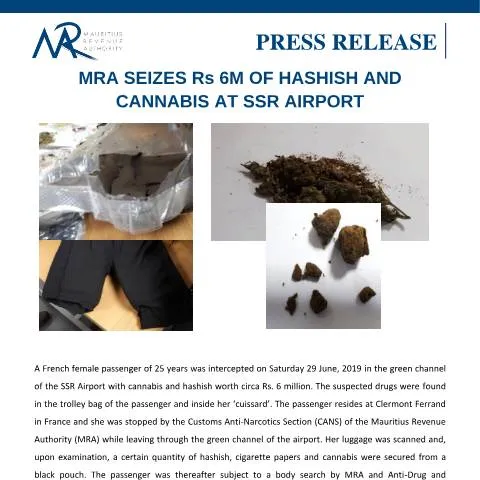
On 2nd July 2019, the Mauritius Revenue Authority (MRA) issued a remarkable press release detailing a significant drug seizure at Sir Seewoosagur Ramgoolam International Airport (SSR Airport). This document outlines a crucial incident where approximately Rs 6 million worth of hashish and cannabis was intercepted from a young French passenger. This case opens a window into the stringent measures employed by the MRA to combat drug trafficking, showcasing the procedures and implications surrounding such incidents.
The Context of Drug Enforcement at SSR Airport
SSR Airport, a pivotal entry point for international travelers, is at the forefront of Mauritius's battle against drug smuggling. In this case, a 25-year-old female passenger traveling from Clermont-Ferrand, France, became a focal point of scrutiny when she attempted to pass through the green channel with illicit substances concealed in her luggage and body. The presence of Customs Anti-Narcotics Section (CANS) officers is indicative of the rigorous protocols in place to monitor and intercept potential drug trafficking activities.
The Incident Recapped
On the 29th of June 2019, the passenger was stopped after a routine luggage scan revealed the presence of suspicious items. The examination led to the discovery of drugs both in her trolley bag and in a hidden compartment in her clothing. This moment signals the beginning of a complex legal procedure that encompasses immediate action from law enforcement and subsequent processes under Mauritian law.
Dissecting the Legal Framework and Procedural Protocols
Upon interception, several protocols come into play. The MRA operates within a hybrid legal framework combining French civil law with English common law procedures. The legal ramifications for drug trafficking can be severe, often leading to both judicial and administrative repercussions. The case is handed over to the Anti-Drug and Smuggling Unit (ADSU) for further investigation, emphasizing the collaborative efforts between various agencies in tackling drug-related offenses.
Steps Following Interception
- Initial Interrogation: The suspected individual is subjected to questioning regarding the origin and purpose of the drugs. In this scenario, the passenger claimed that she was promised €4,000 for delivering the drugs.
- Field Testing: The drugs are subjected to a field test, which, in this case, returned positive results, further solidifying the grounds for further investigation.
- Referral to ADSU: Following the initial findings, the case is referred to ADSU, which conducts a comprehensive investigation, potentially leading to criminal charges.
Channels of Reporting and Their Importance
Both citizens and visitors play a crucial role in combating drug trafficking. The MRA encourages public participation through the MRA Stop Drug Platform, where suspected illicit activities can be reported anonymously. This collaborative approach enhances the effectiveness of drug enforcement strategies. The MRA Hotline (8958) is another avenue for immediate reporting, demonstrating an open channel of communication between authorities and the public.
Why Reporting Matters
Reportage serves as a frontline defense in identifying and curbing trafficking activities. Public vigilance allows authorities to intervene promptly, potentially preventing future incidents and protecting the integrity of the Mauritian community.
The Aftermath of a Drug Seizure
After an incident such as this, several outcomes are possible. Depending on the evidence collected and the legal standing of the accused, the case may lead to various judicial proceedings. The consequences range from fines and restitution to imprisonment, highlighting the serious nature of drug offenses in Mauritius.
Possible Legal Outcomes
| Outcome | Description |
|---|---|
| Criminal Charges | The accused may face serious charges, which could lead to a trial and potential incarceration. |
| Fines | Monetary penalties may be imposed, reflecting the severity and circumstances of the offense. |
| Rehabilitation Programs | In some cases, offenders may be directed to rehabilitation rather than imprisonment, depending on their background and circumstances. |
The Role of Customs and Law Enforcement in Drug Monitoring
The MRA, particularly through its CANS unit, plays a pivotal role in maintaining national security and public health by preventing the entry of illegal substances. The rigorous training of officers, including the use of drug detection canines like 'Otto', illustrates the robust measures in place to ensure thorough inspections and a proactive approach to drug enforcement.
Training and Preparedness
CANS officers undergo extensive training to detect suspicious behavior and illicit goods. The integration of technology and trained personnel enhances the MRA's capability to intercept drugs before they infiltrate the local community.
Future Perspectives: Strengthening Drug Enforcement
In light of increasing drug trafficking attempts, the MRA continues to refine its strategies. Through public awareness campaigns and enhanced cooperation with international drug enforcement agencies, Mauritius aims to bolster its defenses against drug-related crime.
Community Involvement and Awareness
Educational initiatives aimed at the public are essential in building a community that is vigilant and informed about drug-related issues. Awareness programs can empower citizens to recognize and report suspicious activities, forming a united front against trafficking.
Final Thoughts on Drug Enforcement in Mauritius
The case of the seized hashish and cannabis at SSR Airport offers a glimpse into the tireless efforts of the MRA and its partners in combating drug trafficking in Mauritius. By understanding the processes, protocols, and community roles in this fight, it becomes evident that each individual's contribution can make a significant difference. The resolve to maintain a drug-free Mauritius is not solely the responsibility of law enforcement but a collective commitment from all members of society.
Understanding the Legal Framework Surrounding Drug Seizures in Mauritius
The legal framework governing drug offenses in Mauritius is primarily outlined in the Dangerous Drugs Act 1988. Under this legislation, various types of controlled substances, including hashish and cannabis, are classified, and penalties for possession, trafficking, and manufacturing are strictly enforced. The Act provides specific definitions for various offenses and stipulates a range of punishments that can include substantial fines and long-term imprisonment. Depending on the quantity and type of drug involved, the penalties can significantly vary. For instance, possession of small amounts may result in less severe penalties compared to the trafficking of larger quantities. This reflects Mauritius's commitment to combating drug-related crimes while also ensuring that the legal process is transparent and fair.
In the case of the MRA's seizure of Rs 6M worth of hashish and cannabis at SSR Airport, it is crucial to examine the circumstances surrounding the operation. Such seizures often occur during routine inspections and are indicative of the high vigilance exercised by customs and law enforcement agencies at points of entry. In addition, the collaboration between local authorities and international law enforcement bodies is essential in combating drug trafficking networks that operate across borders.
Impact of Drug Seizures on Public Health and Safety
The implications of drug seizures extend beyond legal consequences; they have profound effects on public health and safety. The illicit drug trade poses significant risks to the community, contributing to addiction, increased crime rates, and social instability. Mauritian authorities recognize that tackling drug abuse requires a multifaceted approach that includes prevention, treatment, and enforcement. The MRA's proactive stance in intercepting drug shipments at SSR Airport exemplifies the government's commitment to safeguarding public health.
Moreover, drug seizures are critical in curbing the supply of narcotics within the country. By effectively intercepting large quantities of drugs before they reach the streets, the MRA plays a vital role in reducing availability, which can subsequently lead to a decrease in consumption rates. The government often partners with health organizations to provide support for rehabilitation programs, aiming to help individuals struggling with substance abuse issues. These initiatives not only mitigate the immediate effects of drug use but also foster long-term societal benefits by promoting healthier lifestyles and reducing the burden on healthcare systems.
Community Engagement and Awareness Campaigns
In response to the ongoing challenges posed by drug trafficking and substance abuse, community engagement has emerged as a pivotal strategy in Mauritius. Awareness campaigns are implemented to educate the public about the dangers of drug use and to foster a supportive environment for those seeking help. The role of schools, non-governmental organizations (NGOs), and community groups is essential in disseminating information and providing resources for prevention and intervention.
Programs targeting youth, for instance, are designed to raise awareness of the dangers of drug use and promote healthy lifestyle choices. Workshops, seminars, and interactive sessions are often organized in schools and community centers to engage young people actively. Additionally, local leaders and influencers can play a significant role in shaping public perceptions and attitudes towards drug use, further amplifying the impact of awareness initiatives.
Furthermore, collaboration between governmental bodies, such as the MRA, and community organizations enables a more holistic approach to drug prevention. These partnerships can lead to the establishment of support networks that offer guidance and assistance to individuals and families affected by drug problems, ultimately fostering resilience within communities. Regular evaluations of these programs help refine their effectiveness, ensuring that they meet the evolving needs of the population.