The Context of Drug Seizures in Mauritius
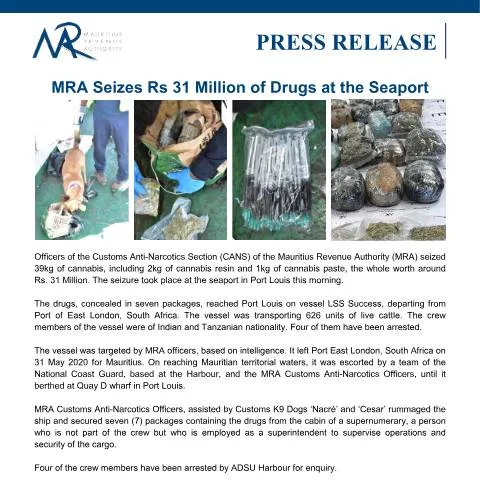
On June 13, 2020, the Mauritius Revenue Authority (MRA) made headlines with a significant drug seizure at the Port Louis seaport. This event not only showcased the operational efficiency of the MRA's Customs Anti-Narcotics Section (CANS) but also highlighted the ongoing battle against the illegal drug trade in Mauritius. The seizure of Rs 31 million worth of drugs, primarily cannabis, underscores the challenges faced by authorities in safeguarding the nation against narcotics.
The Background of the Seizure
The operation began well before the seizure itself, grounded in intelligence-gathering and surveillance. The vessel, LSS Success, arrived in Port Louis after departing from East London, South Africa, carrying a cargo of 626 units of live cattle. The interception was a coordinated effort involving several agencies, including the National Coast Guard and MRA Customs Anti-Narcotics Officers, showcasing a multi-faceted approach to combat drug trafficking.
Understanding the Seizure Process
When drugs are seized by the authorities, it prompts a series of procedural steps and legal actions. In this case, the seizure was executed when MRA officers, supported by specially trained K9 units, conducted a thorough search of the vessel upon its arrival. Here's a detailed breakdown of the process that followed:
- Intelligence Gathering: Prior to the vessel's arrival, MRA officers collected and analyzed intelligence, which indicated a high probability of illegal substances on board.
- Surveillance Operations: Once the vessel neared Mauritian waters, it was closely monitored and escorted to ensure compliance and safety.
- Inspection and Seizure: Upon docking, Customs officers executed a search of the vessel, leading to the discovery of the drugs hidden among the cargo.
- Arrest of Crew Members: Following the seizure, four crew members were arrested for their involvement, which initiated a legal discussion on culpability and further investigations.
Impact on Legal Proceedings
The seizure of such a large quantity of drugs triggers various legal actions, including the arrest of suspects and potential charges. The involvement of the Anti-Drug and Smuggling Unit (ADSU) is crucial, as they are responsible for further inquiries and investigations into the matter. The crew's nationality—Indian and Tanzanian in this case—also implies international legal considerations, given that narcotics trafficking is a serious offense in all jurisdictions.
Roles of the Mauritius Revenue Authority
The MRA plays a pivotal role in not just enforcing the law but also in educating the public about the dangers of drug trafficking. They are tasked with several functions that include:
- Enforcement: The primary responsibility of the MRA is to enforce customs regulations and prevent the illicit trafficking of drugs.
- Public Education: MRA engages in campaigns aimed at raising awareness regarding the consequences of drug use and trafficking.
- Collaboration: They work closely with other governmental and non-governmental organizations to strengthen the fight against drugs.
The Procedural Follow-up After Seizure
Once a seizure has occurred, several procedural aspects must be addressed, including:
| Step | Description |
|---|---|
| 1. Investigation | A thorough investigation is launched to examine the circumstances surrounding the seizure. |
| 2. Legal Proceedings | The arrested individuals are brought before the courts to face charges, which could range from possession to trafficking. |
| 3. Disposal of Seized Goods | Any illegal drugs or items seized are appropriately disposed of under the law. |
Consequences for Individuals Involved
The ramifications for those involved in drug trafficking can be severe. For the crew members arrested during this seizure, the consequences can include lengthy imprisonment, hefty fines, and a permanent criminal record. The laws surrounding drug trafficking in Mauritius are stringent. Depending on the amount and type of substance, penalties may vary significantly, illustrating the seriousness of the offense.
Understanding the Legal Framework
The legal framework governing such cases in Mauritius is primarily guided by the Dangerous Drugs Act, which outlines the penalties associated with drug offenses. The MRA operates within a hybrid legal system, influenced by both French civil law and English common law. This duality can affect how cases are prosecuted and the legal processes involved.
Public Awareness and Community Engagement
In light of such significant seizures, public awareness campaigns are critical. The MRA actively engages with the community to educate citizens about the risks associated with drug trafficking and use. These initiatives are crucial in fostering a cultural shift and reducing the demand for illegal substances. Community programs often involve:
- Workshops and Seminars: These provide information on the dangers of drug abuse and the legal implications of trafficking.
- Partnerships with Schools: By educating the youth, the MRA aims to mitigate future engagement in drug-related activities.
- Media Campaigns: Utilizing various media platforms to disseminate information regarding drug issues and preventive measures.
Listening to the Community’s Voice
Engagement with the public is not just about delivering information; it also involves listening to community concerns. The MRA often conducts surveys and forums to understand better the community's perspectives on drug issues and the effectiveness of current policies. This feedback loop is vital for adapting strategies that resonate with the public.
The Broader Implications of Drug Seizures
The implications of a drug seizure extend beyond immediate legal repercussions. Such events can influence national security policies and international relations, especially in cases involving foreign nationals. Furthermore, they serve as a reminder of the ongoing struggle against organized crime and trafficking networks that often operate across borders.
Shaping Future Policy
Each seizure provides valuable data that can be analyzed to shape future policies and reinforce preventative measures. Government bodies, including the MRA, utilize this information to adapt strategies, improve training for law enforcement, and enhance inter-agency cooperation.
Fill in your form directly online
No printing: type your details into the boxes of the official form, tick, then download the PDF ready to send.
- 1Type into the form boxes
- 2Tick in one click
- 3Save and download the PDF
Encouraging Citizen Participation
One of the most effective ways to combat drug trafficking is through community vigilance. The MRA encourages citizens to report suspicious activities or trafficking attempts. Various anonymous hotlines and platforms have been established for this purpose, allowing individuals to contribute to drug prevention efforts without fear of repercussion.
Reporting Mechanisms
The MRA has set up several channels through which citizens can report drug-related offenses:
- Anonymous Hotlines: Citizens can call to report any suspicious activities without revealing their identity.
- Online Reporting Tools: Accessible through the MRA’s official website, these tools allow for the submission of reports directly.
What Lies Ahead in the Fight Against Drug Trafficking?
As the MRA continues its efforts to combat drug trafficking, ongoing evaluation and adaptation of strategies will be essential. With the rise of technology, methods of trafficking are evolving, and authorities must stay ahead of the game. This includes:
- Investing in Technology: Implementing advanced surveillance and detection technologies to enhance port security.
- International Collaboration: Working with other nations to share intelligence and best practices in drug interdiction efforts.
In conclusion, the seizure of Rs 31 million worth of drugs at the Port Louis seaport exemplifies the ongoing challenges faced by the authorities in Mauritius. With a robust legal framework, community engagement, and international cooperation, the MRA is poised to continue its fight against the drug trade.