Understanding the Role of the MRA in Firearms Control
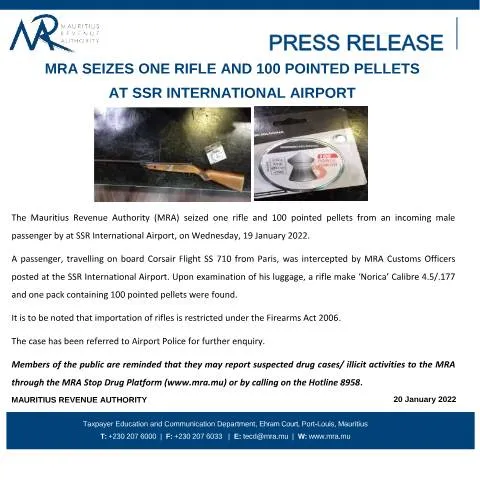
On January 19, 2022, a significant incident at SSR International Airport highlighted the crucial role of the Mauritius Revenue Authority (MRA) in controlling firearms and ensuring compliance with the Firearms Act 2006. The MRA seized a rifle and 100 pointed pellets from a passenger arriving on flight SS 710 from Paris, showcasing the authority's effectiveness in intercepting prohibited items and maintaining national security.
The importance of the MRA in this context cannot be overstated. The authority is not merely a customs body but serves as a guardian of public safety by enforcing laws related to the importation of firearms and ammunition. The Firearms Act 2006 restricts the importation of such items, making it imperative for the MRA to remain vigilant at entry points like the airport.
The Implications of Seizing Restricted Items
When the MRA officers discovered the rifle—specifically a Norica Calibre 4.5/.177—and the accompanying pellets, they acted swiftly. Such seizures have several implications:
- Legal Consequences for Offenders: Individuals caught attempting to import restricted items face potential legal repercussions, including fines and imprisonment.
- Public Awareness: Incidents like this enhance awareness among the public regarding the risks associated with illegal firearms and ammunition.
- Collaboration with Law Enforcement: The case was referred to the Airport Police for further investigation, exemplifying the cooperative efforts between various governmental bodies to ensure public safety.
Navigating the Reporting Process for Seized Items
For individuals who find themselves in situations involving the seizure of firearms or other restricted items, understanding the reporting and follow-up processes is essential. The MRA maintains a structured approach to handling such cases, which can be beneficial for both the authority and the individuals involved.
Steps for Reporting a Seizure
- Immediate Notification: Passengers should notify MRA officers immediately upon seizure, as they may need to provide additional information.
- Documentation: Officers will document the seizure, including details about the item, the passenger’s information, and the circumstances surrounding the incident.
- Investigation by Law Enforcement: The case is then transferred for investigation, ensuring that proper legal procedures are followed.
Those affected by the seizure may seek to understand their legal rights, which can often involve consultation with legal professionals. Individuals can also reach out to the MRA's Taxpayer Education and Communication Department for guidance.
Who is Affected by the MRA's Actions?
The actions taken by the MRA can impact various groups, from tourists and residents to businesses engaged in importing goods. Understanding the nuances of who may be affected is crucial, especially for those who travel frequently or engage in the trade of goods.
Specific Cases of Impact
- Foreign Travelers: Non-residents entering Mauritius must adhere strictly to local laws regarding the importation of firearms and related items. Failure to comply can lead to severe penalties.
- Minors Traveling Alone: Young travelers should be aware that customs officers may conduct additional checks. Parents must ensure that their children are informed about the regulations to avoid unintentional violations.
- Local Importers: Businesses engaging in the importation of sporting goods must be vigilant regarding compliance with the Firearms Act, as they could face severe repercussions for even minor oversights.
The Chain of Procedures Following a Seizure
Following a seizure, several procedural steps are initiated by the MRA, often involving various stakeholders. It’s important to recognize how the system operates and what individuals should anticipate.
Process Overview
| Step | Description | Responsible Body |
|---|---|---|
| Initial Discovery | Customs officers identify and seize prohibited items. | MRA |
| Documentation | Details of the seizure are recorded and filed. | MRA |
| Investigation | The case is referred for further investigation to the Airport Police. | Airport Police |
| Legal Proceedings | If necessary, legal action is taken against the individual. | Judiciary |
By understanding this procedural chain, individuals can better prepare for the implications of such actions and know whom to approach for assistance.
Distinguishing the MRA from Other Regulatory Bodies
Many may confuse the MRA with other regulatory authorities, such as the Ministry of Health or even the Police Department. It is crucial to understand the specific mandate of the MRA in the context of firearms and customs regulations.
Comparison with Other Agencies
| Authority | Primary Function | Relation to Firearms |
|---|---|---|
| MRA | Tax collection and customs enforcement | Seizes illegal firearms and ensures compliance with import laws |
| Ministry of Health | Public health and safety regulations | Regulates health-related aspects of imported goods but not firearms |
| Police Department | Law enforcement and criminal investigations | Investigates cases referred by the MRA but does not control customs |
This distinction is vital for understanding the roles each body plays in ensuring national security and public safety.
Significance of Public Cooperation with MRA
The MRA cannot operate effectively without public cooperation. The recent seizure incident serves as a reminder of the importance of community vigilance in reporting suspicious activities and potential violations of the law.
Ways to Report Illicit Activities
The MRA encourages the public to actively participate in maintaining safety by reporting any suspicious activities. There are several channels available:
- MRA Stop Drug Platform: An online system where individuals can report suspected drug-related activities.
- Hotline 8958: A direct line to report illegal activities anonymously.
- Community Engagement: Participating in community discussions about safety can enhance awareness and ensure a proactive approach to law enforcement.
Ultimately, cooperation between the public and authorities is essential in curbing illegal activities and enforcing laws effectively.
Future Developments in Firearms Regulation
As global security dynamics evolve, so too must the regulatory framework surrounding firearms in Mauritius. The MRA continuously adapts its procedures to better manage the risks associated with illegal firearms.
Anticipated Changes and Improvements
- Enhanced Training: MRA officers will receive ongoing training to recognize potential threats and improve their ability to identify prohibited items rapidly.
- Technological Integration: The MRA is likely to implement more sophisticated technologies for scanning and identifying restricted items in luggage.
- Public Awareness Campaigns: Increased efforts will be made to educate the public about the risks and legal ramifications of illegal firearm possession.
By anticipating these developments, both the MRA and the public can work together more effectively to ensure compliance and safety across the nation.
A Call for Continued Vigilance
The January 2022 incident serves as a potent reminder of the importance of vigilant enforcement of firearm regulations. As Mauritius grapples with complex issues of security and safety, the role of the MRA in safeguarding the public remains paramount.
By understanding the processes, regulations, and the broader implications of firearm control, citizens can take an active role in upholding the law while engaging responsibly with the authorities. The MRA, with support from the public, will continue to adapt and evolve in its mission to ensure a safe and secure environment for all Mauritians.
Understanding the Legal Framework Surrounding Firearm Seizures in Mauritius
The seizure of firearms and ammunition at points of entry such as SSR International Airport is a significant act within the context of Mauritian law. Under the Firearms Act 1988, the acquisition, possession, and transfer of firearms and ammunition require strict adherence to legal provisions designed to ensure public safety and security. This legislation is critical in regulating who can legally possess firearms, the types of firearms that are legal, and the specific processes in place for the importation of such items.
Fill in your form directly online
No printing: type your details into the boxes of the official form, tick, then download the PDF ready to send.
- 1Type into the form boxes
- 2Tick in one click
- 3Save and download the PDF
In this instance, the seizure of a rifle and 100 pointed pellets was carried out by the Mauritius Revenue Authority (MRA) in coordination with the airport's security protocols. Such seizures usually occur when individuals fail to declare firearms during customs checks. The law mandates that any person transporting a firearm through the country must produce the appropriate licenses and permits, which are issued under the Firearms Act.
Furthermore, the legal implications for the individual involved in this seizure could be severe. Offenders may face penalties including substantial fines or imprisonment, depending on the circumstances surrounding the case. It is crucial for potential travelers to understand that firearms must not only be declared but also must meet specific legal criteria, including proper storage and transportation methods. Ignorance of the law is not an acceptable defense, and as such, individuals intending to travel with firearms should consult with legal advisors prior to their departure to ensure compliance with local laws.
Impact of Customs Regulations on Security Measures at SSR International Airport
The security measures enacted at SSR International Airport are a direct response to both national and international pressures to maintain stringent customs regulations. The MRA plays a pivotal role in these regulations, focusing on the prevention of smuggling and the illegal importation of contraband items, including firearms and ammunition. The methods employed by the MRA involve thorough inspections, surveillance, and collaboration with international agencies to strengthen security protocols.
When events such as the seizure of a rifle and pointed pellets occur, they serve as a reminder of the ongoing challenges faced by customs authorities in Mauritius. These incidents not only highlight the risks associated with illegal imports but also showcase the effectiveness of customs regulations and security measures in deterring such activities. Enhanced training for customs officers, implementation of advanced scanning technologies, and inter-agency cooperation are essential components of a comprehensive security strategy.
Moreover, the socio-political climate in Mauritius necessitates a proactive approach to customs enforcement. The potential implications of illegal firearms on public safety and national security cannot be overstated. In this vein, customs regulations are continually reviewed and updated to address emerging threats, ensuring that the security framework remains robust against any potential loopholes that could be exploited by traffickers and other criminals.
Community Awareness and Engagement in Firearm Regulations
In light of incidents involving the importation of illegal firearms, community awareness and engagement are crucial in supporting effective firearm regulation in Mauritius. The MRA, along with local law enforcement agencies, is increasingly focusing on educating the public about the laws surrounding firearms. This awareness campaign goes beyond just legal stipulations; it encompasses understanding the risks associated with firearms and the importance of adhering to regulations designed to safeguard the community.
Community outreach programs that include workshops, seminars, and informational campaigns serve to inform residents about the legal requirements for firearm possession and importation. These initiatives aim to foster a culture of compliance and responsibility, encouraging individuals to take an active role in reporting suspicious activities that may indicate firearm smuggling or illegal possession.
Additionally, there are opportunities for collaboration with local non-governmental organizations (NGOs) that focus on crime prevention and community safety. Through partnerships, the MRA can leverage existing networks to disseminate critical information regarding firearm laws and engage citizens in discussions about the broader implications of firearm-related incidents. Such collaborations can enhance community resilience against crime and build a stronger, informed citizenry capable of safeguarding itself from the threats posed by illegal firearms.