Skip to content
Government & admin

Insights into MRA's Recent Heroin Seizure

Official documentGovernment & admin
PreviewDocument preview: Insights into MRA's Recent Heroin Seizure — Government & admin (PressRelease130722)
Official document

What would you like to do?

After payment, download your document or edit it in your account.

After payment, download your document or edit it in your account.

Understanding the MRA Press Release: A Critical Document in Drug Seizure Reporting

The Mauritius Revenue Authority (MRA) recently issued a press release on July 13, 2022, detailing a significant drug seizure—a poignant reminder of the ongoing battle against narcotics in the nation. This document, designated as PressRelease130722, outlines the MRA's actions, the context of the seizure, and the implications for both the authorities and the public. In this article, we will dissect the various components and ramifications of this press release, ensuring that you grasp its importance and your role therein.

Key Elements of the Press Release

The press release encapsulates crucial information regarding the seizure of 1.73 kilograms of heroin valued at Rs 25.9 million. Understanding its structure can help citizens, especially those involved in reporting or observing similar incidents, grasp the specifics of legal proceedings and their respective responsibilities.

Context and Background of the Seizure

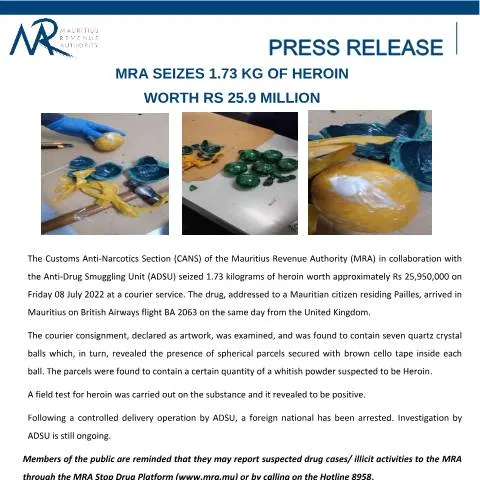
On July 8, 2022, the Customs Anti-Narcotics Section (CANS) of the MRA, in collaboration with the Anti-Drug Smuggling Unit (ADSU), intercepted a consignment at a courier service. The drugs, cunningly concealed as "artwork," were bound for a Mauritian citizen in Pailles, arriving from the UK on British Airways flight BA 2063. This highlights the evolving tactics used by drug traffickers and the need for heightened vigilance at entry points to the country.

Processing the Seizure and Subsequent Actions

The documentation of the seizure is not just a formal record; it initiates a series of procedural steps, including investigations, arrests, and public notifications. The following actions typically unfold after such press releases:

  • Investigation: ADSU continues to investigate the source and distribution network of the seized drugs.
  • Public Awareness: The press release serves as a public declaration of the authorities’ proactive measures against drug smuggling, which can deter potential offenders.
  • Controlled Delivery Operations: In this case, a foreign national was arrested following a controlled delivery operation, showcasing the tactical approach taken by law enforcement.

Calendrical Considerations: Timelines and Follow-Ups

The sequence of events leading from the discovery of illicit substances to public communication is crucial. The timeline extends beyond the initial seizure. The MRA and ADSU will continue to engage in ongoing investigations, which may lead to further developments over a period of weeks or even months.

The public can expect updates as investigations progress, particularly if there are arrests or significant findings relating to the drug network involved. Awareness of this timeline helps in understanding the legal landscape surrounding drug-related offences.

Submission Channels and Their Import

For citizens wishing to contribute information regarding suspected drug activities, the MRA has established channels for reporting. Currently, individuals can report through:

  • The MRA Stop Drug Platform: Accessible via the MRA's official website, this platform allows anonymous reporting of illicit activities.
  • Hotline 8958: A direct line for immediate reporting, ensuring swift communication with law enforcement agencies.

Understanding these channels is vital for encouraging public participation in combating drug-related crimes and enhancing community safety.

Consequences of Non-Compliance and Responsibilities

Failure to report suspicious activities can have serious repercussions. Individuals who observe unusual behaviour or suspect drug-related activities have both a civic duty and the potential for legal liability if they choose to ignore such situations. The authorities emphasize the importance of community vigilance, noting that public cooperation is a cornerstone of effective drug enforcement strategies.

Online editing included

Fill in your form directly online

No printing: type your details into the boxes of the official form, tick, then download the PDF ready to send.

  1. 1Type into the form boxes
  2. 2Tick in one click
  3. 3Save and download the PDF
Get started for Rs 47.16

The issuance of this press release is grounded in Mauritian law, which governs drug trafficking and enforcement measures. The Constitutional framework, along with specific acts under the MRA, dictates how such incidents are handled legally. This historical context serves to reinforce the legitimacy of the MRA’s actions and promotes public trust in the enforcement agencies.

Differentiating This Document from Similar Releases

It is essential to distinguish this press release from other documents that may detail similar incidents or enforcement actions. The MRA’s press releases often address a range of topics, from tax collection to compliance issues. However, its focus on drug enforcement showcases the critical priorities of the agency, particularly in light of the growing concerns surrounding narcotics trafficking. Understanding these differences ensures that stakeholders appropriately categorise documents and respond accordingly.

Final Thoughts on Reporting and Community Engagement

While the MRA’s work in drug enforcement is vital, the role of citizens cannot be overstated. By remaining vigilant and utilizing the channels provided for reporting, individuals contribute significantly to the safety and security of their communities. The press release serves not only as a report of success but also as a call to action for every Mauritian citizen. Engage, report, and help foster a safer environment for all.

p, ul, li { line-height: 1.6; } strong { font-weight: bold; } h2 { color: #2C3E50; } h3 { color: #34495E; }

Understanding the Impact of Drug Seizures on Public Safety and Law Enforcement in Mauritius

The recent seizure of 1.73 kg of heroin valued at Rs 25.9 million by the Mauritius Revenue Authority (MRA) highlights the ongoing battle against drug trafficking within the nation. This incident not only emphasizes the effective enforcement mechanisms in place but also points towards the broader implications such drug-related activities have on society. Drug trafficking poses significant threats, including the degradation of community health, increased crime rates, and expansive networks of organized crime that undermine the rule of law. The MRA, in conjunction with law enforcement agencies, plays a crucial role in intercepting illicit substances before they infiltrate the market. Multiple approaches, including intelligence sharing, surveillance, and the collaboration with international drug enforcement agencies, are fundamental strategies being employed to combat the rise of narcotics. Moreover, drug seizures like the one reported in July 2022 serve as a deterrent. The visibility of such operations is crucial in signalling to potential offenders that law enforcement does not tolerate drug trafficking and is equipped with the necessary tools to tackle the issue. In addition, these actions reinforce public trust in government institutions tasked with maintaining law and order, showcasing a responsive and proactive stance against drug-related crimes. For those interested in the legal ramifications, the possession and trafficking of narcotics are governed under the Dangerous Drugs Act, which outlines severe penalties for offenders. This reinforces the importance of community awareness and the role citizens can play in reporting suspicious activities to aid law enforcement efforts.

Economic Ramifications of Drug Trafficking

The economic implications of drug trafficking in Mauritius cannot be overstated. The seizure of heroin worth Rs 25.9 million is indicative of a larger underground economy that thrives on illegal activities. Drugs, being a significant source of revenue for organized crime, directly impact legitimate businesses and the economy at large. The presence of drug trafficking networks can deter foreign investment and tourism, as safety and security become paramount considerations for potential investors and visitors. A tarnished image, resulting from high-profile drug cases, can lead to declining economic activity in sectors reliant on tourism. Additionally, the diversion of law enforcement resources to combat drug-related issues places a financial strain on public services and emergency response systems, diverting funds that could be allocated for development initiatives. Furthermore, the health implications associated with drug abuse require considerable government expenditure on healthcare systems, addiction treatment programs, and rehabilitation initiatives. The burden on public health services escalates as drug addiction rates rise, leading to increased demand for medical attention, which can overwhelm existing resources in the healthcare sector. To mitigate these economic repercussions, authorities must adopt a dual approach that includes robust law enforcement while also investing in community education and rehabilitation programs. By addressing the root causes of drug use and trafficking, the government can foster a more resilient economy that is less susceptible to the adverse effects of the narcotics trade.

Community Involvement and Prevention Strategies

Integrating community involvement into drug prevention strategies is paramount for combatting drug trafficking in Mauritius effectively. Community members are often the first line of defence against narcotics entering their neighborhoods. Engaging local populations in awareness campaigns about the dangers of drug use and sharing information on how to identify and report suspicious activities can lead to more effective outcomes. Establishing partnerships between government bodies, non-governmental organizations, and community groups can create a comprehensive framework for drug prevention initiatives. Training sessions and workshops can equip citizens with the knowledge to recognize the signs of drug abuse and trafficking. Local schools can also play a crucial role by implementing educational programs revolving around the impact of drugs, fostering a culture of prevention from a young age. Additionally, creating safe spaces for discussion and rehabilitation can encourage individuals struggling with addiction to seek help without fear of stigma. Community-driven support groups can be instrumental in facilitating this process, providing individuals with shared experiences and resources for recovery. The importance of youth engagement cannot be overlooked. Initiatives targeting young people, such as sports programs, art projects, and peer mentorship, can provide constructive alternatives to drug use while building resilience against peer pressure. By fostering a supportive community environment, the likelihood of drug involvement can diminish significantly. In conclusion, while the recent drug seizure by the MRA serves as a critical reminder of the ongoing challenges Mauritius faces regarding drug trafficking, it simultaneously highlights the multifaceted approach required to combat this issue effectively. Strong enforcement, economic considerations, and community involvement form the pillars necessary to create a safer, drug-free Mauritius.

Frequently asked questions

What was seized by the MRA?

The MRA seized 1.73 kg of heroin.

What is the estimated value of the seized heroin?

The heroin is valued at Rs 25.9 million.

When was the press release issued?

The press release was issued on July 13, 2022.

What does this seizure indicate?

It highlights the ongoing battle against narcotics in Mauritius.

What is the significance of the MRA's actions?

It demonstrates the authorities' commitment to combat drug trafficking.

Similar documents