Understanding the MRA Hotline Queries Document
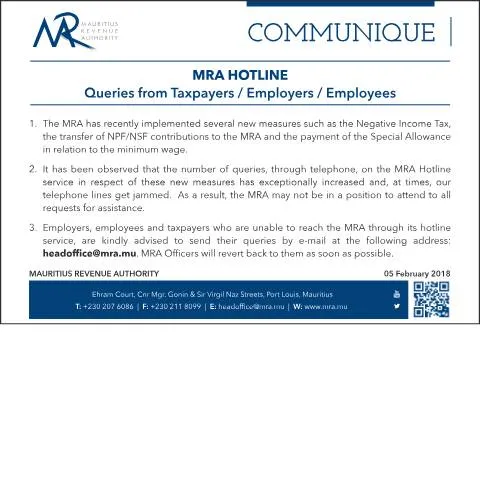
The MRA Hotline Queries document, officially titled "MRA HOTLINE: Queries from Taxpayers / Employers / Employees" and referenced as NPFNSFQueries, serves as a vital communication tool for stakeholders navigating the complexities of tax-related queries in Mauritius. This document is particularly significant in light of recent measures implemented by the Mauritius Revenue Authority (MRA), such as the Negative Income Tax and the transfer of NPF/NSF contributions.
The Functionality of the Document
Recent changes in Mauritian tax legislation have led to an unprecedented increase in the volume of enquiries directed at the MRA. Stakeholders—comprising employers, employees, and taxpayers—now rely heavily on the hotline for immediate assistance. However, the MRA has acknowledged the challenges posed by high call volumes that often lead to jammed telephone lines, rendering this document not just a form, but a lifeline for many.
Who Should Utilize the Hotline Queries Document?
The document is primarily intended for:
- Employers: Those seeking clarification regarding their obligations under new tax measures.
- Employees: Individuals who have questions about their tax deductions or contributions.
- Taxpayers: Citizens or residents with general inquiries related to taxation issues.
Each of these groups might find themselves in situations requiring urgent clarification—be it about compliance, benefits under the Negative Income Tax, or the procedural aspects of NPF/NSF contributions.
Document Submission Process and Follow-Up
How to Submit Queries Effectively
While the hotline is the preferred communication channel, given its current limitations, submitting queries via email is encouraged. The designated email address is [email protected]. This ensures that your query is documented and will receive a response from MRA officers. Here are the steps to submit a successful query:
- Draft a concise email clearly outlining your query.
- Include your full contact information for follow-up.
- Attach any relevant documentation that may aid in resolving your issue.
- Send the email to [email protected].
To ensure your query is addressed promptly, be as detailed as possible while keeping your email succinct. This efficiency in communication could significantly reduce the response time.
Tracking Your Query Status
Once your email is sent, tracking your query’s status is essential. Here are best practices for following up:
- Wait for a minimum of 5 business days for a response before sending a follow-up email.
- Use your original email's subject line when inquiring about the status to help MRA officers quickly identify and address your query.
- Maintain a record of all correspondence for reference.
By adhering to these guidelines, you can ensure that your concerns are efficiently addressed, and any complexities related to your situation are clarified.
Historical Context and Regulatory Framework
The MRA Hotline Queries document was introduced as part of a broader initiative by the MRA to enhance its responsiveness to the public, particularly in light of significant tax reforms. The evolution of tax laws in Mauritius, influenced by both French civil law and English common law, necessitates robust communications between the tax authority and the public.
In 2018, the MRA instituted the hotline system to accommodate the growing number of queries resulting from the implementation of new measures. These reforms, including the introduction of the Negative Income Tax, require both employers and employees to adapt to new compliance requirements swiftly.
Regulatory Milestones Leading to the Hotline
- Introduction of Negative Income Tax: This significant initiative aimed to support low-income earners and ensure a fairer taxation system.
- Transfer of NPF/NSF Contributions: This measure streamlined the contributions process, enhancing compliance but also generating queries regarding the transition.
- Special Allowance Related to Minimum Wage: The complexity of this allowance has led to an increase in queries as employees seek clarification regarding their entitlements.
These milestones illustrate the dynamic nature of tax legislation in Mauritius and the corresponding need for a responsive communication mechanism, emphasizing the importance of the MRA Hotline Queries document.
Specific Cases and Exceptions
Addressing Unique Situations
Various unique circumstances may affect how a taxpayer, employer, or employee interacts with the MRA Hotline. Understanding these exceptions is crucial for effective communication and resolution.
- Foreign Taxpayers: Non-residents may face additional complexities with tax obligations. Queries should be carefully framed to include residency status and specific income sources.
- Minors: Tax queries related to minors, such as those involving trusts or guardianship, must include documentation proving custodianship.
- Complex Situations: Individuals with complex tax scenarios, including those involving multiple income sources or deductions, should prepare comprehensive details to facilitate the MRA's understanding.
- Urgent Queries: For matters that require immediate attention, it’s advisable to specify the urgency in your communication, providing clear reasons.
By recognizing these distinctions, individuals can tailor their queries to enhance clarity, enabling the MRA to respond more effectively.
Comparison with Other Relevant Forms
It is essential to distinguish the MRA Hotline Queries document from other official forms that may serve similar purposes. Understanding these differences can aid stakeholders in selecting the correct channel for their needs.
| Document | Purpose | Submission Method | Typical Response Time |
|---|---|---|---|
| MRA Hotline Queries (NPFNSFQueries) | Address tax-related queries and issues | Email or Hotline | 5-10 business days |
| PSC Form 7 | Application for government posts | Online Submission | 4-6 weeks |
| LGSC Form 7a | Local Government Service applications | In-person Submission | 3-4 weeks |
This table illustrates that while there is overlap in purpose, the MRA Hotline Queries document is tailored explicitly for immediate communication regarding tax queries, contrasting with forms designed for other administrative functions.
Practical Insights for Maximizing Response Efforts
To optimize your experience when using the MRA Hotline Queries document, consider the following practical tips:
- Be Prepared: Gather all relevant documentation before making a call or sending an email. This preparation can significantly smooth the process.
- Use Formal Communication: Maintain a respectful and formal tone in all interactions. This professionalism can facilitate better communication with MRA officers.
- Stay Informed: Regularly check the MRA website for updates on tax regulations and operational changes that may affect your queries.
- Engage with Peers: Network with other taxpayers or employers who may have faced similar issues. Their insights could provide additional context for your query.
Implementing these strategies can enhance your interaction with the MRA and lead to quicker resolutions of your queries.
Final Thoughts on Clarity and Communication
In the ever-evolving landscape of tax legislation in Mauritius, the MRA Hotline Queries document plays a crucial role in ensuring that employers, employees, and taxpayers are equipped to navigate their rights and obligations effectively. By utilizing this document correctly, stakeholders can foster a more transparent and efficient communication process with the MRA, ultimately leading to greater compliance and understanding within the tax system.
Fill in your form directly online
No printing: type your details into the boxes of the official form, tick, then download the PDF ready to send.
- 1Type into the form boxes
- 2Tick in one click
- 3Save and download the PDF
Understanding the MRA Hotline: A Resource for Taxpayer Inquiries
The Mauritius Revenue Authority (MRA) Hotline serves as a pivotal point of contact for taxpayers, employers, and employees seeking clarity on various tax-related issues. By dialling the hotline, individuals can access assistance on a spectrum of topics, including income tax, Value Added Tax (VAT), and corporate tax obligations. This service is particularly beneficial during the peak tax filing periods and around significant changes in tax legislation.
To effectively utilize the hotline, it is advisable to prepare specific questions ahead of the call to streamline the inquiry process. Providing your Tax Account Number (TAN) can also expedite the response time. Typically, queries can range from simple clarifications to more complex issues regarding compliance. Understanding the operating hours of the hotline is also critical; the MRA Hotline is operational on weekdays, ensuring that taxpayers have access to professional guidance when required.
Navigating Common Tax Queries: FAQs for Employees and Employers
The MRA Hotline is frequented by both employees and employers, each with unique concerns that often overlap. Employees might call in to understand their tax deductions, while employers often require clarification on withholding taxes and employee-related benefits. Common questions include:
- What documents are necessary for filing my personal income tax return? Employees should be prepared to submit supporting documentation such as payslips, tax certificates, and any other income-related documents to ensure accurate filing.
- What are the deadlines for submitting tax returns? The MRA has specific deadlines for both individuals and companies, typically aligned with the fiscal year that runs from July 1 to June 30.
- How do I claim tax deductions for my dependents? Understanding the criteria for dependent claims can significantly affect tax liabilities, and taxpayers are encouraged to inquire about the necessary forms and documentation required.
Employers, on the other hand, often seek guidance on payroll taxes, employee benefits, and compliance with the Employees’ Tax (PAYE) regulations. Questions may include:
- What is the correct rate for PAYE deductions? The rates can vary based on income brackets, and it is crucial for employers to stay informed to ensure accurate payroll processing.
- How should I report my PAYE contributions? Employers must adhere to strict reporting guidelines, and the MRA Hotline can provide detailed instructions on how to complete the necessary forms.
- Are there any recent changes to tax regulations affecting employee benefits? With frequent changes in tax legislation, it is vital for employers to stay updated on any modifications that could impact their tax obligations.
Utilizing Digital Platforms Alongside the MRA Hotline
In an effort to enhance taxpayer experience and streamline processes, the MRA encourages the use of digital platforms in conjunction with the Hotline. The online services available through the official MRA website include online registration for tax purposes, e-filing of returns, and access to tax calculators. These platforms not only reduce waiting times but also allow for quicker submissions, making tax compliance more manageable.
For those who prefer online communication, the MRA provides an email service that complements the Hotline, allowing taxpayers to submit queries in writing. This method can be particularly advantageous for complex issues that require detailed explanations. When submitting queries online, it is important to include relevant personal details, such as your TAN, to facilitate prompt assistance.
Moreover, the MRA has integrated e-services into the MauPass single-sign-on system, which ties access to the Central Population Database, simplifying the login process for registered users. Taxpayers can easily navigate through their personal tax accounts, view outstanding balances, and monitor their filing history. This not only enhances transparency but also empowers individuals to take control of their tax responsibilities.