The Imperative Role of Tax Recovery in Mauritius
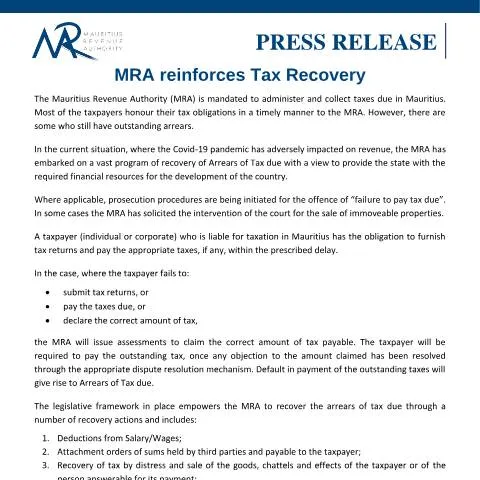
The recent press release from the Mauritius Revenue Authority (MRA) dated 23rd February 2022, highlights the urgent need for tax recovery measures in the wake of financial strains exacerbated by the Covid-19 pandemic. This initiative is not merely a bureaucratic exercise; it is a crucial step towards ensuring that the country has the necessary financial resources to support its development projects and maintain public services. The MRA's mandate to collect taxes due is rooted in its commitment to uphold fiscal responsibility and compliance among all taxpayers.
Understanding the Taxpayer Profile: Who is Affected?
Tax compliance is an obligation for both individuals and corporate entities operating within Mauritius. The MRA's outreach regarding tax recovery particularly targets those with outstanding arrears. This group includes:
- Individuals: This encompasses self-employed persons, freelancers, and any individual whose income is subject to taxation.
- Corporates: Companies registered in Mauritius that have failed to submit their tax returns or pay the necessary taxes.
- Special Cases: Taxpayers involved in legal disputes regarding their tax assessments or those who may be facing financial distress, which may complicate their ability to pay.
It's important to note that the MRA has acknowledged that while the majority of taxpayers fulfill their obligations timely, a significant number still have outstanding arrears.
The Historical Context of Tax Recovery in Mauritius
The framework for tax recovery in Mauritius is deeply embedded in the country’s legislative history. The MRA operates under the constitutional provisions established in 1968, merged with regulations from the PSC Act of 1955. Historically, tax recovery efforts have taken various forms, but the current economic climate has necessitated a more stringent approach. The COVID-19 pandemic has led to a re-evaluation of tax compliance, with the MRA reinforcing its recovery policies to address the growing debt.
Legislative measures empower the MRA to undertake recovery actions ranging from wage deductions to property seizures. This legal foundation is critical in understanding the authority's actions and the potential consequences for non-compliance.
Distinguishing the Tax Recovery Process from Other Tax Forms
It’s crucial to differentiate the tax recovery measures from standard tax filing processes. Many taxpayers might confuse the press release's implications with other forms of tax documentation, such as:
- Tax Return Forms: Standard forms submitted annually that detail income and calculate tax liabilities.
- Objection Forms: Used when a taxpayer disagrees with an assessment made by the MRA.
The focus on recovery signifies that taxpayers have not only failed to report their income properly but also neglected their obligations to settle outstanding debts. The measures outlined by the MRA in the press release are therefore corrective actions aimed at those who have already defaulted.
How the Tax Recovery Process Works: A Step-by-Step Guide
The tax recovery process initiated by the MRA follows a systematic approach designed to encourage compliance while ensuring that necessary actions are taken against defaulters. The process typically unfolds as follows:
- Assessment Issuance: Upon identifying non-compliance, the MRA issues formal assessments demanding payment of outstanding taxes.
- Notification: Taxpayers are notified of their dues, including timelines for payment and potential penalties for non-compliance.
- Opportunity to Object: Taxpayers can formally object to the assessment if they believe the amount claimed is incorrect, initiating a dispute resolution mechanism.
- Payment Resolution: If objections are resolved but payment is still outstanding, the MRA may escalate recovery actions, including wage deductions or legal proceedings.
- Enforcement Actions: If tax debts remain unpaid, the MRA may seek court intervention for measures such as property seizure.
This structured approach is intended not only to recover debts but also to provide taxpayers with opportunities to rectify their compliance before more severe measures are taken.
Legal Mechanisms for Tax Recovery: A Closer Look
The MRA's ability to recover taxes is supported by a range of legal provisions that allow for various enforcement actions. These mechanisms are critical for ensuring compliance and include:
| Recovery Action | Description |
|---|---|
| Deductions from Salary/Wages | A portion of the taxpayer’s salary can be deducted directly to cover outstanding tax liabilities. |
| Attachment Orders | Funds held by third parties, such as banks, can be ordered for payment towards tax debts. |
| Distress and Sale of Goods | The MRA can seize and sell taxpayer assets to recover owed taxes. |
| Inscribed Privilege on Property | An inscribed privilege allows the MRA to secure debts against immoveable property owned by the taxpayer. |
| Sale of Immoveable Property | In extreme cases, the MRA can resort to selling the taxpayer's property to recover taxes owed. |
The choice of recovery action depends on the severity of the taxpayer's default and the MRA’s assessment of the situation.
Encouraging Compliance: The MRA's Call to Action
As part of its communication strategy, the MRA has appealed to taxpayers with outstanding arrears to take proactive steps towards settling their debts. The authority’s message is clear: timely settlement not only helps in avoiding recovery actions but also reflects a citizen’s responsibility towards national development. In addition, taxpayers are reminded that interest and surcharges will continue to accrue on unpaid dues, increasing the amount owed over time.
This appeal is not just about financial rectitude; it taps into a broader sense of patriotism and community responsibility. The MRA aims to foster a culture where tax compliance is viewed not just as a duty but as a contribution to the common good.
Future Implications of Tax Recovery Measures
The MRA’s emphasis on tax recovery could reshape the landscape of tax compliance in Mauritius. By reinforcing the consequences of defaulting on tax responsibilities, the authority hopes to deter future non-compliance and encourage a more proactive approach among taxpayers. This is particularly important in the context of economic recovery post-pandemic.
Moreover, as Mauritius advances towards digital transformation, enhanced online services will likely play a significant role in simplifying tax compliance and payment processes. The MRA has made strides in this direction, but ongoing education and communication will be essential in ensuring that all taxpayers are aware of their obligations and the resources available to them.
In summary, the MRA’s tax recovery initiative highlights the critical intersection of compliance, accountability, and national development. As taxpayers navigate their responsibilities, understanding the implications of this press release and the broader recovery measures will be pivotal in fostering a compliant tax environment in Mauritius.
Fill in your form directly online
No printing: type your details into the boxes of the official form, tick, then download the PDF ready to send.
- 1Type into the form boxes
- 2Tick in one click
- 3Save and download the PDF
Understanding the Tax Recovery Process in Mauritius
The Mauritius Revenue Authority (MRA) has implemented a robust framework for tax recovery, aimed at ensuring compliance and maintaining the integrity of the tax system. The tax recovery process primarily involves assessing outstanding tax liabilities and engaging with taxpayers to resolve any issues. Key steps in this process include sending reminders, conducting assessments, and initiating recovery actions through various means such as garnishment or property seizure.
It's essential for taxpayers to understand their rights and obligations during this process. For instance, if you receive a notice regarding outstanding taxes, it’s crucial to respond promptly. Taxpayers have the right to request a review or appeal against any decisions made by the MRA, and they should be aware of the timelines that govern these processes. Engaging a tax consultant can also provide valuable insights into navigating complex tax issues and ensuring compliance with local laws.
Recent Changes in Tax Legislation Affecting Recovery Efforts
In recent years, there have been several amendments to tax legislation that have direct implications on the MRA's recovery efforts. These changes often focus on improving efficiency and enhancing the collection of taxes owed to the government. For example, the introduction of electronic filing systems has streamlined the submission of tax returns, allowing for quicker identification of non-compliance and outstanding debts.
Furthermore, new provisions introduced under the Income Tax Act and the Value Added Tax Act have clarified the responsibilities of taxpayers regarding timely payments and reporting. Understanding these changes is crucial for businesses and individuals alike, as they provide a framework that the MRA utilizes when assessing tax recovery methods. Taxpayers are encouraged to stay informed on these legislative changes by regularly checking the MRA's official website and participating in any public consultations or workshops the MRA may offer.
Future Directions and Enhanced Strategies for Tax Compliance
Looking ahead, the MRA is focused on adopting advanced technologies and data analytics to enhance tax compliance and recovery strategies. By leveraging big data and machine learning, the MRA aims to identify patterns of non-compliance and target enforcement actions more effectively. This proactive approach not only helps in recovering taxes owed but also fosters a culture of compliance among taxpayers.
Additionally, the MRA is likely to enhance its public awareness campaigns, which aim to educate taxpayers about their responsibilities and the importance of timely tax payments. These campaigns may include workshops, webinars, and informational pamphlets distributed via various channels. The goal is to create a more informed taxpayer base, ultimately reducing the need for aggressive recovery measures.
Taxpayers should take advantage of these resources and actively engage with the MRA to address any uncertainties regarding their tax obligations. Building a cooperative relationship with tax authorities can lead to more favorable resolutions and a smoother recovery process, should the need arise.