Unveiling the Significance of the Drug Seizure Document
On February 25, 2021, the Mauritius Revenue Authority (MRA) made headlines with a significant drug seizure report under the code DrugSeizure250221. This document encapsulates the vital role played by the MRA in combating drug-related crimes while maintaining public safety. Understanding the nuances of this document is paramount for citizens, particularly those directly or indirectly affected by the ongoing drug enforcement initiatives.
Chronology of Events Leading to the Seizure
The narrative begins on February 24, 2021, when officers from the Customs Anti-Narcotics Section (CANS) executed a routine examination at the Parcel Post Office (PPO). Here’s a breakdown of the key events:
- Initial Inspection: Officers conducted a thorough inspection of parcels awaiting collection.
- Discovery of Suspicious Parcels: Among these parcels, two were identified as containing suspicious substances, unclaimed and addressed to residents of Quartier Militaire and Port Louis.
- Use of Narcotics Sniffer Dogs: The MRA’s trained sniffer dogs, Nacre and Olympia, were employed, whose positive reactions confirmed the presence of illegal drugs.
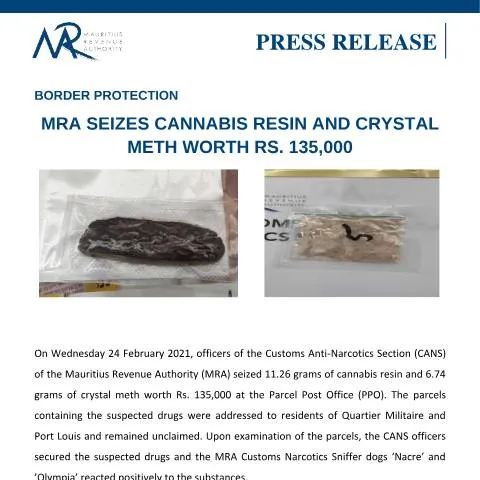
- Substance Confirmation: Subsequent analysis revealed a total of 11.26 grams of cannabis resin and 6.74 grams of crystal meth, valued at Rs. 135,000.
- Referral for Further Investigation: The case was promptly referred to the Anti-Drug and Smuggling Unit (ADSU) for in-depth investigation and appropriate legal action.
The Role of the MRA in Drug Enforcement
The Mauritius Revenue Authority is at the frontline of drug enforcement in the nation. This document serves as a formal record of the authority's efforts to curb drug trafficking and safeguard the community. By documenting such seizures, the MRA upholds its commitment to enhancing national security and public health.
Implications for the General Public
This official document carries significant implications for the Mauritian population. Awareness of drug-related activities and the reporting mechanisms in place ensures community involvement in safety protocols. Failure to report suspicious activities could hinder enforcement efforts, reinforcing the need for public vigilance.
The MRA encourages public engagement through mechanisms such as the Stop Drug platform or by calling the dedicated hotline at 8958. This proactive approach fosters a collaborative environment where citizens play an instrumental role in drug enforcement.
Required Documentation for Filing a Report
If you find yourself in a position to report suspected drug activity, preparation is key. While the MRA simplifies the reporting process, providing accurate and detailed information is critical. Below are the essential components to consider:
- Identification: Your full name and contact details.
- Incident Description: A comprehensive account of the observed activity, including location, time, and nature of suspicion.
- Evidence: Any supporting evidence, such as photographs or witness accounts, can bolster the case.
- Confidentiality Concerns: Indicate if you wish to remain anonymous; the MRA respects privacy and confidentiality in all reports.
Special Considerations for Vulnerable Groups
In certain circumstances, specific populations, such as minors or non-residents, may require special procedural considerations when interacting with the MRA. Here’s what such groups should be aware of:
- Minors: If a minor witnesses or is involved in drug-related activity, reporting should be conducted by a responsible adult, preferably a parent or guardian.
- Foreign Nationals: Non-residents may face additional scrutiny; hence it’s important to provide all relevant documentation, including residency or visitor status.
- Complex Situations: If an individual or family is embroiled in a complicated legal matter concerning drugs, it may be prudent to seek legal counsel before proceeding with reporting.
Understanding the Document Structure
The Drug Seizure document contains specific sections that are crucial for proper comprehension. Each section is designed to provide clarity on the incident, procedural follow-ups, and the MRA's responsibilities:
| Section | Description |
|---|---|
| Date of Seizure | Indicates when the drug seizure took place. |
| Substance Details | Information pertaining to the types and quantities of drugs seized. |
| Location | Specifies where the seizure occurred, crucial for jurisdictional purposes. |
| Value | Estimated market value of the seized drugs, highlighting the severity of the case. |
| Further Investigations | Details the next steps in the legal process, including referrals to the ADSU. |
Submission Channels for Reporting Drug-Related Incidents
When reporting drug-related incidents, understanding the various submission channels is essential. The MRA offers multiple avenues to ensure ease of access for all citizens, enhancing the likelihood of prompt action:
- Online Reporting: Utilize the MRA's official website for an efficient reporting process.
- Telephone Hotline: Direct reporting via the hotline (8958) for immediate attention.
- In-Person Reporting: Visit the nearest MRA office to file a report, where assistance is readily available.
Each channel serves a unique purpose, catering to different user preferences and ensuring that all reports are handled with utmost urgency.
Post-Submission Follow-Up Procedures
After submitting a report, it is crucial to understand the follow-up process. The MRA takes all reports seriously, but citizens should be aware of the following:
- Tracking Your Report: Individuals are encouraged to take note of any reference numbers provided at the time of submission; this makes it easier to track progress.
- Timeframe for Response: While the MRA aims to address all reports swiftly, the complexity of the cases may influence response times.
- Communication: Expect updates via the contact method specified during reporting; staying connected is vital.
The Broader Impact of Drug Seizures on Society
The significance of the Drug Seizure document extends beyond administrative processes. Each seizure is a testament to the MRA's unwavering commitment to protecting society from the adverse effects of illegal drugs. The broader societal implications include:
- Community Safety: Effective drug enforcement contributes to a safer environment, fostering public trust.
- Deterrence: High-profile seizures serve as a deterrent to potential traffickers, signalling the rigorous stance of law enforcement.
- Public Awareness: Such incidents elevate community awareness about drug use and trafficking, encouraging proactive measures.
The ongoing efforts by the MRA, reflected in documents like the Drug Seizure report, illustrate the critical nature of collaboration between authorities and the public in tackling drug-related issues in Mauritius.
Understanding the Legal Framework Surrounding Drug Seizures in Mauritius
In Mauritius, the legal framework for drug-related offenses, including possession, trafficking, and seizure, operates under the Dangerous Drugs Act 1988. This legislation specifies various controlled substances and outlines the procedures for law enforcement agencies to follow when seizing illegal drugs. The Act categorizes drugs into different classes, with cannabis and methamphetamine falling under strict regulations. The Mauritius Revenue Authority (MRA), in conjunction with other law enforcement bodies, plays a crucial role in enforcing these laws and ensuring compliance.
Fill in your form directly online
No printing: type your details into the boxes of the official form, tick, then download the PDF ready to send.
- 1Type into the form boxes
- 2Tick in one click
- 3Save and download the PDF
When the MRA seizes substances like cannabis resin and crystal meth, such actions are often the result of coordinated efforts involving intelligence gathering, surveillance, and sometimes undercover operations. The seized drugs are typically submitted as evidence in a court of law, where legal proceedings will determine the outcomes for those involved in the trafficking or possession of these substances. It's essential for the public to understand that the implications of drug-related offenses can lead to severe penalties, including imprisonment and hefty fines, reflecting the government's zero-tolerance policy towards drug abuse and trafficking.
The Role of the Mauritius Revenue Authority in Combatting Drug Trafficking
The MRA is not just an agency focused on revenue collection; it also plays a pivotal role in combatting drug trafficking and related crimes in Mauritius. The authority collaborates with numerous stakeholders, including the police, customs, and international drug enforcement agencies, to create a robust framework for monitoring and controlling the flow of illegal substances. This collaborative approach enables the MRA to stay ahead of trafficking trends, allowing for proactive measures to intercept shipments before they can enter the local market.
One significant aspect of the MRA's work in this area involves training and equipping its officers to recognize the signs of drug trafficking. Continuous education and updates on the latest methods used by traffickers ensure that MRA officials are well-prepared to act decisively during operations. Furthermore, community awareness programs are conducted to educate citizens about the dangers of drug use and the importance of reporting suspicious activities, which are crucial in the fight against drug trafficking.
The Economic Impact of Drug Seizures on Mauritius
The seizure of illegal drugs such as cannabis resin and crystal meth not only has immediate legal implications but also significant economic effects on Mauritius. The illegal drug trade can have detrimental impacts on the economy, including increased healthcare costs, lost productivity, and a strain on social services. By disrupting drug trafficking through effective seizures, the MRA helps mitigate these adverse economic impacts.
Moreover, successful drug seizures can enhance the country's reputation as a safe destination for tourism and investment. A clear stance against drug trafficking strengthens public trust in law enforcement agencies and enhances the overall stability of the nation. This stability is essential for fostering economic growth and attracting foreign investment, both of which are critical for Mauritius's continued development.
Additionally, the financial implications of drug seizures are multifaceted. The MRA can impose fines and penalties on convicted individuals, which may contribute to public revenue. However, the broader aim is to deter drug-related crimes, thereby promoting a healthier environment for business and everyday life. Thus, the MRA's efforts in seizing illegal drugs have far-reaching consequences beyond the immediate legal ramifications, ultimately benefitting the economy and society as a whole.