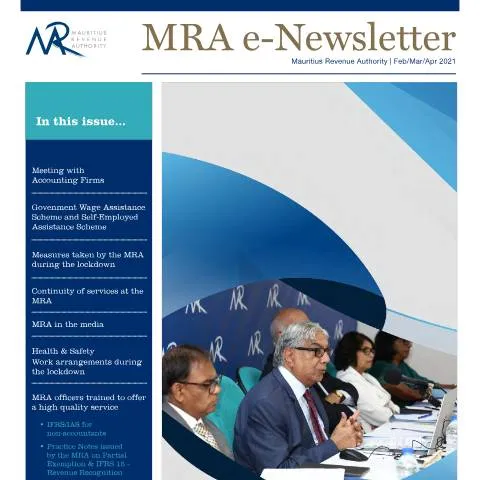
Understanding the February - April 2021 Document: A Comprehensive Guide
The February - April 2021 document issued by the Mauritius Revenue Authority (MRA) plays a pivotal role in informing stakeholders about crucial updates in tax administration, financial support initiatives, and organizational integrity assessments. Understanding this document is essential for various entities—ranging from accounting firms to individual taxpayers—as it outlines the critical adjustments made in response to the economic challenges posed by the COVID-19 pandemic. This guide delves into the importance of this document, its submission procedures, and the implications of its contents.
Critical Updates Impacting Stakeholders
In the rapidly evolving landscape of Mauritian taxation, the updates provided in the document address pressing issues that stakeholders must navigate. The document highlights several programs designed to offer fiscal relief, particularly as the economy faced unprecedented disruptions.
Government Wage Assistance Scheme (GWAS) and Self-Employed Assistance Scheme (SEAS)
- Extension of Assistance: As indicated, both GWAS and SEAS were extended for February, March, and April 2021, reflecting the government's ongoing commitment to support economic operators affected by the pandemic.
- Eligibility Criteria: Operators in both tourism and non-tourism sectors were eligible for financial assistance, demonstrating an adaptive approach to the economic fallout.
- Grant Amounts: For example, beneficiaries could receive assistance equivalent to a maximum basic salary of Rs25,375 under GWAS and Rs5,287 under SEAS for the respective months.
Understanding these schemes is crucial for businesses and self-employed individuals, particularly how they apply for the assistance and what documentation is required.
Engagement with Accounting Firms: Building Collaborative Solutions
A significant meeting held with prominent accounting firms, including the “Big Five” firms, showcased the MRA's commitment to fostering dialogue within the financial community. This collaboration aims to refine tax administration strategies and provides firms with a platform to voice their concerns and suggestions. The meeting, chaired by MRA's Director General, Mr. Sudhamo Lal, focused on:
- Revenue Collection Trends: Presentations highlighted the trends between July 2019 and January 2021, guiding firms to understand the broader economic implications of their practices.
- Feedback Mechanisms: Open lines of communication were established for firms to express their experiences with the MRA’s services, enabling a two-way improvement process.
These insights are important for professionals navigating the complexities of tax compliance and seeking to leverage their expertise effectively.
Historical Context: The Framework Underpinning the Document
To appreciate the significance of the February - April 2021 document fully, it’s vital to contextualize it within the legal and regulatory framework of Mauritius. Established under the Constitution of 1968 and governed by the PSC Act of 1955, the MRA operates within a hybrid legal system that combines French civil law with English common law procedural rules. This hybrid nature influences the administration of tax laws, where compliance is not only an obligation but also a reflection of the evolving fiscal landscape.
The document serves as a timely reminder of the MRA’s adaptability in ensuring that tax policies align with current realities, particularly amidst crises.
Distinct Features of the February - April 2021 Document
When compared to other official documents or forms, the February - April 2021 document stands out in several key areas:
- Focus on Financial Support: Unlike typical tax forms that concentrate on compliance, this document emphasizes financial support mechanisms for impacted entities.
- Engagement with Stakeholders: It highlights the proactive engagement of the MRA with the financial community, which is not a common feature in other administrative documents.
This distinction is essential for users who may be accustomed to forms primarily focused on tax submission rather than economic relief initiatives.
Preparatory Steps: Gathering Evidence and Documentation
For entities eligible for the various assistance programs detailed in the document, preparation is key. Understanding the required documentation will streamline the application process:
Recommended Documentation Checklist
| Type of Assistance | Required Documents |
|---|---|
| Government Wage Assistance Scheme (GWAS) |
|
| Self-Employed Assistance Scheme (SEAS) |
|
| One-Off Grant |
|
Collecting these documents ahead of time ensures that applicants can meet deadlines and avoid any delays in processing their claims.
Timeline of Actions: Navigating the Application Process
The intricate timeline surrounding the submission and processing of applications for financial support is crucial for stakeholders to understand. Each stage presents opportunities and challenges that must be navigated effectively.
Key Dates and Milestones
Stakeholders should take note of the following key dates associated with the document:
- Initial Application Window: Applications for assistance under GWAS and SEAS commenced in early February, continuing through specific deadlines set for each month.
- Submission Deadline for March Assistance: Eligible entities had until March 20, 2021, to submit their applications for the assistance corresponding to February and March.
- Final Deadline for April Assistance: The final date for applications related to April assistance was set for April 30, 2021.
Missing these deadlines could result in forfeiture of potential assistance, underscoring the importance of timely submissions.
Fill in your form directly online
No printing: type your details into the boxes of the official form, tick, then download the PDF ready to send.
- 1Type into the form boxes
- 2Tick in one click
- 3Save and download the PDF
Modes of Submission: E-Services versus Traditional Methods
As part of the government’s commitment to digital transformation, the MRA encourages stakeholders to utilize available online platforms for submissions. However, understanding the nuances of each submission method is essential:
Comparative Overview of Submission Methods
| Submission Method | Advantages | Disadvantages |
|---|---|---|
| Online Submission |
|
|
| Paper Submission |
|
|
Choosing the best submission method can significantly impact the efficiency of the application process, depending on individual circumstances.
From Submission to Outcome: The Application Process Lifecycle
Understanding the lifecycle of an application from submission to potential outcome is crucial for managing expectations. Here’s a typical flow:
- Submission: Applicants submit their required documentation through their chosen method.
- Verification: The MRA reviews the submitted documentation for completeness and accuracy.
- Approval/Denial: Applicants receive notification regarding the status of their application, including any reasons for denial if applicable.
- Disbursement: Approved applicants receive their financial assistance, with timelines varying based on processing volumes.
This sequential understanding aids applicants in anticipating the duration of the process and enables them to stay informed throughout.
Final Remarks: Empowering Stakeholders Through Knowledge
The February - April 2021 document serves as a foundational piece of communication from the MRA, designed to empower stakeholders with the knowledge necessary to navigate challenging times. By fostering a clear understanding of the assistance programs, engagement channels, and submission processes, stakeholders can better position themselves to leverage available resources effectively and ensure compliance with tax regulations. Staying informed and proactive in these areas will significantly enhance one's capacity to thrive in the current economic environment.