Unveiling the Drug Seizure Document: A Critical Tool in Fighting Narcotics
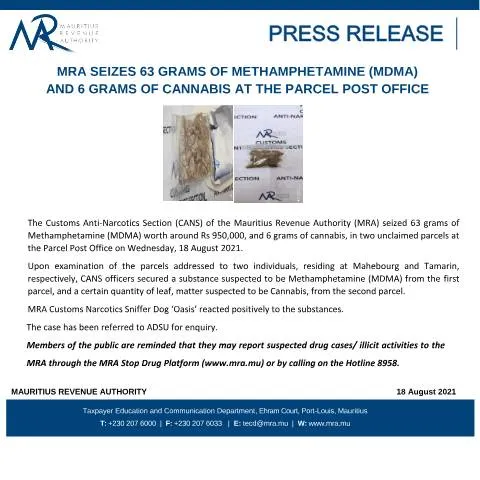
The Mauritius Revenue Authority's (MRA) document titled DrugSeizure180821 plays a pivotal role in addressing drug-related crimes in Mauritius. This official document emerged following a significant seizure of illicit substances by the Customs Anti-Narcotics Section (CANS). On 18 August 2021, officers confiscated 63 grams of Methamphetamine (MDMA) and 6 grams of cannabis found in unclaimed parcels at the Parcel Post Office. Understanding the intricacies of this document is vital for various stakeholders, including law enforcement agencies, legal practitioners, and members of the public.
Context and Relevance of the Document in Narcotics Control
This document is essential in the broader framework of drug enforcement in Mauritius, serving multiple purposes:
- Evidence Collection: It provides a formal record of the substances seized, which is crucial for any subsequent legal proceedings.
- Data Analysis: The information contained aids in understanding drug trafficking trends and patterns within Mauritius.
- Public Awareness: By disseminating information about such seizures, the MRA raises awareness about the ongoing fight against drugs.
Who is Directly Affected by this Document?
This document influences various groups:
- Local Authorities: Law enforcement agencies, such as the Anti-Drug and Smuggling Unit (ADSU), rely on this documentation to pursue investigations.
- Citizens and Residents: Individuals living in Mauritius can report suspected drug activities through the MRA Stop Drug Platform, highlighting the community's role in this battle.
- Legal Practitioners: Lawyers involved in narcotics cases utilize this document to build their cases, emphasizing the need for accuracy in its details.
Sub-case: Individuals Involved in Illegal Activities
In instances where parcels are addressed to individuals engaged in illegal activities, the ramifications can be severe. For instance:
- If the recipient is implicated, they may face criminal charges based on the evidence presented in this document.
- Non-claim of the parcel could signal an intent to evade law enforcement, which adds to the severity of any potential legal consequences.
Completing Essential Requirements: Documentation and Procedure
While individuals typically do not fill out this specific seizure document, it is crucial to understand what happens after a seizure is recorded. Let's explore the procedural path:
- Immediate Action: Upon seizure, CANS officers submit detailed reports, which include descriptions of the substances and circumstances leading to the seizure.
- Investigation Phase: The case is referred to ADSU for further inquiry, which is critical for establishing a clear trajectory of the investigation.
- Community Reporting: Public engagement is encouraged; individuals witnessing suspicious activities can report them easily through the MRA’s dedicated channels.
The Process of Legal Follow-Up
In cases where the investigation leads to criminal charges, the following steps are generally adhered to:
- Documentation will be compiled from the initial seizure report.
- Legal counsel may be sought by the accused or involved parties.
- Trials may follow, relying heavily on evidence from the MRA report.
Consequences of Non-compliance or Errors in the Documentation
In the realm of narcotics enforcement, accuracy is paramount. Any discrepancies or errors in the seizure document can lead to significant consequences:
- Legal Repercussions: Errors may result in the dismissal of cases due to lack of credible evidence.
- Increased Scrutiny: A poorly handled seizure may attract heightened scrutiny from oversight bodies concerned with drug enforcement efficacy.
- Impact on Public Trust: Inaccuracies can erode public confidence in law enforcement agencies and the legal system as a whole.
Understanding the Workflow after a Drug Seizure
Following a seizure, the workflow is systematic, involving multiple stakeholders:
| Step | Description | Responsible Party |
|---|---|---|
| 1. Seizure | Initial confiscation of illegal substances by CANS | CANS Officers |
| 2. Documentation | Creation of the seizure document detailing the event | CANS Officers |
| 3. Referral | Case forwarded to ADSU for further investigation | CANS |
| 4. Community Engagement | Public encouraged to report suspicious activities | MRA Communication |
| 5. Legal Proceedings | Possible court action against individuals involved | ADSU and Legal System |
The Importance of Timeliness in Drug Seizure Proceedings
Timeliness is critical in the context of drug seizures. The MRA indicates a fiscal year extending from 1 July to 30 June, which aligns with their operational activities:
- Immediate Reporting: Seizures must be documented promptly to ensure the integrity of evidence.
- Case Timelines: Following the referral to ADSU, cases are typically prioritized based on the potential threat posed by the individuals involved.
- Public Notifications: Updates regarding ongoing drug investigations are often communicated to maintain transparency.
Monitoring Progress and Following Up on Cases
For anyone concerned about the progress of a case stemming from a drug seizure:
- Reach out to the MRA’s Taxpayer Education and Communication Department for inquiries.
- Utilize the MRA's online platforms to track updates regarding specific cases.
- Maintain documentation of any correspondence for future reference.
Contributions of the MRA in Public Safety and Awareness
The MRA's proactive measures in documenting drug seizures contribute significantly to public safety:
- Educational Campaigns: The MRA runs outreach programs aimed at educating the public about the dangers of drug abuse and the importance of reporting suspicious activities.
- Community Involvement: By encouraging public reporting, the MRA fosters a partnership with the community, amplifying its effectiveness in combating drug trafficking.
- Increased Surveillance: Following reported activities, the MRA can enhance surveillance, thereby preventing future incidences.
This document, thus, stands not just as a record of a single event but as a linchpin in a larger effort to maintain public safety and uphold the law against the backdrop of drug trafficking in Mauritius.
Understanding the Legal Implications of Drug Seizures in Mauritius
The seizure of controlled substances such as methamphetamine and cannabis by the Mauritius Revenue Authority (MRA) raises significant legal questions and implications. Under the Misuse of Drugs Act 1976, possession, trafficking, and distribution of illicit drugs are criminal offenses that carry severe penalties. The nature of the drugs involved, along with their quantity, plays a critical role in determining the legal trajectory of such cases.
For instance, while cannabis is categorized as a less severe drug compared to methamphetamine (MDMA), the amount seized can escalate the seriousness of the charges. Possession of 63 grams of methamphetamine is treated as a serious offense, likely resulting in incarceration and hefty fines. Legal practitioners in Mauritius emphasize the importance of understanding not only the severity of the drug offense but also the potential avenues for defense that may be available based on individual circumstances.
Moreover, the enforcement agencies, including the MRA and the police, work collaboratively to ensure compliance with drug laws. In cases of possession or trafficking, individuals might find themselves navigating through complex judicial processes that may involve preliminary hearings, evidentiary battles, and the potential for plea bargains. It is crucial for those involved in such cases to seek legal counsel early in the process to ensure their rights are protected.
Fill in your form directly online
No printing: type your details into the boxes of the official form, tick, then download the PDF ready to send.
- 1Type into the form boxes
- 2Tick in one click
- 3Save and download the PDF
The Role of International Cooperation in Combating Drug Trafficking
The interception of drugs at the parcel post office spotlights the importance of international cooperation in the fight against drug trafficking. Mauritius, as part of various international agreements and collaborative efforts, actively engages with organizations such as INTERPOL and the United Nations Office on Drugs and Crime (UNODC) to enhance its capacity to address drug-related issues.
Through these collaborations, the MRA benefits from shared intelligence, training programs, and best practices in drug interdiction. The establishment of a comprehensive framework for mutual legal assistance allows for more effective tracking of drug shipments across borders, thereby reducing the likelihood of trafficking networks succeeding in their operations.
Additionally, Mauritius has implemented various measures to strengthen its customs and border control systems, ensuring that parcels entering the country are thoroughly inspected. The advancements in technology, such as biometric scanning and advanced analytics, have bolstered the capabilities of the MRA and other relevant authorities in detecting and seizing illicit drugs before they reach the intended recipients.
Community Impact and Rehabilitation Efforts Following Drug Seizures
The impact of drug seizures goes beyond the immediate legal consequences; it also reverberates throughout the community. The presence of drugs such as methamphetamine and cannabis can lead to various social issues, including addiction, crime, and family disruption. Consequently, community awareness and education programs have become essential components of Mauritius’ strategy to combat drug abuse.
Following significant seizures, authorities often launch campaigns to raise awareness about the dangers of drug use and promote healthy lifestyles. These initiatives aim to inform the public about the physical and psychological effects of drugs, while also guiding them towards available support services. Collaboration with non-governmental organizations (NGOs) and rehabilitation centers has been instrumental in developing programs that focus on prevention and recovery for individuals affected by drug use.
Additionally, rehabilitation efforts within the criminal justice system aim to address the underlying issues that lead to drug offenses. There is a growing recognition that punitive measures alone are not sufficient; therefore, integrating rehabilitation programs into sentencing can provide offenders with the tools they need to reintegrate into society successfully. Such measures may include counseling, skill development training, and community service, which can help reduce recidivism rates and promote a healthier community overall.