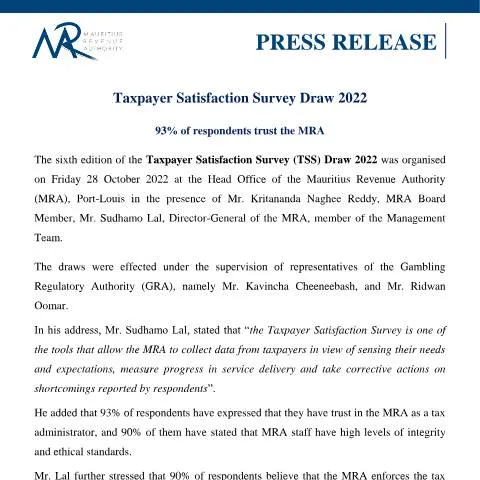
The Significance of the Taxpayer Satisfaction Survey Draw
The Taxpayer Satisfaction Survey (TSS) Draw conducted in 2022 is not merely a routine exercise but a crucial component in fostering trust and transparency between the Mauritius Revenue Authority (MRA) and the taxpayers of Mauritius. The draw, which took place on 28 October 2022, revealed that an impressive 93% of respondents expressed trust in the MRA as a tax administrator. This statistic underscores the MRA's commitment to understanding and addressing taxpayer needs.
Furthermore, the survey provided a platform for taxpayers to voice their concerns, expectations, and experiences. In total, 19,921 individual taxpayers participated, providing invaluable feedback that will inform future policies and operational plans of the MRA. The draw not only incentivized participation through cash prizes but also reinforced the MRA's dedication to enhancing service delivery.
Who is Involved in the Survey Process?
Key Stakeholders
The TSS Draw involves multiple stakeholders, each playing a vital role in its execution. The MRA, represented by its Board members and management team, oversees the survey and ensures that it aligns with its strategic objectives. On the day of the draw, officials from the Gambling Regulatory Authority (GRA) were present to ensure the integrity and transparency of the process.
Additionally, taxpayers themselves are at the heart of this initiative. By participating in the survey, they provide feedback that helps the MRA gauge public sentiment and improve its services.
Laying the Groundwork: The Legal and Regulatory Framework
The Taxpayer Satisfaction Survey is embedded within a broader legal and regulatory context that aims to enhance taxpayer engagement. The PSC Act of 1955 and related legislation provide the framework for public accountability and transparency in Mauritius. Through this survey, the MRA is able to not only fulfill its regulatory obligations but also actively engage citizens in the governance process.
This historical context is pivotal; it illustrates how the MRA is continually evolving to meet the expectations of its stakeholders. The consistent collaboration with taxpayers signals a shift towards a more participatory governance structure where taxpayer feedback is valued and acted upon.
From Participation to Rewards: The Survey Cycle
A Step-by-Step Breakdown
- Announcement: The survey is publicized by the MRA, informing taxpayers of the opportunity to participate and the incentives involved.
- Participation: Taxpayers fill out the survey, providing feedback on their experiences and perceptions of MRA services.
- Draw Execution: After the survey is completed, a draw is conducted to select winners from among the participants, as was seen in 2022 with three cash prizes awarded.
- Feedback Utilization: The MRA analyzes the survey data and incorporates taxpayer suggestions into its operational plans for the coming year.
This structured cycle enables continuous improvement and ensures that taxpayer voices are not only heard but are integral to shaping MRA initiatives.
Dates to Note: The Timing of the Survey and its Outcomes
The Taxpayer Satisfaction Survey was launched with a clear timeline aimed at maximizing participation and ensuring effective processing of the collected data:
| Event | Date |
|---|---|
| Survey Launch Date | 1 October 2022 |
| Survey Deadline | 25 October 2022 |
| Draw Date | 28 October 2022 |
| Feedback Collection Deadline | 15 November 2022 |
This timeline establishes clear milestones for taxpayers and ensures a systematic approach to collecting and analyzing responses. Following the draw, the MRA is expected to release a summary report detailing the survey findings and the actions taken based on taxpayer feedback.
Distinguishing Features of the TSS Draw
It is essential to understand what sets the Taxpayer Satisfaction Survey apart from other forms of taxpayer engagement. Unlike traditional tax forms or complaint mechanisms, the TSS Draw is designed to actively solicit feedback and foster engagement. Moreover, the incorporation of a reward system not only incentivizes participation but also underscores the importance of taxpayer opinions. This participatory approach contrasts with merely punitive or compliance-focused mechanisms often associated with tax administration.
Significantly, this survey is distinct from routine tax filing processes or audits, which often focus on compliance rather than satisfaction. By prioritizing taxpayer experiences, the MRA demonstrates a commitment to service excellence.
How Feedback Shapes the Future of Tax Administration
The feedback collected from the Taxpayer Satisfaction Survey is not simply filed away; it plays a crucial role in shaping the future direction of the MRA. For instance, Mr. Sudhamo Lal, the Director-General of the MRA, noted that the organization received seven thousand comments and suggestions from participants. This volume of feedback reflects the collective voice of taxpayers and serves as a valuable resource for enhancing MRA operations.
Insights gained from the survey will influence the MRA's annual operational plan, ensuring that taxpayer concerns and recommendations are integrated into strategic objectives. This continuous feedback loop fosters a culture of responsiveness and accountability within the MRA.
Concluding Thoughts: The Road Ahead
The Taxpayer Satisfaction Survey Draw of 2022 stands as a testament to the MRA's commitment to transparency and engagement. With a remarkable 93% trust level reported among participants, it is clear that the MRA is on the right path toward nurturing a stronger relationship with taxpayers. The blend of feedback, rewards, and responsive actions positions the MRA to not only meet current taxpayer expectations but also to anticipate future needs.
As Mauritius continues to navigate the complexities of tax administration, initiatives like the TSS Draw will play a vital role in shaping a more inclusive and taxpayer-focused approach to governance. The MRA's commitment to involving taxpayers in decision-making processes will undoubtedly contribute to enhancing public trust and ensuring a fair, transparent, and efficient tax system.
Understanding the Taxpayer Satisfaction Survey: Key Insights and Implications
The Taxpayer Satisfaction Survey conducted by the Mauritius Revenue Authority (MRA) is a significant tool that measures and reflects the trust and satisfaction levels of taxpayers regarding various services offered by the MRA. Released on 31st October 2022, the survey revealed that an impressive 93% of respondents expressed confidence in the MRA's operations. This level of trust highlights the authority’s commitment to transparency, efficiency, and taxpayer engagement.
One of the most critical aspects of the survey is its methodological approach, which includes a diverse sample of taxpayers across different demographics and income levels. The insights gathered not only inform the MRA about the current perception of its services but also guide future policy-making. For example, the survey results indicate specific areas that require improvement, such as the accessibility of e-filing services and the clarity of tax obligations. These findings can lead to targeted initiatives aimed at enhancing the taxpayer experience.
Moreover, the MRA's proactive approach in soliciting feedback demonstrates a clear commitment to fostering a participative culture among taxpayers. It is essential for taxpayers to feel their voices are heard; this encourages ongoing dialogue between the MRA and the taxpayer community, ultimately leading to a more responsive tax administration system.
Fill in your form directly online
No printing: type your details into the boxes of the official form, tick, then download the PDF ready to send.
- 1Type into the form boxes
- 2Tick in one click
- 3Save and download the PDF
Analyzing the Factors Contributing to High Trust Levels Among Taxpayers
The 93% trust level reported in the 2022 Taxpayer Satisfaction Survey can be attributed to several underlying factors that contribute to public confidence in the MRA. Firstly, the authority's investment in digital transformation initiatives has played a pivotal role. By enhancing online services such as e-filing and electronic payments through the Mauritius e-Government platform, taxpayers have experienced increased convenience, reducing the time and effort required for tax compliance.
Secondly, the MRA has made strides in taxpayer education, offering workshops and informational sessions to demystify tax processes. The more informed taxpayers are about their responsibilities and entitlements, the more likely they are to trust the institution overseeing the collection of taxes. The MRA's outreach programs also target specific demographics, including small business owners and first-time taxpayers, ensuring that assistance is tailored to meet various needs.
Furthermore, transparent communication during tax reforms and changes in legislation has further bolstered taxpayer trust. By effectively communicating updates and responding to queries, the MRA showcases its dedication to fostering a trustworthy environment. Transparency in operations, including the publication of annual reports and performance metrics, reinforces the perception that the MRA is accountable to the public it serves.
The Path Forward: Leveraging Survey Results for Continuous Improvement
While the high trust level reflected in the Taxpayer Satisfaction Survey is commendable, it is essential for the MRA to leverage these insights for continuous improvement. One of the recommended actions is to maintain regular survey cycles that track changes in taxpayer satisfaction and trust levels over time. This will allow the MRA to identify trends and respond proactively to any emerging issues.
In addition to periodic surveys, the establishment of focus groups consisting of diverse taxpayer representatives can provide qualitative insights that surveys may not capture fully. These focus groups can offer suggestions on specific areas where the MRA can enhance its services, leading to more robust engagement with the taxpayer base.
Moreover, incorporating advanced data analytics into the evaluation of survey results can unveil deeper insights about taxpayer behavior and preferences. By analyzing demographic segments, the MRA can customize its offerings and outreach efforts, ensuring that each taxpayer's needs are met effectively.
Ultimately, the MRA's initiative in conducting the Taxpayer Satisfaction Survey exemplifies a commitment to improving taxpayer relations. By prioritizing feedback implementation and actively seeking to enhance service delivery, the authority can ensure that the trust bestowed by taxpayers is not only maintained but also strengthened in the years ahead.