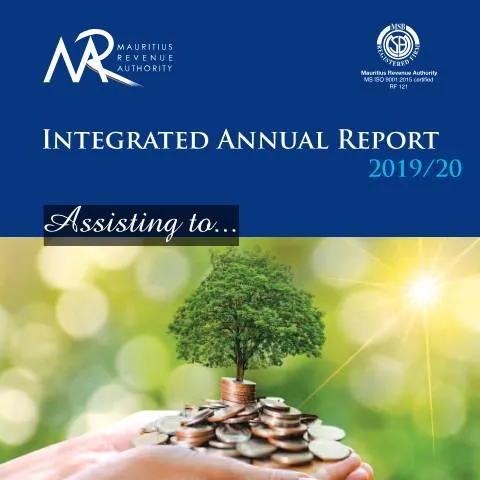
Understanding the Significance of the Annual Report 2019/20
In the realm of public administration and governance, the Annual Report 2019/20 serves as a crucial document that encapsulates the performance and strategic direction of the Mauritius Revenue Authority (MRA). This comprehensive report provides invaluable insights into the fiscal year ending June 30, 2020, particularly in light of the unprecedented challenges posed by the COVID-19 pandemic. It stands as an official record that not only outlines the MRA's achievements and hurdles but also reflects the institution's commitment to transparency and accountability.
The Actors Behind the Submission
The responsibility of preparing and submitting the Annual Report 2019/20 primarily falls on the MRA, led by its Board of Directors and the Director-General. The report is a collective effort by various departments within the MRA, illustrating a comprehensive overview of its operations, financial statements, and strategic initiatives aimed at enhancing tax compliance and revenue collection. The submission is not just a regulatory obligation; it embodies the MRA's commitment to stakeholder engagement, including taxpayers, government agencies, and the general public.
Who Needs to Be Involved?
- Board Members: They play a vital role in overseeing the report's preparation, ensuring it reflects the authority’s strategic goals.
- Management Team: Responsible for collating data and insights from various departments.
- Stakeholders: Including business owners and taxpayers who rely on the transparency of the report for their own fiscal planning.
Navigating the Form: Key Sections and Their Importance
Completing the Annual Report 2019/20 entails a meticulous approach, as each section serves a distinct purpose in presenting a holistic view of the MRA’s operations. Below are some of the essential sections that need particular focus:
1. Chairperson’s Foreword
This section offers a personal insight from the Chairperson, highlighting the key challenges faced during the reporting period, especially the implications of the COVID-19 pandemic on revenue collection and compliance. A well-articulated foreword can set the tone for the report, making it relatable to stakeholders.
2. Director-General’s Review
The Director-General’s Review provides an executive summary of the year’s accomplishments and challenges, reflecting on the authority's adaptability during crises and the initiatives undertaken to support the economy. It is pivotal for understanding the strategic adjustments made in response to external pressures.
3. Financial Statements
This section includes detailed financial data, allowing stakeholders to assess the MRA's fiscal health. Key performance indicators (KPIs), revenue collections, and expenditures are elaborated here, providing clarity on the MRA's financial operations.
4. Legislative and Policy Framework
An understanding of the legal landscape in which the MRA operates is crucial. This section outlines legislative changes, compliance requirements, and policies that govern the authority's operations.
5. Strategic Outcomes
The report details various strategic outcomes such as corporate governance, revenue collection efforts, and taxpayer education initiatives. Each outcome is assessed against predetermined objectives and targets, showcasing the MRA's performance effectively.
Submission Channels: Digital vs. Traditional Methods
With the growing emphasis on digital transformation, the MRA has embraced e-services and online submission methods for its annual report. However, understanding the channels of submission is essential for ensuring compliance and timely delivery.
Online Submission
The MRA encourages the submission of the Annual Report 2019/20 via its official portal, providing an efficient and convenient method for stakeholders. Online submission comes with benefits such as:
- Speed: Faster processing of submissions, reducing the waiting time for confirmation.
- Accessibility: Stakeholders can access the filing platform from anywhere, anytime.
- Tracking: A system in place to monitor the status of the submission.
Paper Submission
For those who prefer traditional methods, the report can also be submitted physically. However, this method may involve longer processing times, and stakeholders may need to visit the MRA offices or designated submission centers. It is essential to schedule appointments or check for public health guidelines before visiting the office.
Following Up: The Treatment of Submissions
After submission, stakeholders may wonder how the report is processed and evaluated. The MRA has established a transparent process for dealing with submissions, ensuring that all reports are reviewed systematically.
Review and Assessment Process
Once the Annual Report 2019/20 is submitted, it undergoes a structured review process:
- Initial Screening: The first step involves verifying that all required sections are completed and that necessary documentation accompanies the report.
- In-depth Analysis: A dedicated team assesses the financial data and strategic outcomes, comparing them against targets and expectations.
- Feedback Loop: Any discrepancies or areas needing clarification will be communicated to the submitting party for prompt resolution.
Tracking Your Submission
Stakeholders can track the status of their submission through the MRA’s online portal, where updates will be provided at various stages of the review process. It’s advisable for submitters to familiarize themselves with the portal functionalities to leverage its benefits fully.
A Timeline to Keep in Mind
Understanding the timeline for the Annual Report 2019/20 is vital for all stakeholders involved. Key dates include:
| Event | Date |
|---|---|
| Start of reporting period | 1 July 2019 |
| End of reporting period | 30 June 2020 |
| Submission Deadline | 31 August 2020 |
| Publication of Report | By 30 September 2020 |
What Happens After Submission?
Once the report is published, it becomes a public document. Stakeholders can access it through the MRA’s website, allowing for transparency and accountability. Public dissemination fosters trust and engagement between the MRA and its stakeholders.
Unique Considerations for Various Stakeholders
The Annual Report 2019/20 caters to diverse stakeholders, each with unique interests and perspectives. Understanding these nuances is key to maximizing the report's utility.
For Taxpayers
- Transparency: Taxpayers gain insights into how their contributions are managed and allocated.
- Compliance Education: The report provides information on compliance measures and initiatives aimed at facilitating tax adherence.
For Businesses
- Policy Updates: Businesses can identify potential changes in tax regulations and prepare accordingly.
- Resource Allocation: Understanding government priorities helps businesses align their operations strategically.
For Government Agencies
- Collaboration Opportunities: Insights from the report can guide inter-agency initiatives and foster collaboration.
- Strategic Planning: Agencies can use the findings to inform their regulatory frameworks and policies.
Final Thoughts: The Road Ahead
The Annual Report 2019/20 is more than just a compliance document; it is a testament to the resilience and adaptability of the MRA in the face of adversity. As the authority continues to navigate turbulent waters, this report serves as a guiding light for future initiatives and reforms aimed at enhancing public trust and promoting fiscal responsibility. Stakeholders are encouraged to utilize the insights gleaned from this report to inform their decisions, foster compliance, and contribute to the economic well-being of Mauritius.
Understanding the Fiscal Year and Its Implications in Mauritius
The fiscal year in Mauritius runs from July 1 to June 30 of the following year, which plays a crucial role in government budgeting, tax collection, and public service financing. Understanding this timeline is imperative for businesses and individuals alike, as it affects financial planning and tax obligations.
For businesses, especially small and medium enterprises (SMEs), aligning their financial reporting with the fiscal year can help in managing cash flow effectively. It is advisable to prepare quarterly financial statements that coincide with this timeline to evaluate performance and make necessary adjustments. Moreover, businesses should keep abreast of any changes in tax regulations announced during the annual budget speech delivered in May or June, as these could impact their tax liabilities.
Individuals should also be mindful of how their income and deductions align with the fiscal year. The Mauritius Revenue Authority (MRA) plays a pivotal role by setting deadlines for filing income tax returns, typically due by September 30 for the preceding fiscal year. Preparing and submitting these returns on time is crucial to avoid penalties and ensure compliance. Moreover, taxpayers must maintain accurate records of all income and deductible expenses throughout the fiscal year to streamline the filing process.
Moreover, the timing of expenditures can influence tax liabilities. For instance, individuals looking to maximize their tax deductions should consider making charitable donations or incurring deductible expenses before June 30, thus impacting the subsequent tax return positively. Understanding these dynamics within the fiscal year context can lead to better financial management for both individuals and enterprises.
The Role of Digital Transformation in Public Services
Digital transformation has become a cornerstone of public service delivery in Mauritius, significantly enhancing the efficiency and transparency of government operations. With the introduction of the MauPass system, which integrates single-sign-on access tied to the National ID Card, citizens can now navigate various government services seamlessly. This initiative has reduced paperwork and waiting times, promoting a more citizen-centric approach.
Among the services digitized, tax filing through the MRA’s online portal exemplifies a shift towards more accessible public service. Taxpayers can file their returns, make payments, and access their tax information without needing to visit MRA offices physically. This not only saves time but also reduces congestion at government offices, allowing public servants to focus on more complex cases that require personal attention.
Moreover, the digital infrastructure supports the Local Government Service Commission (LGSC) recruitment processes, offering a streamlined application experience for prospective job seekers. Applicants can submit their applications electronically, thus simplifying the application process and enabling better tracking of submissions. Enhanced user experience is coupled with robust data management, ensuring that recruitment processes are transparent and fair.
The push for digital services is also aligned with the government’s broader objectives to promote e-governance and improve service delivery. Regular updates and enhancements to online platforms are implemented based on user feedback, ensuring that government services remain relevant and user-friendly. As digital literacy increases among citizens, further adoption of e-services is anticipated, leading to an overall improvement in public administration.
Challenges and Opportunities in the 2019/20 Economic Landscape
The economic landscape in Mauritius during the 2019/20 period was marked by both challenges and opportunities. Emerging from a decade of consistent economic growth, the country faced external pressures such as global trade tensions and a slowdown in major markets, which impacted tourism and exports—two critical sectors of the Mauritian economy.
Despite these challenges, the government initiated various measures to stimulate economic growth. These included targeted fiscal policies aimed at supporting key sectors and incentivizing foreign investment. For example, the introduction of tax holidays for certain industries and the promotion of financial services as an export sector provided new avenues for growth. Moreover, the government’s commitment to enhancing the business environment through regulatory reforms aimed at easing business operations was pivotal.
Furthermore, the agricultural sector, particularly sugar production, faced significant challenges due to changing global market dynamics. However, the diversification efforts, including the promotion of organic and niche products, opened up new markets and opportunities for local farmers. Additionally, the rise of the digital economy during this period presented businesses with the chance to innovate and adapt to changing consumer behaviors.
Importantly, the socioeconomic initiatives launched during this fiscal year were geared towards enhancing inclusivity and reducing inequalities. Programs aimed at improving education, healthcare, and social welfare were implemented to uplift vulnerable communities, demonstrating the government’s commitment to sustainable development.
In conclusion, while the 2019/20 fiscal year posed various challenges, the strategic responses from the government and the resilience of the Mauritian people led to opportunities for growth and development, setting the stage for future economic stability and prosperity.