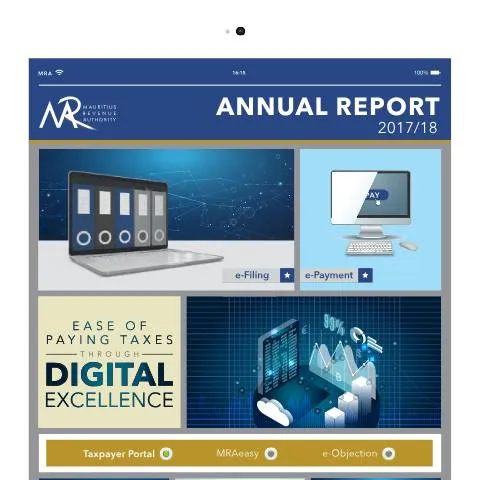
Navigating the MRA Annual Report 2017/18: A Guide for Stakeholders
The MRA Annual Report 2017/18 serves as a pivotal document reflecting the Mauritius Revenue Authority's (MRA) performance, strategic direction, and administrative integrity over the fiscal year from July 1, 2017, to June 30, 2018. Understanding this report is crucial not only for compliance but also for engaging effectively with the MRA as a taxpayer or a stakeholder.
Understanding the Importance of the Annual Report
The report is not merely a summary of revenue collection; it encapsulates the MRA's mission and vision, providing insights into its operational ethos and its accountability to the public. It plays a significant role in reinforcing the MRA's commitment to transparency and governance.
Core Values that Shape the Report
- Integrity: The report underscores the MRA's dedication to maintaining high standards of integrity and honesty.
- Responsiveness: It highlights the authority's efforts to meet and exceed taxpayer expectations through efficient service delivery.
- Fairness: The document details the equitable application of revenue laws.
- Transparency and Accountability: Illustrated through the publication of financial statements and performance metrics.
Who Is Required to Acknowledge This Document?
While the report is mandatory for internal review within the MRA, it is also essential reading for various stakeholders, including:
- Taxpayers seeking to understand their obligations and rights.
- Businesses assessing compliance and operational risks.
- Researchers and policy-makers evaluating fiscal policies and trends.
- Members of the public interested in the MRA’s contributions to social and economic development.
Exceptions to Reporting Requirements
Organizations or individuals who do not directly interact with the MRA, such as those exempt from taxation or entities with no revenue, may find limited relevance in the Annual Report, though they are still encouraged to recognize the authority’s impact on broader economic conditions.
Timeline: When to Engage with the Report
The MRA typically releases its annual report shortly after the end of the fiscal year, making it available to the public by December. Here's a simplified timeline:
| Milestone | Date | Action Required |
|---|---|---|
| End of Fiscal Year | June 30, 2018 | Closing of accounts for the year. |
| Report Compilation | July - November 2018 | Preparation and internal reviews. |
| Public Release | December 2018 | Engagement with the report begins. |
How to Access the Annual Report: Digital vs. Physical Copies
In an era of digital transformation, the MRA has made significant strides in ensuring that stakeholders can efficiently access the Annual Report through various channels:
- Online Portal: The report is available on the official MRA website, allowing for immediate access to the latest information.
- Physical Copies: Printed copies can be obtained from MRA offices, though stakeholders are encouraged to opt for the digital version to reduce paper usage.
- Email Requests: Stakeholders may request copies via official correspondence, ensuring they remain informed even if they do not have direct internet access.
Benefits of Digital Access
Accessing the report online not only provides immediate information but also allows for easy sharing and reference. Stakeholders can bookmark pertinent sections or even download the report for offline reading, maximizing engagement possibilities.
Processing and Utilizing the Information in the Report
Once stakeholders have accessed the MRA Annual Report, understanding how to utilize the information is key. The document includes:
- Revenue Collection Summary: Insights into the financial health of the MRA, illustrating how effectively it meets its revenue targets.
- Monitoring Tax Compliance: Detailed assessments of compliance rates and taxpayer engagement strategies.
- Future Outlook: Projections and strategies that the MRA plans to implement in the upcoming fiscal year.
How to Follow Up After Reading the Report
Stakeholders are encouraged to engage further with the MRA post-report reading:
- Contact the MRA for clarification on specific sections.
- Participate in forums or talks organized by the MRA to get a deeper understanding of revenue policies.
- Utilize the feedback channels offered by the MRA to voice concerns or suggestions based on the report's findings.
Distinguishing the MRA Annual Report from Other Documents
It is essential to note that the MRA Annual Report is distinct from other forms of documentation, especially for taxpayers. Commonly confused documents include:
| Document Type | Purpose | Relevance to Taxpayers |
|---|---|---|
| MRA Annual Report | Overview of the authority's performance and compliance | Broad understanding of the MRA's functions and vision |
| Tax Return Forms | Individual tax obligations per fiscal year | Directly applicable for personal tax calculations and submissions |
| Policy Statements | Specific guidance on tax laws and compliance procedures | Crucial for compliance but less broad than the annual report |
Addressing Errors and Rejections Related to the Report
In instances where stakeholders believe there are errors in the report or interpretations, the MRA encourages an open dialogue:
- Contact MRA Offices: Immediate communication is encouraged for clarification or rectification.
- Submit a Formal Request: For formal disputes regarding figures or statements made, a request for reconsideration can be lodged.
- E-Services: Utilizing MRA's e-portal can expedite the process of communication and correction.
What to Expect Post-Submission
Once a request for clarification or correction is submitted, stakeholders should:
- Allow for a response time, typically within a 14-day period.
- Be prepared to provide additional documentation if necessary.
- Follow up if no response is received within the expected timeframe.
The Way Forward: Embracing Digital Transformation
The MRA Annual Report 2017/18 illustrates a significant commitment to navigating the complexities of modern revenue administration. As stakeholders engage with the report, they will discover a wealth of information that not only informs them about the MRA’s past performance but also outlines its ambitions for future advancements.
With an eye on digital excellence, the MRA continues to enhance its services through technological adaptations, ensuring that Mauritian taxpayers receive timely, equitable, and effective service delivery across the board.
Understanding the Public Service Recruitment Process in Mauritius
The process of recruitment in the public service is overseen by the Public Service Commission (PSC), which plays a vital role in ensuring that the recruitment is based on merit and the principles of transparency and fairness. In the fiscal year 2017/18, the PSC employed various strategies to fill vacancies across different government departments, which included the issuance of numerous recruitment advertisements and organizing competitive examinations.
Public service recruitment steps typically involve the publication of job vacancies on the PSC's official website and in local newspapers. Interested candidates are required to submit their applications through the online portal, which necessitates the use of their National ID. It is essential to ensure that all documentation is completed accurately, as incomplete applications could lead to disqualification.
- Application Submission: Candidates must fill out PSC Form 7 for general recruitment, ensuring that they provide necessary details such as personal information, educational background, and relevant work experience.
- Eligibility Criteria: Each role will have specific eligibility criteria, which may include educational qualifications and years of experience relevant to the position. It is crucial to meet these requirements before applying.
- Selection Process: Successful applicants are usually invited to sit for a written examination, followed by an interview. The examination aims to assess the candidate's knowledge, skills, and competencies related to the position they are applying for.
Understanding the intricacies of the recruitment process is vital for any aspiring public servant in Mauritius, particularly in a competitive landscape. Familiarizing oneself with past examination papers and preparation resources is highly recommended to improve one's chances of success.
Impact of E-Government Initiatives on Public Services
The fiscal year 2017/18 witnessed a significant enhancement in e-government services in Mauritius, aimed at streamlining public service delivery and improving citizen engagement. The government has invested considerably in digital technology to facilitate easier access to services and information.
One of the primary platforms for these e-services is the Govmu.org portal, which serves as a centralized hub for various government services, including tax filings, business registrations, and civil service applications. This transition to a digital framework has not only reduced the administrative burden on citizens but has also promoted greater efficiency within the public sector.
- Online Tax Administration: The Mauritius Revenue Authority (MRA) has introduced e-filing options for tax returns, enabling taxpayers to submit their documents electronically, thus minimizing paperwork and reducing the need for physical visits to MRA offices.
- Single Sign-On Access: With the establishment of the MauPass system, citizens can now access multiple government services using a single login linked to their National ID. This integration simplifies the user experience and encourages more citizens to engage with government services.
- Digital Literacy Programs: To support these initiatives, the government has launched various digital literacy programs aimed at equipping citizens with the necessary skills to navigate online platforms effectively. These programs are especially beneficial for the elderly and those with limited exposure to technology.
The transition to e-governance in Mauritius is not only about improving service delivery but also about fostering a culture of transparency and accountability within public institutions. As more services move online, it is anticipated that citizens will hold government agencies to higher standards of performance, positively impacting public trust.
Challenges Faced by Local Government Services in 2017/18
Local Government Services in Mauritius, administered by the Local Government Service Commission (LGSC), faced several challenges during the fiscal year 2017/18. While efforts were made to enhance service delivery, various systemic issues persisted that hindered progress.
One of the notable challenges was the inconsistent implementation of policies across different local authorities. While some municipalities adopted innovative practices to enhance service provision, others lagged behind due to outdated processes and lack of resources.
- Staffing Shortages: Many local government bodies faced significant staffing shortages, which limited their capacity to deliver essential services effectively. Recruitment processes were often slow, and the inability to attract qualified personnel exacerbated the situation.
- Funding Constraints: Local authorities often struggled with budgetary constraints, which hampered their ability to implement new projects or upgrade existing facilities. This limitation was particularly evident in areas such as waste management and public infrastructure.
- Public Engagement: Engaging with the community remains a critical aspect of local governance. However, many local authorities encountered difficulties in effectively reaching out to citizens, leading to a disconnect between local government services and the community's needs.
To address these challenges, the LGSC has been focusing on improving recruitment and retention strategies, as well as encouraging local authorities to adopt more participatory approaches that involve citizens in decision-making processes. Collaborative workshops and forums have been organized to foster dialogue between local governments and communities, aiming to enhance service delivery and accountability.