Understanding the Context Surrounding the Document PressRelease060919
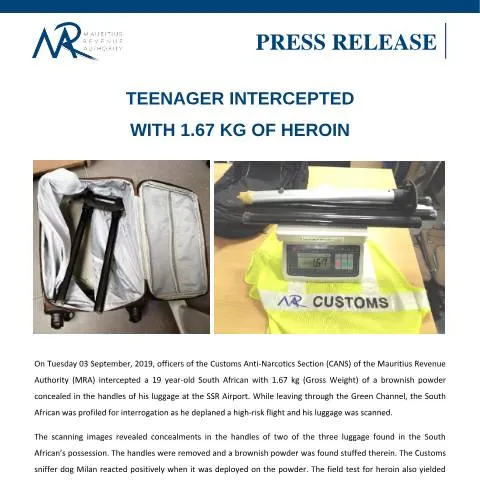
The incident that led to the creation of Document PressRelease060919 occurred on September 3, 2019, when a 19-year-old South African was intercepted at Sir Seewoosagur Ramgoolam International Airport (SSR Airport) with a significant quantity of heroin concealed in his luggage. This event is not merely an isolated case; it highlights the ongoing battle against drug smuggling in Mauritius, a nation striving for a safer environment for its citizens. The legal framework governing such drug-related offenses is rooted in the Narcotics Drugs and Psychotropic Substances Act, which establishes stringent measures to combat drug trafficking and protect public health.
Who Should Be Informed by This Document?
While the document specifically details the interception of an individual, it serves a broader audience. The key stakeholders include:
- Customs Officers: They play a critical role in border control and drug enforcement.
- Law Enforcement Agencies: Collaboration with the Anti-Drug and Smuggling Unit (ADSU) is essential for further investigations.
- The General Public: Awareness campaigns are crucial; citizens are encouraged to report suspected drug-related activities.
In addition, educational institutions and youth organizations must also take note. The involvement of teenagers, like the individual in this case, indicates the increasing recruitment of youths in drug-related activities, necessitating preventive measures and awareness programs aimed at young people.
Regulatory Framework and Impact of Document PressRelease060919
The incident documented in PressRelease060919 is emblematic of the legislative framework that governs narcotics in Mauritius. The Narcotics Drugs and Psychotropic Substances Act stipulates severe penalties for drug possession and trafficking, a fact made evident through the actions taken by the Customs Anti-Narcotics Section (CANS) upon intercepting the suspect.
An essential aspect of this legal framework is the use of profiling techniques, which are employed at various ports of entry to identify potential traffickers. In this case, the suspect was flagged for interrogation due to his high-risk flight, demonstrating the importance of intelligence-led operations in drug enforcement.
How the Incident Reflects on National and International Drug Policies
This particular case underscores the challenges faced by Mauritius as it aligns itself with international drug control treaties. The strategic role of the Mauritius Revenue Authority (MRA) in implementing these policies reflects a commitment to uphold public health and safety. Furthermore, the cooperation with agencies like the United Nations Office on Drugs and Crime (UNODC) reinforces Mauritius's dedication to combating drug trafficking on a global scale.
Distinguishing Features of PressRelease060919
While many documents may outline drug-related incidents, PressRelease060919 is distinctive in its detailed account of the interception process. Here are some key features that set it apart:
| Feature | PressRelease060919 | Standard Drug Incident Reports |
|---|---|---|
| Detail Level | In-depth analysis of interception and evidence collection | High-level summaries without technical details |
| Agency Involvement | Involves CANS and ADSU | Often only involves one agency |
| Public Engagement | Encouragement for public reporting via hotline | Less focus on community involvement |
This level of specificity not only aids law enforcement but also contributes to a greater understanding among the public regarding the realities of drug trafficking and the importance of vigilance.
Navigating the Submission Channels and Processes
While PressRelease060919 does not serve as a form for submission in the traditional sense, it informs the public of the measures that can be taken if they suspect drug-related activities in their community. The MRA encourages reporting through various channels:
Available Reporting Channels
- Online Reporting: Through the MRA Stop Drug Platform at www.mra.mu, the public can submit reports anonymously.
- Hotline: Citizens may call the MRA Hotline at 8958 to report suspicions.
This proactive approach aims to foster a collaborative environment where citizens act as partners in the fight against drug-related activities. The channels are designed to be user-friendly and ensure that people feel safe reporting any irregularities they may encounter.
Addressing Challenges and Next Steps After Reporting
Once a report is made, the MRA and associated law enforcement agencies take several steps to investigate the claims. However, challenges remain. There may be instances where reports yield no evidence or where the investigations face operational hurdles.
Outcomes of Reporting
Different scenarios may play out after a report is submitted:
- Successful Interception: Further investigations may lead to arrests and the seizure of narcotics.
- Community Awareness: Unfounded reports may still result in community education and outreach initiatives.
- No Action Taken: In some cases, a lack of evidence may lead to no further action, keeping the process transparent and accountable.
In the event of dissatisfaction regarding the handling of a report, individuals can reach out to the MRA for clarification or follow-up on the status of their case. Understanding the process and potential outcomes encourages community involvement while managing expectations.
The Importance of Public Participation in Drug Prevention
The arrest documented in PressRelease060919 serves as a reminder of the critical role that public vigilance plays in curbing drug trafficking. This incident should not only be viewed through the lens of law enforcement but as part of a larger community effort.
Fill in your form directly online
No printing: type your details into the boxes of the official form, tick, then download the PDF ready to send.
- 1Type into the form boxes
- 2Tick in one click
- 3Save and download the PDF
Community Programs and Educational Initiatives
Local organizations and schools should consider implementing programs designed to educate youth about the dangers of drug abuse and trafficking. This holistic approach aims to deter young people from becoming involved in such activities:
- Workshops: Engage students with workshops focusing on drug education and peer pressure management.
- Support Groups: Establish networks where youths can discuss their concerns or experiences in a safe environment.
- Collaboration with Authorities: Invite local law enforcement to participate in discussions, facilitating open communication between youths and police.
Programs like these not only foster a sense of responsibility within the community but can also potentially deter young individuals from becoming involved in illicit activities.
The Broader Implications of Drug Trafficking on Society
The consequences of drug trafficking extend far beyond the immediate legal implications for the individuals involved. They permeate various aspects of society and affect families, communities, and the nation as a whole.
Social Impact of Drug Trafficking
Drug trafficking contributes to increased crime rates, strained healthcare systems, and economic burdens on society. Communities that experience high levels of drug abuse often face:
- Increased Crime: A rise in criminal activities associated with drug trafficking can lead to safety concerns for residents.
- Health Crises: Substance abuse issues strain healthcare facilities, leading to higher costs for both taxpayers and the government.
- Economic Effects: The costs associated with law enforcement and rehabilitation programs can divert funds from other essential services.
By addressing these issues collaboratively, Mauritius can work towards a more sustainable future free from the grip of narcotics, fostering a healthy, informed, and secure society for future generations.