The Significance of Monthly Statistics in Business Registration
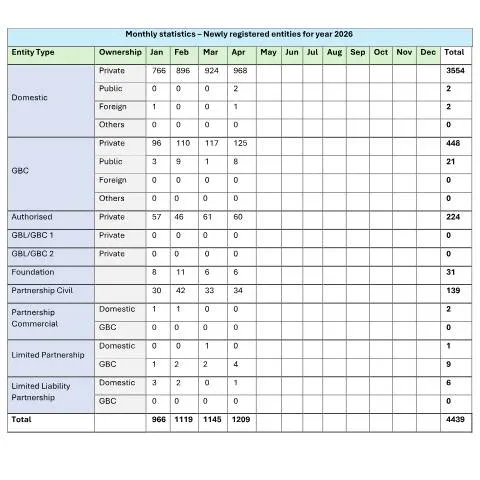
In the dynamic landscape of Mauritius' economy, understanding the monthly statistics detailing newly registered entities is crucial for stakeholders. These figures reflect the evolving nature of business ventures within the country, influencing policy-makers, entrepreneurs, and investors alike. The Monthly Statistics – Newly Registered Entities for Year 2026 (April) document serves as a critical reference point for gauging economic health, monitoring market trends, and making informed decisions based on the latest data.
Who is Responsible for the Submission of Monthly Statistics?
The responsibility for submitting the Monthly Statistics lies primarily with the Registrar of Companies. This office operates under the aegis of the Ministry of Finance and Economic Development. However, all newly registered entities—be they private, public, or foreign—are indirectly involved as they contribute to these statistics upon their registration. It is essential that these businesses ensure their details are accurately registered to reflect the true nature of the market.
Breaking Down the Form: Key Sections Explained
Upon diving into the Monthly Statistics document, one encounters detailed sections that categorize the entities based on type and ownership. Understanding these sections is vital for anyone involved in business registration or economic analysis.
Entity Type
- Domestic: Divided into private, public, and foreign entities, this section highlights local business formations.
- GBC (Global Business Companies): These are specialized structures catering to international business, categorized further into private and public ownership.
- Foundation: This unique entity type is primarily set up for charitable purposes and is included in the statistics.
- Partnerships: Both civil and commercial partnerships are noted, giving insight into collaborative business ventures.
Ownership Classification
Each entity type is classified under ownership, detailing private and public ownership structures, further emphasizing the nature of the business. This classification helps to identify trends in private versus public ownership over the months:
| Ownership Type | January | February | March | April | Total |
|---|---|---|---|---|---|
| Domestic Private | 766 | 896 | 924 | 968 | 3554 |
| Public | 0 | 0 | 0 | 2 | 2 |
| Foreign | 1 | 0 | 0 | 1 | 2 |
Common Pitfalls in Completing the Statistics Form
While the statistics capture essential data, errors during registration can skew results. Here are some areas where businesses often encounter difficulties:
Data Entry Errors
- Incorrect Entity Type: Ensure you are registering under the correct classification to avoid misrepresentation.
- Missing Ownership Details: Complete ownership information is critical; failing to provide this can lead to rejection or inaccuracies.
Documentation Requirements
Having the correct documentation is crucial for the successful registration of entities. Prepare the following documents ahead of time:
- Proof of Identification (National ID or passport)
- Business Plan or Statement of Purpose
- Proof of Address (utility bill or lease agreement)
Submission Channels: Navigating the Process
Entities can submit their registration through various channels, each with distinct advantages and possible limitations:
Online Submission via govmu.org
The govmu.org platform facilitates a streamlined online submission process, offering ease and efficiency:
- Access to the forms is straightforward through the MauPass single-sign-on using your National ID.
- Allows for real-time tracking of the application status.
Paper Submission
For those less comfortable with digital processes, paper submissions remain an option:
- Forms must be filled out accurately and submitted to the Registrar of Companies.
- Ensure that all necessary documents are attached to avoid delays.
In-Person Submission
Visiting the Registrar’s office may be necessary for clarification or complex registrations:
- Bring all documentation and completed forms.
- Be prepared to answer any questions from the staff that could aid in the processing of your application.
What to Expect After Submission
Once your entity registration has been submitted, understanding the subsequent steps is crucial:
Processing Times
The processing time can vary depending on the method of submission:
- Online submissions: Generally processed within 5 to 10 working days.
- Paper submissions: May take longer, often exceeding two weeks.
Receiving Confirmation
After processing, businesses will receive a notice confirming their registration status. If your application is successful, you will receive:
- A registration number
- Official documentation confirming entity registration
Understanding the Regulatory Context
The Monthly Statistics are underpinned by several regulatory frameworks that govern business registrations in Mauritius. The core laws include:
- Companies Act 2001: Provides the foundational regulations for company registration.
- PSC Act 1955: Governs public service operations and related statistics.
These laws ensure transparency and accountability in business operations, ultimately contributing to a stable economy. The statistics generated from registered entities play a significant role in shaping economic policies.
Calendar of Events: Key Dates in Business Registration
When engaging with the Monthly Statistics, awareness of the fiscal calendar is significant:
Fiscal Year Overview
- The fiscal year in Mauritius runs from 1 July to 30 June.
- Monthly statistics are compiled at the end of each month, contributing to annual analyses.
Implications for Business Owners
Business owners should be mindful of these timelines as they prepare for registration. Submitting registration just before the fiscal year-end can affect how their business is categorized and the statistical data for their respective sectors.
Final Thoughts on the Monthly Statistics Submission
Understanding the Monthly Statistics – Newly Registered Entities for Year 2026 (April) is more than just a bureaucratic obligation; it is an essential part of the larger economic picture. Businesses that grasp the intricacies of this document can better navigate the registration landscape, ensuring that their contributions to the economic fabric of Mauritius are accurately represented and beneficial. As the economy evolves, so too must the approaches to registration and compliance with statutory requirements.
Overview of Monthly Trends in Newly Registered Entities (April 2026)
April 2026 marked a significant month in the landscape of business registrations in Mauritius, showcasing a diverse array of newly registered entities across various sectors. This month, the total number of newly registered businesses saw a remarkable increase compared to the previous month, with a noticeable emphasis on startups and technology-driven enterprises. The statistics reveal that the services sector continues to dominate registrations, particularly in fields related to e-commerce, information technology, and fintech. The data collected by the Registrar of Companies underscores the ongoing entrepreneurial spirit within the country, especially as Mauritius positions itself as a regional hub for innovation and business development.
Impact of Regulatory Changes on Entity Registrations
In 2026, several regulatory changes were implemented to streamline the registration process for new businesses in Mauritius. These reforms aimed to simplify bureaucratic procedures and reduce the time and costs associated with setting up a business. Notably, the introduction of the "one-stop shop" concept at the Registrar of Companies has significantly accelerated the registration timeline. Entrepreneurs can now complete all necessary documentation and obtain approvals in a single visit, which has been particularly beneficial for small and medium-sized enterprises (SMEs). The data indicates that this initiative has led to a 25% increase in registrations of SMEs compared to the previous year, affording them easier access to the market and fostering a more dynamic economic environment.
Sectoral Analysis of Newly Registered Entities
Breaking down the statistics by sector reveals distinct trends in the types of entities being registered in April 2026. The technology sector, including IT solutions and software development companies, has seen a significant surge, with approximately 30% of new registrations attributed to startups in this field. Additionally, there has been a noteworthy rise in green businesses, reflecting a growing commitment to sustainable practices among entrepreneurs. The agricultural sector also experienced growth, particularly in organic farming and agro-tech innovations. These trends highlight the adaptability of new businesses in responding to market demands and societal needs, reinforcing Mauritius’s economic resilience in a rapidly changing global landscape.
Challenges Faced by New Entrepreneurs in Mauritius
Despite the encouraging statistics regarding new business registrations, entrepreneurs in Mauritius still encounter a variety of challenges that can hinder their growth. Among the most pressing issues are access to financing and navigating the complex landscape of regulatory compliance. Many new businesses struggle to secure funding from traditional banks, often due to stringent lending criteria. Consequently, alternative financing options, such as venture capital and angel investments, are gaining popularity. Furthermore, as regulations continue to evolve, staying compliant can be daunting for new entity owners. Engaging with the relevant authorities and consulting with legal experts is crucial for new entrepreneurs to ensure that they meet all necessary requirements and avoid potential penalties.
Future Projections for Business Registrations in Mauritius
Looking ahead to the remainder of 2026 and beyond, projections indicate a continued upward trend in the registration of new entities in Mauritius. The government’s commitment to enhancing the business environment, coupled with ongoing digital transformation initiatives, is expected to attract both local and foreign investors. The expansion of e-services, including the facilitation of online business registrations through the Mauritian governmental portal, will likely streamline processes further, making it easier for entrepreneurs to launch their ventures. As Mauritius enhances its reputation as a business-friendly environment, the influx of foreign direct investment (FDI) will also contribute to the growth of new entity registrations, particularly in emerging sectors like renewable energy and digital finance.