Understanding the Context of Drug Seizures in Mauritius
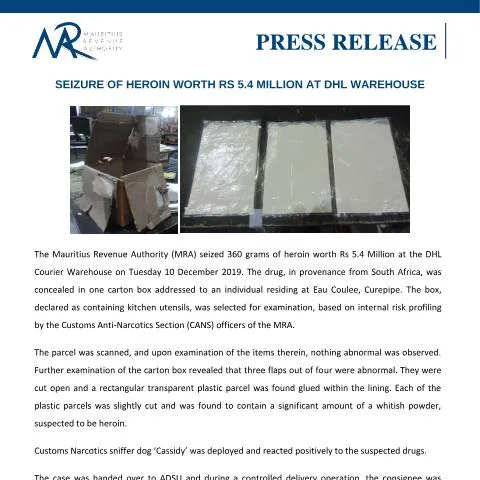
The recent seizure of 360 grams of heroin valued at Rs 5.4 million on December 10, 2019, at the DHL warehouse has shed light on the critical role played by the Mauritius Revenue Authority (MRA) in combatting drug trafficking. This incident underscores the ongoing battle against illicit drug activities within Mauritius' borders and the procedural framework established to address such offenses. The proactive measures taken by MRA officials, including the use of sophisticated risk profiling and sniffer dogs, illustrate a robust strategy aimed at curbing the influx of narcotics into the country.
Chronological Breakdown of the Seizure Incident
To fully appreciate the significance of the Drug Seizure Document, it is essential to trace the events leading up to the transaction:
- December 10, 2019: MRA's Customs Anti-Narcotics Section (CANS) officers, following internal risk profiling, selected a suspicious parcel for examination at the DHL Courier Warehouse.
- Inspection Process: The parcel, declared to contain kitchen utensils, underwent scanning where no abnormalities were initially observed. However, further inspection revealed irregularities in the carton box.
- Discovery of Drugs: Upon careful examination, three flaps of the carton box were found to be cut open, leading to the discovery of plastic parcels containing a white powder, subsequently identified as heroin.
- Deployment of Sniffer Dog: A trained narcotics dog, Cassidy, was brought to the scene and positively alerted to the presence of the suspected drugs.
- Arrest of Consignee: The operation culminated with a controlled delivery, resulting in the arrest of the individual to whom the parcel was addressed.
The Significance of the Drug Seizure Document
This document, referenced as DrugSeizure121219, serves an integral role in the procedural landscape of drug enforcement in Mauritius. It acts as an official record of the seizure, evidencing the specific circumstances surrounding the incident. The document includes detailed information that is crucial for any subsequent legal proceedings. The CANS utilizes this document to not only register the seizure but also to ensure compliance with national laws and international drug control treaties.
Submission Channels for the Drug Seizure Document
Understanding the various submission channels is vital for those involved in the process. The document can be submitted through several avenues:
- Online Submission: Utilizing the Mauritius e-filing portal, stakeholders can electronically submit the document, allowing for a streamlined and efficient process.
- In-Person at MRA Offices: Alternatively, individuals may opt to deliver the document physically at designated MRA offices, where staff can assist with any inquiries.
- Mail Submission: For those unable to access online services, mailing the document to the relevant department is also permissible, although it may lead to longer processing times.
Deciphering the Components of the Document
Completing the Drug Seizure Document requires precision. Here’s a breakdown of the critical sections:
| Section | Description | Common Pitfalls |
|---|---|---|
| Incident Date | Specify the exact date of the seizure. | Incorrect date format can lead to processing delays. |
| Location | Detail the specific site of the seizure (e.g., DHL Warehouse). | Omitting the precise location may affect traceability. |
| Type of Substance | Clearly state the nature of the illicit substance. | Generalizing the substance type can hinder enforcement efforts. |
| Quantity | Indicate the total weight of the drugs seized. | Inaccurate weight reporting can impact legal categorizations. |
| Consignee Information | Provide full details of the intended recipient. | Missing information can obstruct follow-up investigations. |
Timeline and Next Steps After Submission
Once the Drug Seizure Document is submitted, specific timelines and processes ensue:
- Initial Review: Within 7 days, MRA officials will review the document for completeness.
- Investigation Phase: If deemed necessary, further investigations may be initiated, lasting between 30 to 90 days.
- Legal Proceedings: Following the investigation, if there is sufficient evidence, cases will be referred to the authorities for prosecution.
Legal Framework Surrounding Drug Enforcement in Mauritius
The operation of the Drug Seizure Document is underpinned by a robust legal framework. Several laws govern the enforcement of drug-related offenses, including:
- The Dangerous Drugs Act which establishes penalties and guidelines for dealing with controlled substances.
- The Customs Act that allows for the inspection and seizure of goods that contravene local laws.
This legal backdrop provides the necessary authority for MRA officials to perform their duties effectively, fostering a climate of accountability and compliance.
Distinctive Features of the Drug Seizure Document
While there are various forms used within the MRA and other governmental bodies, the Drug Seizure Document stands out due to its specific focus on illicit substances. Unlike generic forms used for customs clearance or generic complaints, this document encapsulates unique data pertaining to drug trafficking incidents, emphasizing the security and enforcement measures specific to this domain. The rigor applied in collecting data and evidence is paramount in sustaining legal integrity and ensuring successful prosecutions.
Final Considerations for Stakeholders Involved in Drug Seizures
For law enforcement officers, legal practitioners, and customs officials, understanding the intricacies of the Drug Seizure Document is crucial. Proper completion and timely submission facilitate the prosecution of offenders and protect the integrity of Mauritius' borders. As the fight against drug trafficking intensifies, the importance of accurate documentation cannot be overstated. It ensures that all parties involved are informed and compliant, thus bolstering the collective efforts to eradicate illicit drug activities.
Background of Drug Trafficking in Mauritius
The issue of drug trafficking in Mauritius has seen a concerning rise over the years, significantly impacting the social fabric of the nation. Mauritius, being strategically located in the Indian Ocean, is often targeted as a transit point for various illegal substances, including heroin. The country's geographical position makes it susceptible to smugglers who exploit its ports and free trade zones.
In the years leading up to the seizure of heroin worth Rs 5.4 million at the DHL warehouse in December 2019, authorities noted an uptick in incidents involving various narcotics. This highlighted the increasing sophistication of trafficking networks operating both locally and internationally. The Mauritius Police Force (MPF), in collaboration with the National Drugs Commission, has been actively pursuing intelligence-led operations to combat drug-related crimes. Such operations often include surveillance of key points like international shipping and logistics hubs, which are associated with drug trafficking.
Moreover, various local and international organizations have come together to provide training and resources to law enforcement personnel, enabling them to respond more effectively to the evolving tactics of drug traffickers. The national strategy also incorporates community awareness programs aimed at educating the public about the dangers of substance abuse and the importance of reporting suspicious activities.
Legal Framework and Enforcement Measures
The legal framework in Mauritius concerning drug trafficking is primarily governed by the Dangerous Drugs Act, which classifies controlled substances and prescribes penalties for possession, trafficking, and distribution. The act has been periodically amended to adapt to the changing landscape of drug-related offenses.
In the context of the seizure of heroin at the DHL warehouse, law enforcement officials employed various investigative measures that comply with both local laws and international protocols. The seizure operation was part of a broader initiative to disrupt drug supply chains within the country. Utilizing intelligence gathered through both domestic and international sources, the authorities executed a well-coordinated raid on the warehouse, illustrating the effectiveness of cross-border collaboration in tackling drug trafficking.
Following such seizures, the authorities are mandated to undertake forensic analysis of the drugs and trace their origins, often leading to the dismantling of trafficking networks. The legal proceedings that follow involve various stakeholders, including the Central Drug Authority, customs officials, and the judiciary, each playing a critical role in ensuring that justice is served and that measures are taken to prevent future occurrences.
Community Impact and Rehabilitation Efforts
The impact of drug trafficking and substance abuse extends beyond the immediate legal ramifications, affecting families and communities at large. The seizure of Rs 5.4 million worth of heroin not only highlights the ongoing battle against drug trafficking but also underscores the necessity of addressing the underlying issues associated with drug addiction in Mauritius.
In response to the growing concern over drug abuse, the government has initiated various rehabilitation programs aimed at supporting individuals struggling with addiction. These programs often involve collaboration with non-governmental organizations (NGOs) that specialize in addiction recovery. They offer services ranging from counseling and treatment to reintegration support, focusing on empowering individuals to reintegrate into society successfully.
Moreover, community engagement initiatives are crucial in promoting awareness and understanding of the issue, encouraging families to seek help when needed. Schools and local organizations are increasingly involved in preventive education, teaching young people about the dangers of drug use and offering alternative recreational activities that foster personal development and community cohesion.
As the authorities continue to combat drug trafficking, it is equally important to address the societal challenges posed by addiction. This holistic approach not only aims to reduce the supply of drugs in the community but also seeks to create a supportive environment that helps individuals recover and thrive beyond their struggles with substance abuse.