The Significance of CbC Reporting in the Mauritian Context
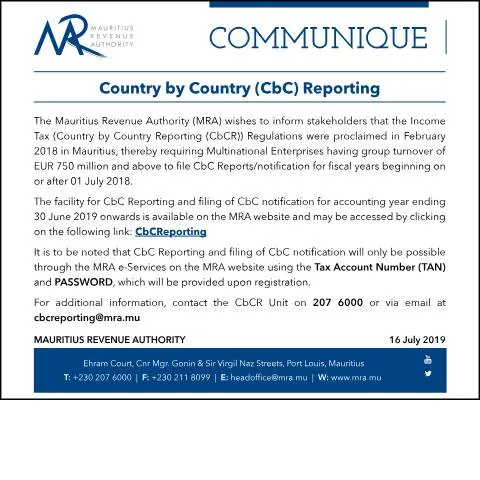
In an ever-evolving global economic landscape, transparency in taxation has become paramount. The Country by Country Reporting (CbCR) initiative represents a critical step towards enhancing compliance and accountability among multinational enterprises (MNEs). Particularly, Mauritius has embraced this commitment following the proclamation of the Income Tax (Country by Country Reporting (CbCR)) Regulations in February 2018. Those MNEs with a group turnover of EUR 750 million or more are now mandated to submit detailed reports for fiscal years commencing on or after 1 July 2018.
Navigating the Challenges of Compliance
For businesses falling under this directive, the CbC Reporting process is not merely a bureaucratic obligation but a reflection of their operational footprint globally. Failure to comply can lead to severe consequences, including financial penalties and reputational damage. The following are the core obligations and implications for firms:
- Mandatory Reporting: Firms must ensure timely submission of the CbC Reports and notifications to the Mauritius Revenue Authority (MRA).
- Penalties for Non-Compliance: The MRA is empowered to impose fines or sanctions on entities failing to adhere to these regulations, which could jeopardize future operations.
- Enhanced Scrutiny: Entities that fail to submit reports may face increased scrutiny from tax authorities, both locally and internationally.
Crafting the CbC Report: Essential Sections Explored
The CbC Report comprises several critical sections that require careful consideration and accurate data entry. Each segment serves a distinct purpose in illustrating the financial and operational status of the multinational concern. Below, we dissect the primary sections of the reporting structure:
Entity Information
This section necessitates the disclosure of the legal name, registered office address, and the tax identification number of each entity in the group. It is crucial to ensure that all information is current and accurately reflects the corporate structure.
Financial Information
Here, entities must report revenues, profit before tax, income tax paid, and capital employed in each jurisdiction. It is essential to double-check all figures against financial statements to prevent discrepancies that could trigger audits.
Business Activities
Each entity's principal activities should be outlined clearly, providing a snapshot of their operational focus. Failure to accurately represent business activities may lead to misinterpretation of the company's tax obligations.
Jurisdictional Information
Companies must provide details about the jurisdictions in which they operate, which can have significant implications for tax liabilities. This section requires meticulous attention to ensure compliance with local tax laws.
The CbC Submission Process: Step-by-Step Guidance
The submission of CbC Reports and notifications is a straightforward process, though it warrants attention to detail. Here’s how to effectively navigate the submission process:
- Registration: Firms must register for an account on the MRA e-Services platform. Upon registration, a Tax Account Number (TAN) and PASSWORD will be issued.
- Access the CbC Reporting Portal: Utilize the MRA website to access the CbC Reporting portal.
- Complete the Report: Fill in the report sections thoroughly, ensuring consistency with all business and financial data.
- Review: Conduct a thorough review of the report for accuracy and completeness before submission.
- Submission: Submit the completed CbC Report electronically via the portal. Retain a confirmation receipt for record-keeping.
Monitoring and Follow-Up: Keeping Track of Your Submission
After submitting the CbC Report, it is prudent to maintain a proactive approach in tracking the status of your submission. The MRA provides various channels for follow-up:
- Contacting the CbCR Unit: Should there be any queries regarding your report, the CbCR Unit can be reached at +230 207 6000.
- Email Inquiries: For more detailed inquiries, you may email the CbCR team at [email protected].
- Online Status Check: Utilize the MRA website to check for any updates regarding your submission status.
Addressing Challenges: Errors, Omissions, and Rejections
In the event of an error, omission, or rejection of the submitted CbC Report, it is vital to address the issue promptly to mitigate potential penalties. Here’s a recommended course of action:
Identifying Mistakes
If notified of an error following submission, carefully review the feedback from the MRA to identify the specific issues raised. Common areas of contention include:
- Inaccurate financial figures.
- Insufficient details regarding group entities.
- Failure to comply with reporting deadlines.
Submitting Corrections
Once errors are identified, companies should rectify the mistakes and resubmit the CbC Report via the same MRA e-Services portal. Timeliness is crucial; corrections should be submitted as soon as possible to avoid additional penalties.
The Importance of Awareness: Understanding Regulations and Their Implications
The establishment of CbC Reporting regulations in Mauritius stems from a broader commitment to international tax compliance standards, particularly as outlined by the OECD. The regulations aim not only to enhance transparency but also to discourage tax avoidance practices.
| Aspect | Details |
|---|---|
| Regulatory Authority | Mauritius Revenue Authority (MRA) |
| Scope | Applicable to MNEs with turnover exceeding EUR 750 million |
| Reporting Period | Fiscal years starting from 1 July 2018 onwards |
| Submission Method | Mandatory online submission through MRA e-Services |
| Contact for Assistance | CbCR Unit - +230 207 6000 / [email protected] |
The Road Ahead: Future Developments in CbC Regulations
As global tax landscapes evolve, it is imperative for businesses to remain informed about potential changes to CbC Reporting regulations. Continuous engagement with the MRA and participation in relevant workshops or seminars can facilitate better compliance and understanding of any upcoming amendments.
In conclusion, while the CbC Reporting process may appear daunting, understanding its intricacies and following the outlined procedure can significantly streamline compliance. As a cornerstone of transparent business practices in Mauritius, adherence to these regulations not only fosters accountability but also enhances the nation’s standing in the global economic arena.
Understanding the Framework of Country by Country (CbC) Reporting in Mauritius
The Country by Country (CbC) reporting framework was introduced in Mauritius following the OECD's Base Erosion and Profit Shifting (BEPS) initiative. This initiative aims to ensure that multinational enterprises (MNEs) pay taxes where they operate and generate profits. The implementation of CbC reporting in Mauritius is aligned with the OECD guidelines and is pertinent for MNEs with an annual consolidated group revenue of more than MUR 1 billion or its equivalent in foreign currency.
CbC reporting requires the ultimate parent entity of the MNE group to submit a CbC report that provides a comprehensive overview of the financial information of the group, including revenue, profit or loss before tax, income tax paid and accrued, and a breakdown of the workforce, capital, and tangible assets of the entities within the group. The submission should be made to the Mauritius Revenue Authority (MRA) within 12 months of the end of the reporting fiscal year, following the fiscal year which runs from 1 July to 30 June.
To facilitate compliance, the MRA has established regulations that detail the information required in the CbC reports, along with guidelines on the format and submission process. It's crucial for MNEs to ensure that their CbC reporting aligns with the regulations to avoid penalties and ensure transparency and compliance with international tax standards.
Fill in your form directly online
No printing: type your details into the boxes of the official form, tick, then download the PDF ready to send.
- 1Type into the form boxes
- 2Tick in one click
- 3Save and download the PDF
Key Challenges and Considerations for Multinational Enterprises in CbC Reporting
While the introduction of CbC reporting is a progressive step towards tax transparency, MNEs in Mauritius face several challenges in complying with these requirements. One of the primary challenges is the complexity of gathering relevant data from various jurisdictions. MNEs often operate in multiple countries with varying tax laws and regulations, making it challenging to consolidate financial data accurately.
Additionally, the interpretation of the OECD guidelines may vary, leading to inconsistencies in reporting practices among different companies. MNEs must also consider the potential reputational risks associated with CbC reporting. Due to the public nature of the reports, any discrepancies or inaccuracies could lead to scrutiny from tax authorities and damage the company's reputation.
Moreover, the implementation of CbC reporting requires significant investment in data management and reporting systems. Companies must ensure that they have the necessary infrastructure in place to collect, analyze, and report data effectively. This often involves investing in technology and training personnel to understand the new reporting requirements.
Future Trends and Developments in CbC Reporting in Mauritius
As the global landscape of tax regulations continues to evolve, it is pivotal for MNEs operating in Mauritius to stay abreast of future developments in CbC reporting. The MRA is actively engaging with international bodies to refine reporting standards and ensure that Mauritius remains aligned with global best practices.
One significant trend is the increasing emphasis on digitalization and the use of technology for reporting purposes. The MRA has been advocating for e-filing systems through their official portal, govmu.org, to streamline submissions and enhance compliance. MNEs should be prepared to adapt to these technological advancements by investing in robust digital platforms that facilitate easier compliance with CbC requirements.
Furthermore, as countries worldwide push for greater tax transparency, there may be additional regulations or revisions to CbC reporting guidelines that could impact how MNEs report their financials. Continuous engagement with legal and tax advisors will be necessary to navigate these changes effectively.
In summary, while CbC reporting presents challenges, it also offers an opportunity for MNEs to demonstrate their commitment to transparency and responsible tax practices. By staying informed and proactive, companies can effectively manage their compliance obligations and mitigate risks associated with CbC reporting.